


Unraveling the Causes of Electrical Fires Through Blockchain
 Published2017.11.15 11:45
The Ministry of Science and ICT and the Korea Electrical Safety Corporation announced that they have jointly established a "blockchain-based electrical fire ignition point analysis support service" with SK Telecom.
Currently, when electrical fires occur, the ignition cause is analyzed using photographs, drawings, and inquiries; however, most evidence is destroyed by the fire, making it difficult to identify the ignition point. This has led to frequent legal disputes regarding liability among building owners, tenants, and property insurance companies, resulting in significant social costs.
If objective data related to the accident existed, it would facilitate root cause identification; however, it is currently difficult to find cases of relevant data collection, and even when collected, securing legal evidentiary value for such data is not straightforward.
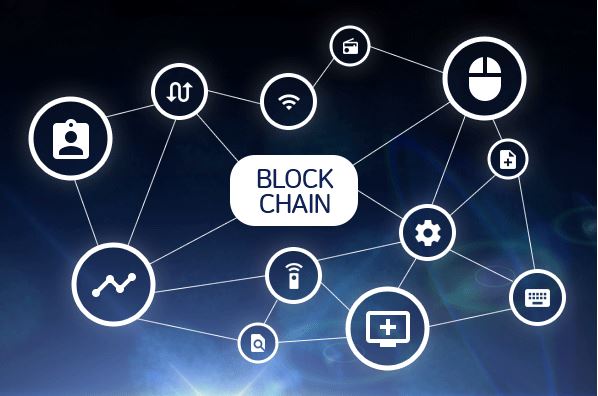
The "blockchain-based electrical fire occurrence point analysis support system" established this time records arc occurrence information—which accounts for 80% of electrical fire ignition patterns (6,033 cases in 2016)—in a blockchain, enabling such information to serve as objective evidence material in subsequent electrical fire root cause identification.
To identify the floor where the arc occurred, IoT-based arc sensors installed in electrical distribution panels on each floor of the building collect arc occurrence information and transmit it wirelessly at 5-minute intervals, which is then recorded in a blockchain participated in jointly by the Korea Electrical Safety Corporation, the National Fire Agency, property insurance companies, and others.
Given that blockchain allows participants to jointly validate and retain data, ensuring that data has not been forged or altered, arc occurrence information stored in the blockchain can be applied to this system to serve as objective evidence in electrical fire cause assessment and forensic investigation.
This pilot project, which began in April of this year and targeted 10 locations including commercial buildings, residential buildings, traditional markets, temples, and livestock facilities, will be expanded to 20 locations next year. Furthermore, the related agencies plan to analyze the outcomes of this pilot project and examine expansion to major buildings nationwide.
Choi Young-hae, Internet Convergence Policy Director at the Ministry of Science and ICT, emphasized, "Through this pilot project, we have confirmed that blockchain can be effectively utilized in disaster and safety sectors," and stated, "We will continue to expand support so that blockchain technology can be disseminated across various industrial sectors."
Related news
[Discussion] Why Korea, Home to the Largest Blockchain Exchange, Cannot Create Cryptocurrency
Looking at the global blockchain exchange trading volume rankings, Korean exchanges hold 3 positions in the top 10. However, when examining virtual currency rankings, there are no Korean projects within the top 100. Regarding why our country, which has the world's largest exchanges, lacks virtual currencies, attorney Jung Ho-seok from Law Firm Seum stated, "One might think it's because technology hasn't developed enough, but that's not the case," adding that it is "because legal systems and environments have not provided sufficient support." Last month, an amendment to the "Electronic Financial Transactions Act" was initiated by Representative Park Yong-jin. The bill requires virtual currency operators to maintain capital of 500 million won or more and obtain authorization from the Financial Services Commission to conduct business, and includes provisions prohibiting illegal activities such as market manipulation using virtual currencies and money laundering. There is concern about whether regulation is necessary given that the amendment leans more toward regulation than promotion and blockchain has not even been defined as currency. In response, a forum has been arranged to discuss issues surrounding blockchain regulation.
2017.09.04by 김지혜 기자
Energo Labs, Trade energy generated from solar PV cells on the blockchain
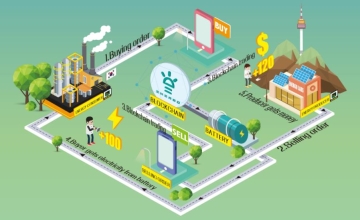
Energo Labs is entering the Korean market with the goal of building a decentralized autonomous energy (DAE) community. Energo uses blockchain to enable residents with solar PV panels to sell energy without intermediaries. Energo uses microgrids and provides solutions that support energy producers in selling energy to energy consumers. This means real-time peer-to-peer energy transactions. In other words, consumers who want a specific amount of energy can use clean energy stored in microgrid batteries through the Energo app or directly pay energy producers through monthly electricity bills. Energo's core product is based on the Qtum blockchain platform and includes hardware infrastructure used for clean energy measurement, transactions, and settlement. Each household in the microgrid is equipped with a smart meter that digitizes not only the amount of energy consumed in that household but also the amount of energy produced by solar panels. The smart meter is connected to the Energo app and is used in energy trading.
2017.10.13by 김지혜 기자
KT Signs MOU with KT Mhouse for Blockchain-Based Financial Transaction Business
KT announced that it has concluded a technology development agreement with KT M-House for blockchain-based financial transactions. Under this agreement, the two companies plan to jointly research blockchain technology and cooperate to promote financial transaction business. KT M-House will apply KT's blockchain-based virtual currency platform 'K-Coin' to its mobile gift certificate service 'GiftyShow,' and plans to establish its own point system enabling the issuance, accumulation, and payment of various points, with a pilot opening of the point management platform scheduled for November. By the first half of next year, KT plans to expand its blockchain into a next-generation financial transaction platform capable of not only points but also the distribution of various electronic currencies such as gift certificates and virtual currencies, as well as direct transactions between customers. Such a blockchain-based platform is expected to enable easy linkage and partnership with external points through breakthrough service scalability and high operational efficiency, thereby providing consumers with more diverse benefits.
2017.10.20by 김지혜 기자

The financial services industry is the most active in adopting hybrid cloud.
Nutanix announced the cloud adoption status and outlook for the financial services industry through its Enterprise Cloud Index report. According to a survey of current hybrid cloud adoption rates by industry, the financial services industry's hybrid cloud adoption rate was 21%, which was higher than the industry average of 18.5%. Financial services companies are facing the challenge of providing differentiated experiences to customers through methods such as leveraging emerging technologies like blockchain, while simultaneously simplifying operations.
2019.04.02by 이수민 기자

IBM Blockchain World Wire… Real-time global financial payment network expands to over 50 countries worldwide
IBM announced on the 19th the expansion of IBM Blockchain World Wire, a real-time global financial settlement network for financial institutions. World Wire was developed to accelerate and optimize foreign exchange transactions and cross-border payment and remittance speeds. Additionally, it integrates payment message transmission, clearing, and settlement procedures into a single network while supporting network participants in selecting various types of digital assets for settlement. Starting from the 19th, the payment service area will be expanded to 72 countries, including 47 global currencies and 44 financial endpoints. Busan Bank became the first domestic bank to join World Wire.
2019.03.19by 이수민 기자











