


"Data-Based Platform Services Will Change Society"
 Published2017.11.17 16:39
Mobility Platform Starting from the Direction of Enabling Better Lives for the Entire City
Amazon, Google, Alibaba, Netflix, and Facebook share a common characteristic among global enterprises. They are "platform companies." Now, platforms are emerging as an important business in industry.
The Ministry of Trade, Industry and Energy has created an opportunity to share cases of platform companies and discuss the direction that the domestic industry should take. The "2017 Industrial Platform Conference" held at COEX on the 17th was organized to raise awareness of platform business, which is a new trend in business industry, and to promote its expansion.
Baek Man-ki, director of the R&D Strategy Planning Division at the Ministry of Trade, Industry and Energy, stated, "Major industries are undergoing rapid digitalization. Data and platforms are at the core of this," and added, "We must create public platforms with both public interest and innovation by combining the common capabilities of platforms with the core competencies of companies." He explained that for transitioning to platforms by industry, it is desirable to start from existing hub companies.
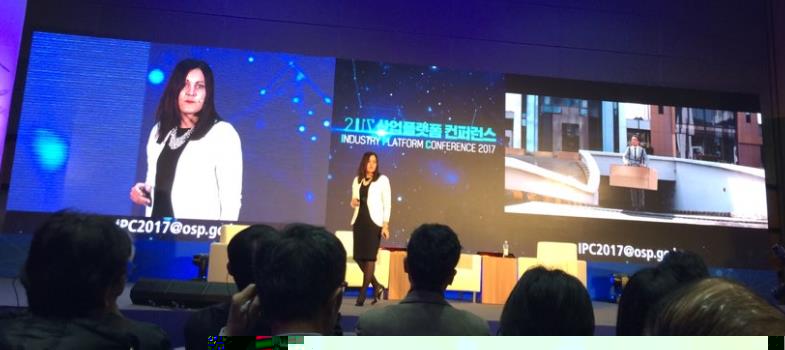
Among emerging platform companies, the mobility platform company "Uber" cannot be overlooked. Uber has grown as a technology platform that connects passengers and drivers with a single smartphone button. Currently, it provides a variety of services beyond Uber taxi, including UberShare, a commute carpooling service; UberAssist, a customized service for transportation-disadvantaged individuals; and Uber Eats for food delivery.
Emily Portvin, Uber Asia Director, stated, "Seoul citizens spend two weeks a year dealing with traffic congestion and finding parking. As cars increase, there are environmental, human, and economic costs," and added, "Uber focuses on making urban mobility convenient, safe, and fast to reach desired destinations."
Uber taxi service is offered in over 70 countries. Users can input their destination by opening the app and share the estimated arrival time with family or friends. Both drivers and passengers can rate each other, fostering mutual respect and trust. Additionally, focusing on the fact that even when using public transportation, one must travel to stations or bus stops, the service connects these points by using taxis. These services originated from consideration of how passengers, drivers, and the city as a whole can lead better lives.
Emily Portvin conveyed, "It is important to provide services when passengers need them to improve service quality. We identify urban trends based on collected data." This means anticipating and responding to supply and demand in advance when events occur in the city, such as sports games or concerts.
He stated, "Recently, we discovered that many people move in the same direction at the same time. Sharing vehicle movements can reduce negative impacts from traffic congestion," and added, "The complementary roles between vehicle sharing and public transportation are at the core of Uber."
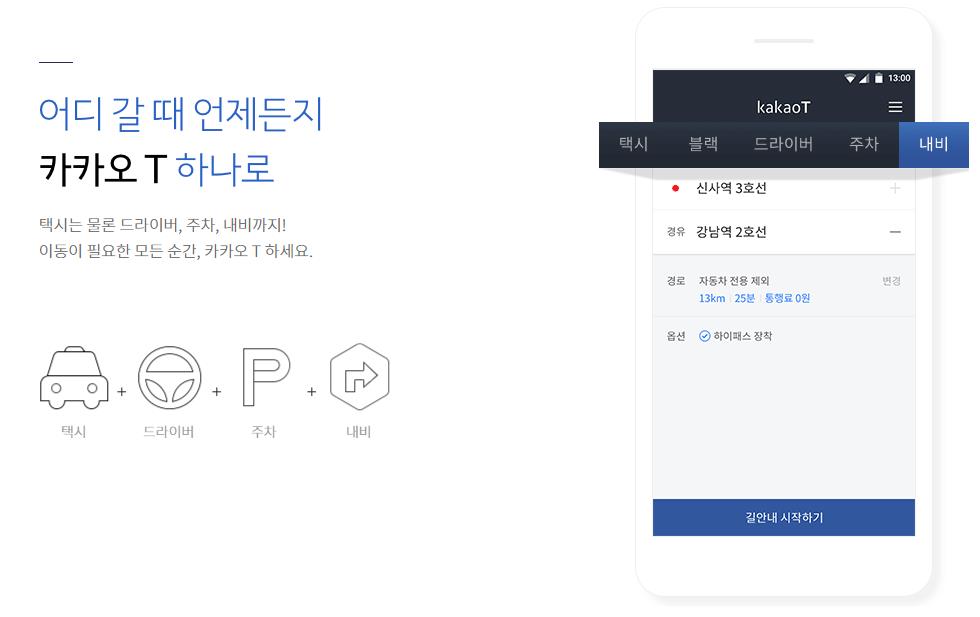
Uber taxi, used in many countries, is not yet available in Korea. Kakao Taxi serves as a domestic platform alternative. Kakao Mobility has bundled four services—Kakao Taxi, navigation, driver, and parking—into a single T app.
Ahn Gyu-jin, director of Kakao Mobility, explained, "We started to make people's movement convenient. Currently, it is limited to people's movement, but we plan to expand to goods and business mobility," explaining Kakao Mobility's services.
He stated, "Looking at Kakao Taxi data, whereas people used to call taxis from main streets in the past, now many people call taxis from indoors or alleyways," and revealed, "There were concerns about dividing the call taxi market, but as taxi demand actually increased, taxi drivers' incomes also increased."
"The driver service also had a cost-reduction effect as insurance premiums and program fees that designated drivers had to bear disappeared," he emphasized that government, companies, providers, and consumers are stakeholders in mobility services, and explained how mobility services are changing our society.
Related news

Could Amazon emerge as a dark horse in the autonomous vehicle market?
Google's autonomous vehicle company Waymo announced on Monday the 26th that it will collaborate with car rental company AVIS to utilize AVIS's garage facilities for managing autonomous vehicles and as parking space. In April of this year, Google announced that it would expand autonomous vehicle-based mobility services targeting general residents in the Phoenix area and deploy an additional 500 vehicles beyond its existing fleet to provide services.
2017.06.30by 김자영 기자
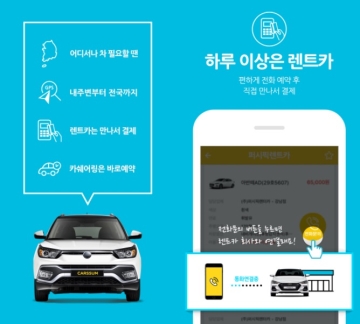
Carssum, it's the era of mobility now, so try car sharing.
Last July, Ssoca achieved a cumulative booking milestone of 10 million reservations. Not only Ssoca but car-sharing service providers such as Green Car are also seeing increased usage rates. Ha Ho-seon, CEO of Korea Car Sharing, stated, "Car-sharing has been adopted as we enter an era of low growth and shared economy," adding, "It is not simply a car rental concept but a mobile-based converged service centered on automobiles, and an era of automobile mobility will arrive." Korea Car Sharing's Carsum is realizing e-mobility through car-sharing platform development and the activation of connected rental vehicle usage. It provides corporate fleet vehicles on a B2B basis and unmanned rental car services and integrated rental car management platform services on a B2C basis. Carsum provides unmanned brokerage services for members who are rental car users and rental car operators. Existing rental car services enabled long-term rentals and non-member usage, but were based on long-distance criteria. By introducing the car-sharing concept, it has made both long-distance and short-distance usage possible. Through unmanned rental, vehicles at sales offices or parking lots can be used without time constraints, available 24 hours a day, 365 days a year.
2017.09.29by 김지혜 기자
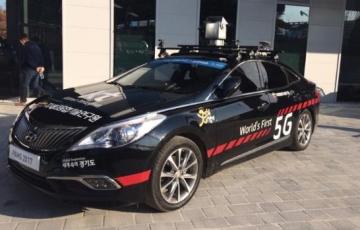
“We will make Pangyo Zero City an international standard platform”
A venue has been set up to take a comprehensive look at how far domestic autonomous driving technology has advanced. The "2017 Pangyo Autonomous Driving Motor Show," the world's first motor show dedicated to autonomous vehicles, opened on the 16th at the Enterprise Support Hub in Pangyo Zero City, Gyeonggi Province. In the autonomous driving demonstration complex being developed in Pangyo Zero City, a future-oriented innovative city free from carbon emissions, environmental pollution, accidents, and hazards, autonomous driving traffic infrastructure including an autonomous driving control center, integrated control platform, IoT system, and big data system will be established by the end of 2019. The "Zero Shuttle," a symbol of Pangyo Zero City, was unveiled on the first day of the event. The Zero Shuttle is an autonomous vehicle developed under the leadership of Gyeonggi Province's Next-Generation Convergence Technology Research Institute and operates through V2X communication technology to exchange information with the control center and road conditions in real-world road environments where regular vehicles run. Beginning in December, it will operate in a pilot program on regular roads spanning 5.5 km between Pangyo Zero City and Pangyo Station.
2017.11.16by 김지혜 기자

A single misaligned light means 'defect'… Vehicle interior lighting now guarded by semiconductors and software
Automotive interior lighting is moving beyond its role as 'auxiliary lighting.' As it becomes a core element of user experience (UX) that expresses brand identity through color and animation while reflecting driver preferences, the LED interior ambient lighting market is growing rapidly. In connection with this, we met in advance with Choi Young-jae, Research Director at Dabo Corporation, who will present a technical webinar session on "Intelligent LED Interior Lighting Solutions Illuminating Future Vehicles," to hear about market trends and changes in design requirements.
2026.08.28by 명세환 기자
TI Unveils Multi-Axis Coreless Current Sensor TMCS2100-Q1 for HEV/EV Traction Inverters
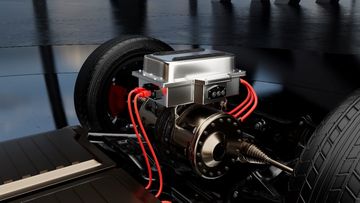
Texas Instruments has unveiled the TMCS2100-Q1, a multi-axis coreless Hall-effect current sensor for HEV and EV traction inverters. By simultaneously measuring horizontal and vertical magnetic fields through multi-axis sensing technology, it achieves up to 20 times higher accuracy compared to conventional single-axis sensors, while the busbar-unmodified design provides mechanical design flexibility. It simultaneously meets the high-accuracy requirements and miniaturization driven by the expansion of 800V architectures.
2026.08.27by 배종인 기자











