



Autonomous vehicle cooperating with road demonstrates driving test
 Published2017.11.22 11:04
'Cooperative autonomous driving' technology, in which self-driving cars communicate with road infrastructure or other vehicles to overcome dangerous situations on their own, is being unveiled for the first time in Korea.
The Ministry of Land, Infrastructure and Transport is holding an international event to demonstrate seven types of autonomous cooperative driving technologies at the Yeoju Test Road on the Jungbu Inland Expressway.
This demonstration will be attended not only by domestic researchers and industry representatives but also by government and industry officials from major developed countries, including the U.S. Department of Transportation and the European Road Transport Telematics Organization (ERTICO, the European research and supervisory body for intelligent transport systems).
Conventional autonomous driving perceived surrounding conditions based on sensors such as cameras, radar, and lidar, but it had limitations in perceiving situations arising from weather, long distances, or blind spots.
To overcome the limitations of such sensors, the core of cooperative autonomous driving technology is to receive information from road infrastructure (V2I) or other vehicles (V2V) and autonomously change direction and decelerate without human intervention.
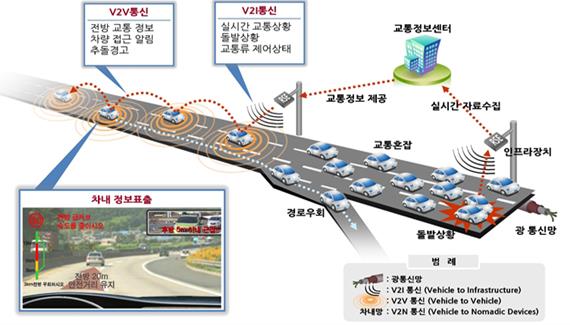
In this demonstration, we plan to show the technology of an autonomous vehicle changing lanes (avoiding) or decelerating by assuming seven situations that are difficult for the sensor to recognize while driving at a maximum speed of 80 km/h.
Situations requiring a lane change (avoidance) are: ① when there is a work zone ahead, ② when a vehicle two ahead with unseen taillights makes a sudden stop, or ③ when a broken-down vehicle (obstacle) is stopped ahead.
Situations requiring deceleration include ① when another vehicle enters from the right blind spot, ② when the road ahead is icy, and ③ when the driving lane narrows (the following vehicle(Route change), ④ Cases where another vehicle suddenly cuts in.
These technologies are the interim results of the "Smart Autonomous Cooperative Driving Road System Development Research" being promoted by the Ministry of Land, Infrastructure and Transport. Although this demonstration is being conducted on the closed Yeoju Test Road, the plan is to enable autonomous cooperative driving on general roads by 2020 when the research is completed.
If autonomous cooperative driving technology advances further in the future, future roads are expected to transform from a 'road network' serving as a mere transportation space into a 'digital network' serving as a service space, thereby realizing a 'hyper-connected society' where all vehicles, infrastructure, and people are interconnected.
Through this, traffic flow will be optimized to create roads free from traffic accidents and congestion, and a demand-driven transportation system is also expected to be introduced, allowing anyone to call and use a vehicle whenever needed.
Minister of Land, Infrastructure and Transport Kim Hyun-mee stated, “The core of the Fourth Industrial Revolution is the convergence and integration of industries and technologies, and cooperative autonomous driving technology is a prime example of this,” adding, “We expect that infrastructure will complement the limitations of sensors installed in vehicles, thereby significantly improving the efficiency and safety of autonomous driving.”
Comments
Related news
SKT Establishes Autonomous Driving Joint Research Alliance
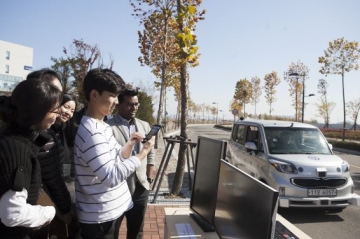
SK Telecom announced the launch of AROUND Alliance, an industry-academia-research autonomous driving joint research consortium, on October 31st with Seoul National University, Yonsei University, and Daegu Gyeongbuk Institute of Science and Technology (DGIST). AROUND Alliance was established with the purpose of sharing capabilities and infrastructure among leading companies, universities, and research institutes in the domestic autonomous driving industry to develop foundational technologies and accelerate commercialization of autonomous driving in Korea. The alliance plans to focus on ▲advancing artificial intelligence and driving perception and decision-making software for accident-free autonomous driving ▲establishing a general-purpose autonomous driving platform ▲providing major software as open source ▲talent cultivation and other initiatives.
2017.10.31by 김자영 기자
Autonomous Vehicle Sensor Technology Trends
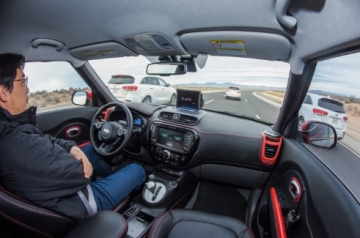
We reviewed the technology and product development trends of sensors for implementing Level 2 autonomous driving systems, which have seen rapidly growing market size in recent times, and Level 3 autonomous driving systems, whose market is expected to be formed within the next 3-5 years. We also explained the necessity of multi-sensor fusion and the development of sensor fusion platforms for implementing autonomous vehicles.
2017.11.13by 명세환 기자
“We will make Pangyo Zero City an international standard platform”
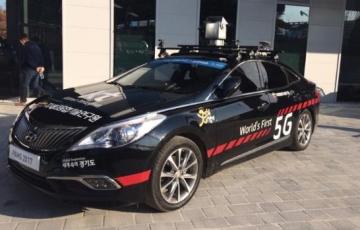
A venue has been set up to take a comprehensive look at how far domestic autonomous driving technology has advanced. The "2017 Pangyo Autonomous Driving Motor Show," the world's first motor show dedicated to autonomous vehicles, opened on the 16th at the Enterprise Support Hub in Pangyo Zero City, Gyeonggi Province. In the autonomous driving demonstration complex being developed in Pangyo Zero City, a future-oriented innovative city free from carbon emissions, environmental pollution, accidents, and hazards, autonomous driving traffic infrastructure including an autonomous driving control center, integrated control platform, IoT system, and big data system will be established by the end of 2019. The "Zero Shuttle," a symbol of Pangyo Zero City, was unveiled on the first day of the event. The Zero Shuttle is an autonomous vehicle developed under the leadership of Gyeonggi Province's Next-Generation Convergence Technology Research Institute and operates through V2X communication technology to exchange information with the control center and road conditions in real-world road environments where regular vehicles run. Beginning in December, it will operate in a pilot program on regular roads spanning 5.5 km between Pangyo Zero City and Pangyo Station.
2017.11.16by 김지혜 기자

[Technical Contribution] Caltera: "Evolution of Precision Sensing, UWB Infrastructure Enhances Parking Safety"
Discussing new possibilities in parking assistance and precision sensing with UWB, Lee Sang-min, Korea Branch Manager at Caltera.
2026.10.23by 편집부
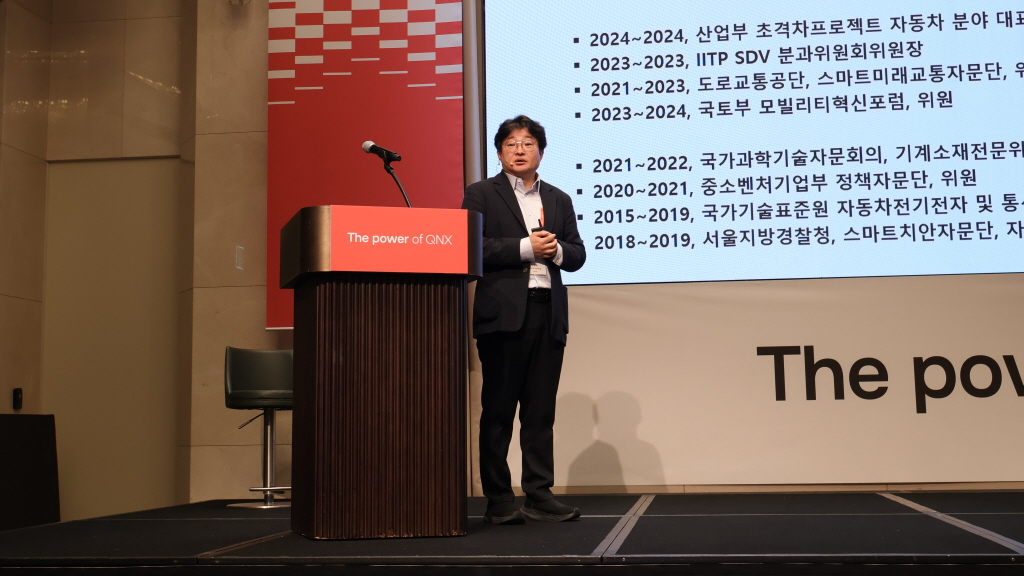
Professor Jeong Gu-min from Kookmin University, "QNX RTOS will become an important foundational technology in the physical AI era"
As software-defined vehicles (SDV) establish themselves as a new standard in the automotive industry, forecasts indicate that future competitiveness will be determined not by vehicle hardware but by software platforms and AI utilization capabilities. With the automotive industry rapidly transitioning to centralized architecture and AI-based development systems, an analysis suggests that how effectively vehicle platforms can be simplified and operated cost-efficiently will become core competitiveness for next-generation SDV and AI-defined vehicles. Professor Jeong Gu-min from Kookmin University emphasized at QNX TechForum Korea 2026 that "the automotive industry is now shifting from hardware competition to software ecosystem competition," highlighting that API-centric platforms and AI utilization will determine success or failure in the future automotive industry.
2026.10.23by 배종인 기자











