


NI Launches Test System from Radar to ADAS
 Published2017.11.27 11:39
National Instruments announced the launch of a new Vehicle Radar Test System (VRTS).
Using VRTS, engineers can test 76–81 GHz radar technology developed in R&D experiments for large-scale production testing, from individual radar sensors to advanced driver assistance systems (ADAS). VRTS is provided through NI Alliance Partners that offer advanced system integration and support.
VRTS combines NI's mmWave front-end technology, PXI vector signal transceiver (VST), and application-specific software. Additionally, unlike conventional automotive radar simulators that can only generate static obstacles for functional operation testing, VRTS is equipped with a 76–81 GHz vector signal generator/analyzer designed for dynamic obstacle generation and comprehensive RF characteristic measurement.
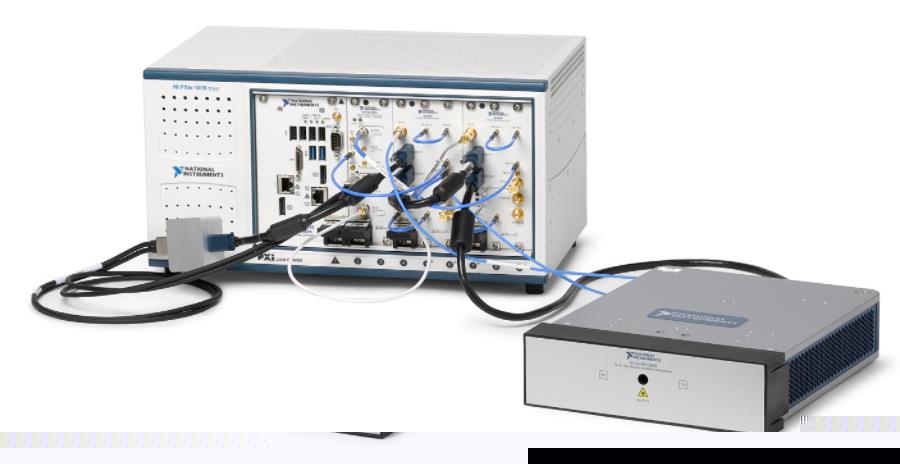
By employing a more comprehensive approach to radar testing that includes both conventional test techniques and Hardware-in-the-Loop (HIL) test methods, engineers can deliver more robust autonomous driving technology and comply with evolving regulatory requirements.
NI plans to deploy VRTS through specialized VRTS partners including Hirain Technologies, Konrad Technologies, Linktron, and Noffz Computer Technik. VRTS specialized partners provide advanced radar test software and systems customized to precisely meet customer requirements.
Michael Konrad, founder and CEO of Konrad Technologies and co-founder of the ADAS IIT (Innovation in Test) Consortium, stated, "With VRTS, Konrad can configure industry-leading ADAS test systems and improve vehicle safety and reliability. Through PXI's advanced synchronization capabilities combined with LabVIEW's ease of use, we can also simulate cutting-edge sensor fusion environments integrated with GNSS, radar, camera, and lidar."
VRTS boasts a wide support range, from a basic configuration capable of emulating 2 obstacles to a precision configuration capable of emulating 4 independent obstacles in a single PXI chassis. Key characteristics of VRTS include speed simulation up to 250 km/h including Doppler effect, near-field obstacle emulation as close as 4 m, obstacle resolution as fine as 10 cm, multi-angle support, and variable radar across sections. VRTS includes both object simulation functionality and a radar measurement product suite.
Furthermore, by leveraging VRTS's software flexibility, a wide range of environments can be simulated from pedestrians crossing roads to lane-change driving scenarios. The software flexibility of VRTS is a key advantage of this system, enabling engineers to easily adapt to the rapidly changing regulatory environment.
Related news
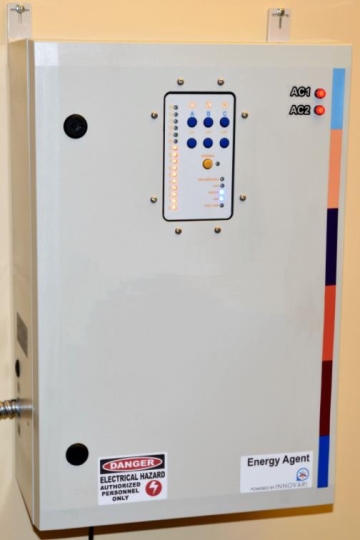
NI and Innovari Sign Technology Agreement to Increase Grid Operations Utilization and Reduce Costs
National Instruments announced that it has entered into a technology partnership with Innovari to support public utilities worldwide in improving system utilization rates, effectively managing distributed energy resources, and enhancing relationships among customers, local communities, and regulatory agencies. Innovari's IEP (Interactive Energy Platform) uses NI technology-based grid edge hardware, artificial intelligence, big data analytics, and proprietary optimization routines to deliver sufficient capacity and meet grid requirements. KCP&L (Kansas City Power & Light) has adopted a forward-looking strategy that views grid edge resources as an opportunity rather than a threat and regards users as partners rather than mere billing customers. KCP&L stated that it implemented the IEP solution because IEP technology provides real-time, deep situational awareness information to the grid, supporting performance optimization by reducing the likelihood of outages and shortening outage duration. National Instruments announced that it has entered into a technology partnership with Innovari to support public utilities worldwide in improving system utilization rates, effectively managing distributed energy resources, and enhancing relationships among customers, local communities, and regulatory agencies. Innovari's IEP (Interactive Energy Platform) uses NI technology-based grid edge hardware, artificial intelligence, big data analytics, and proprietary optimization routines to deliver sufficient capacity and meet grid requirements. KCP&L (Kansas City Power & Light) has adopted a forward-looking strategy that views grid edge resources as an opportunity rather than a threat and regards users as partners rather than mere billing customers. KCP&L stated that it implemented the IEP solution because IEP technology provides real-time, deep situational awareness information to the grid, supporting performance optimization by reducing the likelihood of outages and shortening outage duration.
2017.11.06by 김지혜 기자
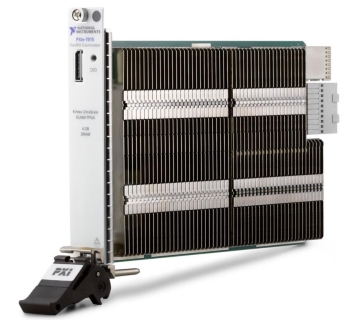
NI Launches PXI FlexRIO Architecture with Xilinx KINTEX UltraScale Technology
National Instruments has announced a new model of PXI FlexRIO architecture that integrates mezzanine I/O modules with Xilinx Kintex UltraScale FPGA. The first product lineup based on this new architecture includes two high-resolution PXI FlexRIO digitizers, three dedicated PXI FlexRIO coprocessor modules, and a module development kit that enables customized front-end implementations.
2017.11.09by 김지혜 기자
NI Releases Data-Verifiable Management Software
National Instruments announced the launch of its Data Management Software Suite. This enterprise software solution provides a complete workflow to standardize measurement data across all teams, mine data to obtain useful information, transform data through automated analysis, and deliver reports containing key insights. Dave Wilson, Vice President of NI Platform Software, stated, "The volume of data collected for device testing, physical asset monitoring, and product design analysis continues to grow explosively. As the amount of collected data increases exponentially, it is necessary to establish repeatable automated processes to derive critical insights. Since data inconsistencies and errors often lead to incorrect results, engineers must manually inspect and validate all data before sending it to manual or automated analysis processes."
2017.11.20by 김지혜 기자

Intel Unveils Next-Generation 'Core Ultra Series 3' and vPro Platform for Enterprise PCs
Intel has officially unveiled the "Intel Core Ultra Series 3" for next-generation enterprise PCs and the latest vPro platform, addressing a wide range of demands from enterprise notebooks to high-performance workstations.
2026.03.26by 배종인 기자
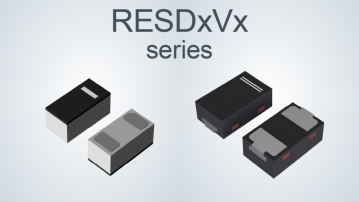
ROHM Launches ESD Protection Diode Compatible with High-Speed Interfaces of 10Gbps or Higher
Semiconductor specialist ROHM has developed the 'RESDxVx series' of ESD (electrostatic discharge) protection diodes capable of responding to next-generation high-speed data communication environments exceeding 10Gbps, simultaneously enhancing both signal quality maintenance required in high-speed interfaces and IC protection performance.
2026.03.26by 배종인 기자











