



Making it the 'standard' for a sustainable future society
 Published2017.12.08 16:58
A new standardized governance system is needed for sustainable growth
International standards are necessary to minimize the uncertainty of the Fourth Industrial Revolution, where boundaries between all fields, including physical and digital, are becoming blurred.
The Fourth Industrial Revolution is unfolding faster than any previous revolution. Changes are occurring not only in positive aspects such as technological advancement but also in negative aspects, such as social inequality and deepening polarization, as well as in unpredictable areas. In this uncertain environment, the role of standards is to ensure interoperability and provide certainty. There is a growing consensus that the decentralized standardization system must be innovated and measures must be devised to link R&D with standards.
Accordingly, the 'International Forum on the 4th Industrial Revolution' was held under the auspices of Representative Kim Tae-nyeon and the Korean Standards Association. A panel discussion took place on the topics of standardization policies for a sustainable society, innovation measures for the standardization system, and standards-based smart cities.
First, John Walter, the incoming President of the International Organization for Standardization (ISO), explained the importance of standards, stating, “Standards are spreading across society, including smart manufacturing, intelligent transportation systems, personal robots, cybersecurity, and smart cities,” and added, “Some governments must establish standardization elements.”
Kang Byung-gu, Director General of the Standard Policy Bureau at the Korean Agency for Technology and Standards, stated, “New technologies and R&D for new technologies are important in the future,” adding, “We must consider whether we can bring technologies developed using past methods into the market.” He emphasized that standards and R&D must be linked, stating that standards are necessary for technology to enter the market.
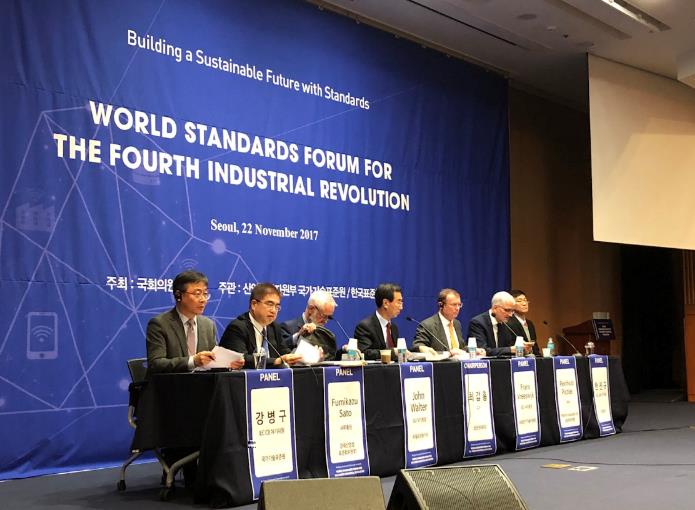
The impact of the Fourth Industrial Revolution will spread economically, environmentally, and socially. In this regard, what role will standards play for sustainable growth?
Franz Bryswijk, Secretary General of the International Electrotechnical Commission (IEC), stated that technology is a prerequisite for social development. He explained that environmental issues, such as carbon footprints, renewable energy, and energy efficiency, can act as obstacles to technological advancement and cause social conflict. Accordingly, he expressed the opinion that it is necessary to create a social platform to discuss these issues.
Kang Byung-gu, Director of the Policy Bureau, pointed out, “Korea has only talked about industrial development and has not considered the role of standards in resolving social conflicts,” adding, “It is time for standards to play an important role for the socially vulnerable, anti-corruption systems, and a safe society, without being trapped in past paradigms.”
Internationally, organizations responsible for establishing standards include the International Organization for Standardization (ISO), the International Electrotechnical Commission (IEC), and the International Telecommunication Union (ITU). Opinions have been raised regarding the need to define the roles of these standardization bodies and establish strong standards governance.
Director Kang stated, “In the past, products and services were separate, but now services are integrated into every product, and various technologies are incorporated into a single product. Even automobiles contain mechanical, electronic, and communication devices,” adding, “It is problematic to maintain the same perspective as before. The system for creating standards must also change.” "We must establish a new standardized governance system suited to change," he said.
Secretary General Franz Bryzwijk also agreed with the view that a governance system needs to be established. “Since the structured methods differ from country to country, there must be a consultative body,” he said, adding, “Because a method that worked in one country is not necessarily suitable for another, it needs to be discussed in an integrated manner.”
A group leader also expressed agreement, explaining, “In the new era, industries meet. Different industries mean different goals,” and added, “For industries to collaborate, a new form of collaboration system is required. In this context, it will serve as a tool that enables groups with differing interests to collaborate.”
Standards must be included from the smart city design stage.
The ultimate goal of the Fourth Industrial Revolution will be the smart city. This is because a smart city is a project that integrates various technologies and industries, including energy, mobility, healthcare, education, technology, and security. Accordingly, what is the role of standards in the realization of smart cities?
The solution to the problem of rapid urban population growth is also the smart city. Its construction is possible only if the interoperability of the city's systems is guaranteed. Regarding this, a group leader emphasized, “A smart city is a case where various industries are converged. Since large-scale infrastructure is being built, there are inevitably some losses, and preventing this is what global standards are,” adding, “When applying advanced technology, we must ensure that it becomes a continuously meaningful investment. When designing a smart city, global standards must be kept in mind from the initial investment stage.”
Secretary General Franz Brizwijk said, “We need to look at the big picture overall.” "Ultimately, a smart city is about making people's lives smarter and becoming a sustainable society," he said, adding that "standards must be included in the design of each component, such as the environment and society."
Starting with this forum, it will be regularized as an international forum involving ISO, IEC, leading nations of the Fourth Industrial Revolution, and target countries for the export of core technologies. Jeong Dong-hee, Director General of the Korean Agency for Technology and Standards, stated, “We will establish a standardization roadmap and promote international standardization to secure global market competitiveness for promising new industries such as smart cities and autonomous vehicles.”
관련뉴스
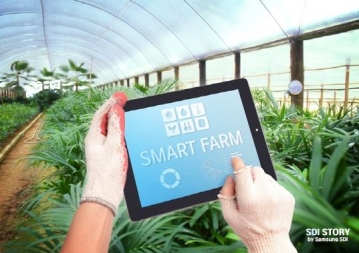
[Smart Farm] "We will make farming a happy experience for those returning to the countryside" through agricultural standardization.
There is a joke that goes, "If there are 4.5 million farmers, there are 4.5 million farming methods." This speaks to how different each individual farmer's approach is. This is also why urban farmers dreaming of returning to agricultural life often face 'discrimination' when settling in rural areas. Park Heun-dong, director of research at FarmCloud, stated, "Through standardization of farming methods, we will enable those returning to farming to establish themselves without difficulty." This was at a conference held on the 19th by the Ministry of Science and ICT regarding the IoT open platform-based development verification support infrastructure construction project. The ICT convergence Korean-style smart farm development strategy currently presented by the Rural Development Administration consists of three generations. ▲The first generation links sensors and smartphones to allow viewing of greenhouses from outside. It displays sensors and controllers through video. ▲The second generation adds big data analysis to first-generation farm technology to provide intelligent prescriptions. It applies complex environmental control to measure the atmospheric environment inside and outside the greenhouse and applies intelligent control algorithms, supporting decision-making through cloud services. ▲The third stage involves standardizing components through complex energy management and robot introduction, reaching a level where the platform can enter the global market.
2017.09.20by 김자영 기자

“We will make Pangyo Zero City an international standard platform”
A venue has been set up to take a comprehensive look at how far domestic autonomous driving technology has advanced. The "2017 Pangyo Autonomous Driving Motor Show," the world's first motor show dedicated to autonomous vehicles, opened on the 16th at the Enterprise Support Hub in Pangyo Zero City, Gyeonggi Province. In the autonomous driving demonstration complex being developed in Pangyo Zero City, a future-oriented innovative city free from carbon emissions, environmental pollution, accidents, and hazards, autonomous driving traffic infrastructure including an autonomous driving control center, integrated control platform, IoT system, and big data system will be established by the end of 2019. The "Zero Shuttle," a symbol of Pangyo Zero City, was unveiled on the first day of the event. The Zero Shuttle is an autonomous vehicle developed under the leadership of Gyeonggi Province's Next-Generation Convergence Technology Research Institute and operates through V2X communication technology to exchange information with the control center and road conditions in real-world road environments where regular vehicles run. Beginning in December, it will operate in a pilot program on regular roads spanning 5.5 km between Pangyo Zero City and Pangyo Station.
2017.11.16by 김지혜 기자
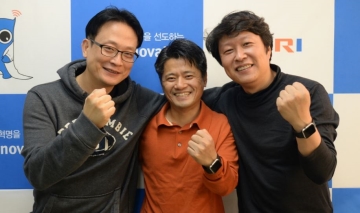
ETRI Approves International Standard to Promote Big Data Distribution
The Korea Electronics and Telecommunications Research Institute (ETRI) announced that it received approval for an international standard to promote the distribution and activation of big data at an International Telecommunication Union (ITU) standardization conference held in Geneva, Switzerland last month. The institute also announced that it achieved results by proposing and having two new agenda items adopted in the big data and cloud computing fields. ETRI explained that the 'Big Data Exchange Framework and Requirements (ITU-T Y.3601)' standard, which it has led development of for the past three years, received final approval at the Future Networks standardization research group (SG13) standardization conference. The standard was achieved with the participation of Lee Gang-chan, head of the Service Standards Research Department, and Ren Min-jiao, principal research engineer, since ETRI principal research engineer Ha Su-wook took on the role of editor starting in 2015.
2017.11.30by 김지혜 기자
Nvidia invests $5 billion in Intel
NVIDIA and Intel, leaders in global AI computing technology, are now forging ahead in providing cutting-edge solutions through NVLink-based architecture integration. NVIDIA and Intel have officially announced a strategic partnership and stated that they will jointly develop customized data center and personal computing products to accelerate diverse applications and workloads ranging from hyperscale to enterprise and consumer markets, thereby laying the foundation for the next generation computing era.
2025.09.22by 배종인 기자
.jpg)
Applied Materials Launches Environmental Protection Campaign to Mark World Cleanup Day
Applied Materials Korea (CEO Park Kwang-seon) is carrying out environmental cleanup activities with employees and their families around the Dongtan Sinricheon area on the occasion of World Cleanup Day, evolving into a company that engages with the local community beyond technological innovation.
2025.09.22by 명세환 기자











