

.png)

Veritas Announces '2018 Data Management Outlook'
 Published2017.12.18 11:47
Veritas Technologies announced its '2018 Data Management Outlook'.
With the volume of data skyrocketing, IT environments becoming increasingly complex such as multi-cloud and on-premises systems, and compliance requirements like the General Data Protection Regulation (GDPR) becoming stricter, the systematic protection and management of corporate data is becoming increasingly important.
Veritas predicted for 2018 that: ▲ IT departments will face increased pressure regarding cloud data management and cost reduction; ▲ data storage growth will slow despite a surge in data; ▲ the first GDPR-violating company will emerge; ▲ data management will evolve to the next level due to the influence of analytics; and ▲ data breaches will become more serious.
Outlook 1. IT departments will face increasing burden regarding cloud data management and cost reduction.
According to the 'Truth in Cloud 2017' report by Veritas, which surveyed the status and perceptions of cloud adoption by companies worldwide in 2017, 69% of companies responded that cloud service providers are responsible for data protection, privacy, and compliance. Due to this misconception among companies regarding their responsibility for cloud data management, the likelihood of future data breaches is expected to increase. Furthermore, as many companies indiscriminately adopt multiple cloud services without considering costs, corporate IT departments are projected to face serious cost issues in 2018. IT departments are becoming aware of their responsibilities regarding cloud management through incidents such as data breaches, and corporate Chief Financial Officers (CFOs) are expected to demand infrastructure cost reductions from the IT department.
Outlook 2. Data Storage Growth to Stag Despite Data Surge
Last year, the annual data growth rate surged to 48.7%, leading to rapid accumulation of data in corporate storage. However, it was found that more than half of the files actually stored in corporate systems were "unknown" files. In 2018, it is projected that companies will shift away from the so-called "data storage-first" approach—which involves storing data unconditionally—to a storage strategy that identifies and stores only the data providing valuable insights or mission-critical information. (Source: Veritas Data Genomics Index 2017 report)
Outlook 3. The first GDPR-violating company will emerge
The General Data Protection Regulation (GDPR) will come into effect on May 25, 2018. Despite the imminent implementation of the GDPR, the 'Veritas 2017 GDPR Report: Chapter 2' indicates that only 31% of the companies surveyed by Veritas are complying with the GDPR. As penalties, such as fines, become inevitable for companies violating GDPR regulations, this is expected to have a significant impact on businesses that monitor the behavior of data subjects residing in the EU, such as by providing goods or services or tracking purchasing habits.
Outlook 4. Data management will evolve to the next level due to the influence of analytics.
Moving forward, advancements in analytics technology are expected to enable archiving, backup, and storage management to go beyond simple "capacity expansion." Companies can automate policy enforcement using new data evaluation techniques powered by artificial intelligence (AI) and transform their internal data lifecycle management through more intelligent data management. Furthermore, by leveraging existing repositories, companies are expected to uncover new data discoveries, sales initiatives, and insights for customer experience across various fields.
Forecast 5. Data leaks will become more serious
According to the Identity Theft Resource Center (ITRC), a total of 1,093 data breaches occurred in 2016, marking a 40% increase compared to 2015. As of July this year, the number of breaches has already surpassed that of 2016, indicating a further upward trend in corporate data breaches. Therefore, companies appear to need to establish simple yet integrated solutions capable of regularly protecting and backing up corporate workloads in complex environments, such as cloud and on-premises systems, while simultaneously safeguarding their entire infrastructure. Furthermore, as ransomware targeting both existing and new workloads becomes more sophisticated, it is projected that it will be crucial for companies to build and protect agile, intelligent, and scalable infrastructure.
관련뉴스
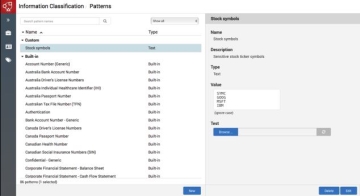
베리타스, 지능형 데이터 관리를 위한 통합 분류 엔진 발표
베리타스테크놀로지스가 온프레미스와 클라우드 환경의 데이터 리스크에 대한 강력한 인텔리전스를 제공하는 신기술 ‘통합 분류 엔진(Integrated Classification Engine)’을 발표했다. 오늘날 기업들은 급증하는 비정형 데이터에 대한 가시성을 확보하고 인사이트를 얻는데 어려움을 겪고 있다. 이메일, 문서, 이미지 파일과 같은 비정형 데이터로 인해 기업들은 잠재적인 보안 취약점과 개인 식별 정보(PII) 유출 위험에 노출된다.
2017.08.01by 김자영 기자
Veritas Announces Data Management Solutions for Microsoft Azure Customers
베리타스테크놀로지스가 베리타스와 마이크로소프트 애저(Microsoft Azure) 고객을 위한 새로운 360 데이터 관리 솔루션을 발표했다. 고객은 애저가 제공하는 유연성 및 민첩성과 함께 베리타스 데이터 관리 기능을 통해 비용 절감, 컴플라이언스 보장, 가시성 강화, 워크로드 마이그레이션 간소화 등 다양한 혜택을 누릴 수 있게 됐다. 또한 데이터에서 더 큰 가치를 창출해 보다 우수한 비즈니스 성과를 거둘 수 있다. 마크 러시노비치(Mark Russinovich) MS 애저 부문 최고기술책임자(CTO)는 “베리타스와 MS의 솔루션을 함께 사용하는 고객은 베리타스 360 데이터 관리 플랫폼의 신뢰할 수 있는 툴셋과 결합한 애저 클라우드의 유연성과 민첩성 두 가지 혜택을 모두 누릴 수 있다”며, “고객은 데이터로부터 더 큰 가치를 창출하면서 이러한 오퍼링을 이용해 하이브리드 클라우드 환경을 최적화할 수 있다”고 말했다.
2017.09.20by 김지혜 기자
Veritas Launches Data Classification Platform
베리타스테크놀로지스가 데이터 분류 기능이 포함된 최신 e디스커버리 플랫폼(eDiscovery Platform)을 발표했다. 기업의 컴플라이언스 및 조사팀은 새롭게 추가된 데이터 분류 기능을 활용해 컴플라이언스 준수를 보장함으로써 대규모 과징금을 피하고 기업 명성 리스크를 최소화할 수 있으며, 기업은 개인식별정보(PII)와 정보 접근 요청(Subject Access Request)을 관리할 수 있다. 정보 접근 요청 대비는 GDPR 컴플라이언스 전략의 핵심 요소로, 기업들은 GDPR에 대비하기 위해 다각도로 노력하고 있다. 최근 발표한 ‘베리타스 2017 GDPR 보고서: 3장’에 따르면, 전 세계의 많은 기업들이 전사적으로 새로운 법규를 준수하기 위한 문화를 조성하기 시작했다.
2017.12.12by 김지혜 기자
.jpg)
SalePoint Signs Multi-Year Partnership Agreement with AWS… Promoting Identity Security that Integrates Even AI Agents
Sailpoint has entered into a multi-year strategic partnership agreement with AWS and is moving forward with establishing an integrated governance system that manages both human and non-human identities together. The plan is to consistently manage access permissions in an environment where AI agents are increasing as work execution entities, while applying the principle of least privilege and automated policy enforcement. The two companies plan to jointly expand capabilities to manage the identities of various entities, including AI agents, within a single layer in the AWS environment. This collaboration is interpreted as a move to design security and governance together in corporate environments where AI adoption is expanding.
2026.03.26by 배종인 기자
.png)
Databricks Unveils Open AI Security Monitoring 'Lakewatch'
Databricks entered the security market on March 24 by unveiling LakeWatch, an open-source agentic SIEM. The core functionality of this product is to integrate and analyze security, IT, and business data in a single environment to support AI-based threat detection and investigation. The company explained that it reduces the limitations of existing security operations centers, which have had to forgo some data due to high cost structures, and enables large-scale data analysis and automation based on open formats and ecosystems. LakeWatch is currently offered as a private preview, with Adobe and Dropbox mentioned as early customers. Databricks also announced an expanded partnership with Anthropic as well as the acquisition of Antimatter and SiftD.ai.
2026.03.26by 배종인 기자











