

.png)

NI Supports MAC Layer in 802.11 Application Framework to Advance 5G Research
 Published2017.12.20 11:29
National Instruments announced that it supports the MAC layer for the LabVIEW Communications 802.11 Application Framework.
When wireless researchers leverage this new multi-user MAC layer enhancement capability for the 802.11 Application Framework and move beyond the PHY layer, they can address complex network-level issues that must be resolved to realize the 5G vision.
With 5G, unprecedented services and diverse use cases such as autonomous vehicles, smart factories, and remote healthcare will emerge. While most of these applications are delivered through mobile communication links, many applications are also provided through Wi-Fi-based private networks. In 5G, protocols for both licensed and unlicensed spectrum bands will be combined.
To provide Wi-Fi and 5G cellular services in a more optimized manner, wireless researchers must address numerous challenges. One of them is 5G network slicing performance, which seamlessly provides end-to-end coordination across diverse radio access technologies. By pairing the 802.11 Application Framework with NI software-defined radio hardware, wireless researchers can rapidly conduct network-level, real-time, over-the-air (OTA) prototyping experiments for diverse Wi-Fi and 5G MAC/PHY research.
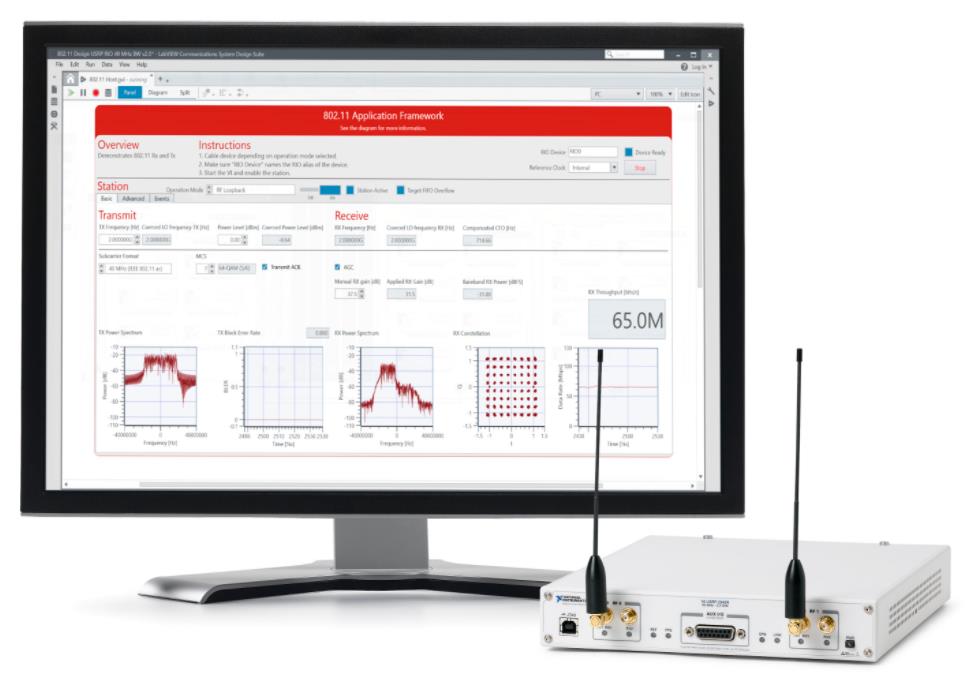
Additionally, the 802.11 Application Framework supports real-time bandwidth up to 80MHz and full-duplex communication, and includes MAC layer functions such as CSMA/CA, RTS, CTS, NAV, and retransmission. Since the MAC layer is implemented based on FPGA, the 802.11 Application Framework meets the stringent timing requirements of the 802.11 technical specification, constituting a perfect real-time solution. Through these new capabilities, users can utilize the 802.11 Application Framework to conduct diverse Wi-Fi experiments. Additionally, in a much shorter time compared to other approaches, custom signal processing algorithms and MAC layer protocols can be perfectly integrated.
Wireless researchers at Texas A&M University in the United States, participating in NI's RF/Communications Lead User Program, use NI's flexible prototyping solution to implement and validate new MAC layer algorithms. These algorithms can enhance the performance of Wi-Fi, WiGig, and 5G protocol stacks operating in the unlicensed spectrum band.
P. R. Kumar, IEEE member and Dean of the College of Engineering at Texas A&M University, stated, "The efficiency of MAC protocols is critical to wireless network performance," and added, "Our research team has continuously studied MAC protocols to accommodate increasingly dense wireless deployments while meeting system performance requirements for next-generation wireless networks. However, for these protocols to gain credibility, they must be implemented in hardware. NI's 802.11 Application Framework provides the tools necessary to experimentally validate the performance of MAC protocols under real-world conditions."
Related news
NI Announces PXI Chassis Providing Cooling with 58W Dedicated Power Per Slot
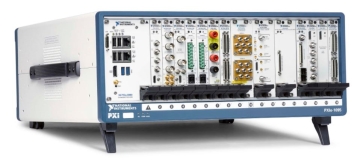
National Instruments announced the PXIe-1095, the industry's first PXI chassis offering dedicated power performance and cooling capability of 58 W per slot. This represents a 50% improvement in power performance and cooling capability per slot compared to the previously released NI PXI Express chassis. Beyond the increased power performance, the fan noise in the 38 W cooling profile mode is recorded at 13 dB, significantly lower than the existing PXIe-1085 chassis, earning it recognition as NI's quietest PXI Express chassis. Steve Warntjes, Vice President of R&D for Modular Instrumentation at NI, stated, "With the PXIe-1095 delivering 58 W power performance and cooling capability across all slots, NI can extend the PXI platform to meet even the most demanding measurement requirements of our customers." He added, "This new chassis not only provides enhanced power and cooling capabilities to FPGA processing applications that suffer from power constraints, but also offers scalability for high power requirements for next-generation PXI modules."
2017.11.29by 김지혜 기자
NI Launches IP67 Edge Node for Industrial IoT
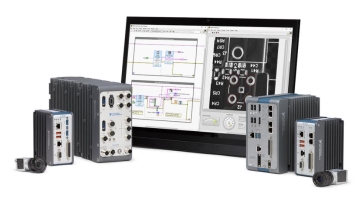
National Instruments has announced the launch of the IC-3173 industrial controller, which carries an IP67 rating. The new controller is suitable for performing as an industrial IoT edge node without protective enclosures in non-particulate-generating manufacturing environments, test cells, outdoor settings, and other extremely harsh conditions. The IP67 rating, which complies with IEC standard 60529, ensures reliable operation even in dusty and humid environments. This industrial controller is a high-performance fanless device that delivers high-level processing capability and connectivity performance for automated image processing, data collection, and control applications in extreme environments. The fanless, rugged design is equipped with an Intel Core i7 dual-core processor up to 2.2 GHz, 8 GB DDR3 RAM, 64 GB storage, four PoE GigE ports, two USB 3.0 ports, and two DisplayPorts, while supporting up to IP67 rating reliability.
2017.12.06by 김지혜 기자
Development of 'Real-Time Flex-Duplex' Technology Applicable to 5G Communication Systems Using NI Solutions
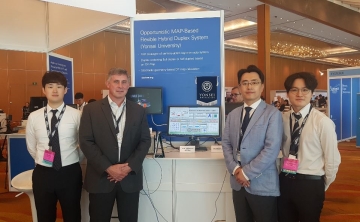
National Instruments announced that domestic research teams have developed 'Real-Time Flex-Duplex Radio' technology applicable to 5th generation (5G)/Beyond 5th generation (B5G) communication systems using NI solutions for the first time in the world. The research team led by Professor Kim Sung-ryun and Professor Chae Chan-byung from Yonsei University showcased this real-time flex-duplex technology at the NI booth during 'IEEE GLOBECOM 2017' held in Singapore from December 4-8.
2017.12.11by 김지혜 기자
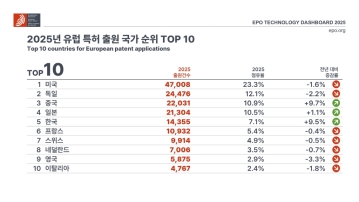
European Patent Applications Surpass 200,000 for the First Time… South Korea Maintains 5th Place, Led by Batteries and Telecommunications
According to the European Patent Office (EPO)'s 'Technology Dashboard 2025', European patent applications last year reached 201,974, surpassing 200,000 for the first time. Korean companies and inventors filed 14,355 applications, representing a 9.5% increase from the previous year and maintaining 5th place by country. Battery, digital communication, and semiconductor technologies led the growth, with Samsung ranking as the top EPO applicant for the second consecutive year and LG reaching 3rd place. The presence of major domestic cities such as Seoul, Suwon, and Yongin was also confirmed. It was also revealed that Korea's European patent strategy is expanding beyond individual technologies to span the entire industry.
2026.03.24by 명세환 기자

SK Telecom First Applies AI-Based Network Operations at Gwanghwamun K-Pop Concert
SK Telecom announced that it applied an AI-based network operation system for the first time at a large-scale K-pop concert held in the Gwanghwamun area of Seoul on March 21st, managing communication quality throughout the event. Mobile data usage during the three hours before and after the concert reached 12.15TB, approximately doubling compared to the same time slot the previous weekend. SK Telecom monitored traffic using the AI system 'A-One' in five-minute and 50-meter units to respond to potential overload situations, while also operating temporary communication facilities and on-site personnel in parallel. This case is interpreted as confirmation of the practical applicability of AI-based autonomous network operation in an environment where demand from dense events and foreign users increases simultaneously.
2026.03.23by 명세환 기자











