


Altera and TSMC Jointly Develop World's First Heterogeneous 3D IC Test Vehicle Using CoWoS™ Process
 Published2012.03.23 11:02
Altera has become the first semiconductor company to develop and characterize a heterogeneous test vehicle using TSMC’s CoWoS process. This test vehicle, along with additional test vehicles, enables Altera to rapidly test the functionality and reliability of 3D ICs to ensure that they meet yield and performance targets. Combining TSMC’s CoWoS process with Altera’s leading silicon and intellectual property (IP) expertise provides the technology foundation for rapid, low-cost development of heterogeneous 3D ICs.
Altera aims to develop a variety of device products that allow customers to mix and match silicon IPs according to their individual application needs in relation to heterogeneous 3D ICs. Based on its advanced technology accumulated in the FPGA field, Altera aims to integrate various technologies such as CPUs, ASICs, ASSPs, memories, and optical devices into FPGAs. Alera’s 3D ICs will enable customers to differentiate their applications by leveraging the flexibility of FPGAs while maximizing system performance, minimizing system power, and reducing form factor and system cost.
“Our partnerships with standards bodies such as IMEC and SEMATECH, and our use of TSMC’s advanced CoWoS manufacturing and assembly processes, position us well to deliver on our strategy to deliver heterogeneous 3D devices with critical features to our customers faster than anyone else,” said Bill Hata, senior vice president of worldwide operations and engineering at Altera. “By enabling heterogeneous 3D capabilities in our devices, we can continue to drive technology innovation and advance the pace of Moore’s Law.”
“Our relationship with Altera goes back nearly two decades, and during that time, we have worked closely together to develop cutting-edge manufacturing processes and semiconductor technologies,” said Rick Cassidy, president of TSMC North America. “Working with Altera to develop these next-generation 3D ICs is another example of how our two companies’ close collaboration is enabling the next level of semiconductor technology.”
CoWoS is an integrated process technology that uses the chip-on-wafer (CoW) bonding process to attach device silicon chips to wafers. By attaching this CoW chip to the substrate (CoW-On-Substrate), the final device component is completed. CoWoS technology prevents warpage caused during manufacturing by attaching device silicon to the original thickness wafer silicon and completing the manufacturing process. TSMC plans to provide CoWoS as a turnkey manufacturing service.

관련뉴스
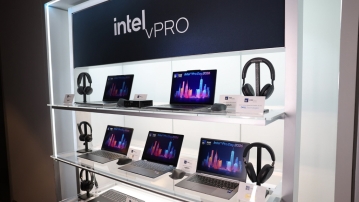
Intel Unveils Next-Generation 'Core Ultra Series 3' and vPro Platform for Enterprise PCs
인텔이 차세대 기업용 PC를 위한 ‘인텔 코어 Ultra 시리즈 3’와 최신 vPro 플랫폼을 공식 발표하며, 기업용 노트북부터 고성능 워크스테이션까지 폭넓은 수요 충족에 나섰다.
2026.03.26by 배종인 기자
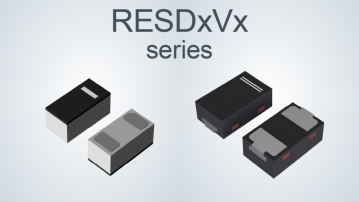
ROHM Launches ESD Protection Diode Compatible with High-Speed Interfaces of 10Gbps or Higher
반도체 전문 기업 로옴(ROHM)이 10Gbps를 넘어서는 차세대 고속 데이터 통신 환경에 대응할 수 있는 ESD(정전기 방전) 보호 다이오드 ‘RESDxVx 시리즈’를 개발하며, 고속 인터페이스에서 요구되는 신호 품질 유지와 IC 보호 성능을 동시에 끌어올렸다.
2026.03.26by 배종인 기자
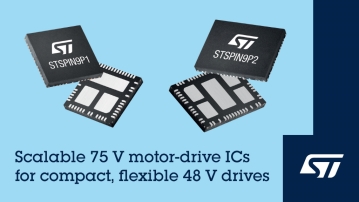
ST Launches 75V Drive IC Targeting 48V Industrial Motor Driving
ST마이크로일렉트로닉스가 48V급 산업용 구동 시스템 설계에 맞춘 75V 모터 드라이브 IC ‘STSPIN9P’ 시리즈를 공개했다. 새 제품군은 하프 브리지와 풀 브리지 구조로 구성돼 모터 종류와 출력 조건에 따라 설계를 확장할 수 있도록 한 것이 특징이다. 전원 회로와 보호 기능, 전류 감지 회로를 칩에 통합해 시스템 구성을 단순화했으며, 최대 500W급 애플리케이션까지 대응하도록 설계됐다. 회사는 레퍼런스 디자인과 데모 보드도 함께 제공해 산업 자동화, 로보틱스, 펌프, 팬, 조명, 섬유 기계 등에서 개발과 평가를 지원할 계획이다.
2026.03.26by 배종인 기자
Nordic supports security updates for the entire lifecycle of IoT devices at a single fixed cost
Nordic Semiconductor, a global leader in low-power wireless connectivity solutions, has unveiled a single fixed-cost licensing model that delivers FOTA (Firmware Over-the-Air) and device management capabilities throughout the device lifecycle via nRF Cloud, and introduced a new firmware update solution to prepare for the enforcement of the European Union's Cyber Resilience Act (CRA).
2026.03.26by 배종인 기자
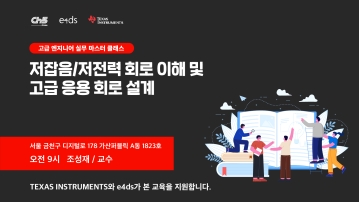
Practical Training in Low-Noise, Low-Power Circuit Design All in One Place… Training Fee Support
고감도 아날로그 회로와 센서 기반 시스템 설계 역량을 강화할 수 있는 ‘2026 고급 엔지니어 실무 마스터 클래스’가 오는 4월16일 서울 가산동 e4ds 컨퍼런스 센터에서 열린다. 이번 과정은 온라인이 아닌 오프라인 유료 실습 교육으로 진행되며, 현장 중심의 심화 학습을 원하는 엔지니어를 대상으로 한다. 이번 교육은 텍사스 인스트루먼트(Texas Instruments)가 교육비를 지원해 정가 25만원에서 10만원 할인 된 15만원에 참가할 수 있다.
2026.03.26by 배종인 기자











