



ETRI Develops Corrosion-Free Flexible Neural Electrode In Vivo
 Published2017.12.22 09:02
Successfully developed a flexible neural electrode that does not corrode in vivo, can measure neural signals over extended periods, and efficiently deliver electrical stimulation to cells.
The Electronics and Telecommunications Research Institute (ETRI) announced the successful development of a neural electrode composed solely of biocompatible gold (Au) and fluorine (F)-based polymers with excellent chemical durability, no water absorption or permeation. The results were published in ACS Applied Materials & Interfaces (ACSAMI), a journal published by the American Chemical Society.
The developed neural electrode has no chemical corrosion factors, enabling long-term stability when implanted in bodily fluids composed of various substances. Therefore, stable detection of brain neural signals and continuous stimulation of neural tissue are possible.
Silicon (Si)-based electrodes have strong mechanical strength but suffer from severe biological rejection responses. In contrast, electrodes based on flexible polymers exhibit minimal biological rejection but have encountered difficulties in bonding between the polymer substrate and metal electrode. Typically, adhesive layers such as chromium (Cr) and titanium (Ti) are used, but these adhesive layers have suffered from corrosion in the biological environment.
To address this issue, ETRI researchers improved adhesion between the gold (Au) electrode and a fluorine (F)-based polymer film with minimal hygroscopicity through plasma treatment. Additionally, they enhanced adhesion by heat-pressing the plasma-treated fluorine-based polymer film below its melting point to create chemical bonding between fluorine-based polymer layers.
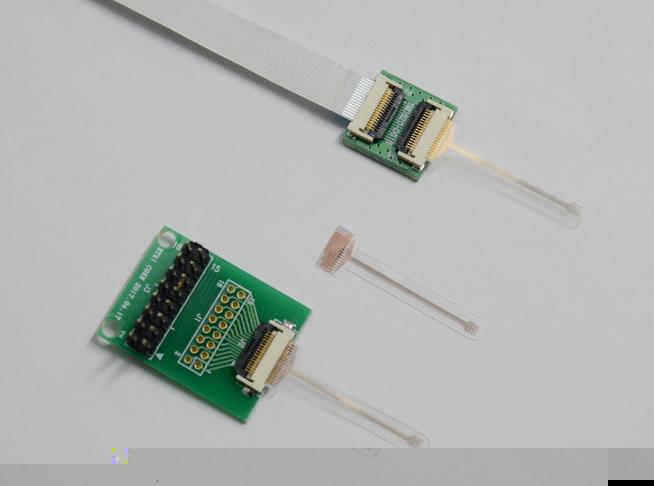
Through this process, the researchers fabricated a 16-channel gold neural electrode with a diameter of 100 μm (micrometer) protected by the fluorine-based polymer film. Additionally, ETRI confirmed the chemical stability of the developed flexible neural electrode by verifying it did not corrode even when submerged in concentrated nitric acid at 70°C for over one hour.
The research team collaborated with Wonkwang University's Department of Basic Medicine, implanting the electrode in laboratory rat heads and inducing epilepsy with drugs to detect seizure signals and verify the performance of the neural electrode.
Professor Kim Min-seon of the School of Medicine at Wonkwang University also stated, "This electrode can be implanted in vivo to regulate brain and cardiac functions through continuous electrical stimulation of muscle and nerve cells. Furthermore, by attaching it to the scalp and dura mater for extended periods, it can measure and regulate brain activity and serve as a fundamental device for diagnosis and treatment of various brain diseases."
ETRI anticipates that this electrode will be widely applied to bioimplantable blood glucose sensors, wearable flexible sensors, neural prosthetic provision for limb-amputated patients, functional recovery for brain disease patients responding to aging, wearable sensors, and chemical sensors requiring durability in extreme environments.
In particular, the research team explained that due to excellent chemical durability, this technology will be effective for limb-amputated patients and artificial retina users who require continuous long-term electrode implantation in vivo.
Based on this technology, ETRI plans to focus on research and development including long-term in vivo stability and durability verification as well as process development for flexible cerebral cortex-implantable electrodes with hundreds of channels. Additionally, the institute stated it will verify medical efficacy through preclinical and clinical collaborative trials.
Furthermore, the research team explained that for brain-computer interface technology development, given that they have developed a highly sensitive electrode, the ultimate goal is to conduct electrical stimulation experiments on animals using the electrode, and then establish bidirectional communication between the neural network system through brain signal extraction.
1 Comments:
Related news
ETRI Approves International Standard to Promote Big Data Distribution
The Korea Electronics and Telecommunications Research Institute (ETRI) announced that it received approval for an international standard to promote the distribution and activation of big data at an International Telecommunication Union (ITU) standardization conference held in Geneva, Switzerland last month. The institute also announced that it achieved results by proposing and having two new agenda items adopted in the big data and cloud computing fields. ETRI explained that the 'Big Data Exchange Framework and Requirements (ITU-T Y.3601)' standard, which it has led development of for the past three years, received final approval at the Future Networks standardization research group (SG13) standardization conference. The standard was achieved with the participation of Lee Gang-chan, head of the Service Standards Research Department, and Ren Min-jiao, principal research engineer, since ETRI principal research engineer Ha Su-wook took on the role of editor starting in 2015.
2017.11.30by 김지혜 기자
ETRI Creates Smart Factories with NB-IoT
Domestic researchers have successfully applied mobile communication technology to smart factories, and this is expected to open the way for wireless remote control of factories in the future. The Electronics and Telecommunications Research Institute (ETRI) has successfully demonstrated industrial Internet of Things (IIoT) services by applying mobile communication technology to a smart factory production automation system for the first time in Korea. Until now, industrial sites such as factories have independently applied IT. Wired communication technology, which is widely used in factory operations, has higher reliability compared to wireless communication; however, it is not suitable for mobile operations, leaving room for improvement in wiring and safety. Therefore, there has been the inconvenience of having to completely reinstall the factory's wired communication infrastructure when rearranging the factory layout or moving machinery and robots in response to process changes.
2017.12.06by 김지혜 기자
ETRI, Chollian Satellite Communication Payload Achieves World-Class Level
The Electronics and Telecommunications Research Institute (ETRI) announced that it has developed a communication payload—the core component of the Chollian satellite—and verified world-class technical excellence in performance through satellite control and other operations. The research team has conducted satellite communication public services, satellite signal measurement, ground terminal testing, and satellite control over the past seven years. The communication payload developed by ETRI operates in the Ka band, a high-frequency band of 20–30 GHz (gigahertz). The team developed three relay channels for communication and installed them on the satellite to provide satellite communication services.
2017.12.14by 김지혜 기자
Intel Unveils Next-Generation 'Core Ultra Series 3' and vPro Platform for Enterprise PCs
Intel has officially unveiled the "Intel Core Ultra Series 3" for next-generation enterprise PCs and the latest vPro platform, addressing a wide range of demands from enterprise notebooks to high-performance workstations.
2026.03.26by 배종인 기자
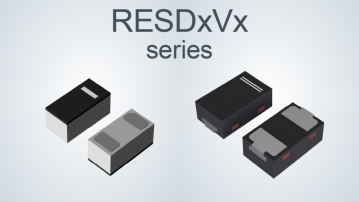
ROHM Launches ESD Protection Diode Compatible with High-Speed Interfaces of 10Gbps or Higher
Semiconductor specialist ROHM has developed the 'RESDxVx series' of ESD (electrostatic discharge) protection diodes capable of responding to next-generation high-speed data communication environments exceeding 10Gbps, simultaneously enhancing both signal quality maintenance required in high-speed interfaces and IC protection performance.
2026.03.26by 배종인 기자












뇌속에 칩 이식을 해서 인터넷에 접속하는 시대가 올 것 같습니다.