


LTE is applied to the railway communication system for fast data transmission.
 Published2018.01.15 08:59
The domestic railway communication system, which currently uses voice-oriented communication systems (VHF, TRS), is expected to be transformed into a new railway communication system (LTE-R) developed domestically for the first time in the world by applying LTE, a fourth-generation communication technology capable of high-speed and high-capacity information transmission.
The Ministry of Land, Infrastructure and Transport developed through national R&D ('14. 12.–'17. 10., 16.3 billion won) The verification of the LTE-based railway communication system (hereinafter “LTE-R”) has been completed, and an ‘LTE-R construction plan’ has been established to invest a total of 1.1 trillion won by 2027 to install it on all general and high-speed railway lines.
The railway communication system is a communication system for railway personnel (controllers, engineers, crew members, workers, etc.) to ensure safe and smooth railway operations. Currently, general railways mainly use the VHF communication system (hereinafter “VHF”), which was first introduced in 1969, while high-speed railways have been using the TRS communication system (hereinafter “TRS”), which was introduced from the United States (Motorola) in 2004.
However, since VHF is an analog system, stable communication operations were limited in some sections due to low call quality and dead zones where communication was interrupted. Furthermore, high-speed trains operating on general railway sections had to endure user inconvenience and increased maintenance costs as they used a combination of VHF and TRS.
.JPG)
In order to solve these problems and respond to the demand for advanced and intelligent railway services, we received an integrated public network frequency (700 MHz band) from the Ministry of Science and ICT, developed LTE-R, and completed verification on the Gyeonggang Line (Wonju-Gangneung), and are now actively pursuing expanded installation.
The goal is to build all general and high-speed railway lines with LTE-R by 2027 by investing a total of 1.1 trillion won in new lines opening after 2018 and existing lines due for upgrade.
Through this, the railway communication system will be integrated into LTE-R in the future, facilitating interconnected operations between lines, and an import substitution effect of approximately 150 billion won is expected; furthermore, the disaster safety communication network (PS-LTE, promoted by the Ministry of the Interior and Safety) and It is expected to be utilized as a disaster communication network in conjunction with other systems in the event of disasters such as railway accidents.
An official from the Ministry of Land, Infrastructure and Transport stated, “Until now, railway communication systems have remained at a level capable only of voice communication, failing to live up to the reputation of being a telecommunications powerhouse. However, with the establishment of LTE-R, which enables high-speed and high-capacity information transmission, it will be possible to provide advanced services such as wireless-based train control, contributing to improved railway safety and entry into overseas markets.”
관련뉴스
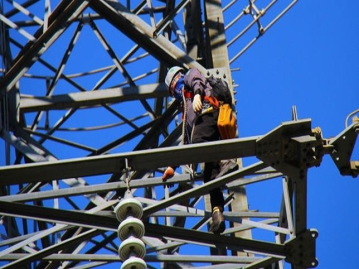
Now, drones inspect railway facilities.
Drones are being utilized in railroad facility inspections of high-priced bridges on steep slopes, transmission lines, and other infrastructure that were previously inspected visually from a distance or with direct human accompaniment. Facility management of steep slope areas where landslides or rockfalls are a concern, as well as high-level bridges and transmission towers, requires personnel to climb directly for inspection, which is time-consuming and costly with reduced efficiency, and poses accident risks such as falls and electrical shock. To address these issues, drones are being used to capture photographs and video of facilities to determine the presence or absence of anomalies, converting the system to one that implements repairs based on these findings.
2017.05.29by 김지혜 기자
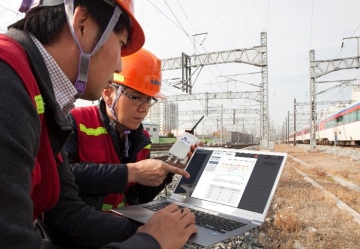
SKT, Now Even Railway Detection is in the IoT Era
SK Telecom announced that it has developed an IoT system for safe railway operation in collaboration with Korail and Navel Communications. This system is the result of a joint research agreement on 'IoT-based Infrastructure Monitoring System' concluded in May, and its core focus is to manage railways more efficiently by utilizing LoRa and LTE. The development of railway IoT was conducted on the Gyeongbu Line between Seoul and Busan in the following areas directly related to the safety of users and employees: ▲rail temperature measurement ▲vehicle battery voltage measurement ▲vehicle reducer temperature measurement ▲vehicle vibration measurement ▲automatic tension adjustment device power gauge measurement.
2017.11.13by 김지혜 기자
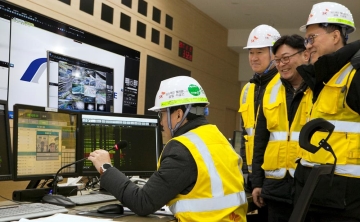
SK Telecom Deploys Railway Integrated Wireless Network (LTE-R) to Gimpo Urban Railway
SK Telecom announced that it will establish the next-generation railway communication standard 'Railway Integrated Wireless Network (hereinafter LTE-R)' on the main section of the Gimpo Urban Railway together with the Korea Railroad Corporation, and will begin train test runs starting on the 20th. The two companies will conduct annual test runs of trains and verify the stability of LTE-R, and plan to commence Gimpo Urban Railway operations from November 2018. Gimpo Urban Railway is an unmanned light rail transit. This is the first time LTE-R has been applied to an unmanned light rail transit line. For unmanned light rail transit, the reliability and stability of wireless communication between the control center and trains are of paramount importance.
2017.12.20by 김지혜 기자
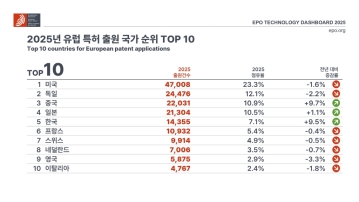
European Patent Applications Surpass 200,000 for the First Time… South Korea Maintains 5th Place, Led by Batteries and Telecommunications
According to the European Patent Office (EPO)'s 'Technology Dashboard 2025', European patent applications last year reached 201,974, surpassing 200,000 for the first time. Korean companies and inventors filed 14,355 applications, representing a 9.5% increase from the previous year and maintaining 5th place by country. Battery, digital communication, and semiconductor technologies led the growth, with Samsung ranking as the top EPO applicant for the second consecutive year and LG reaching 3rd place. The presence of major domestic cities such as Seoul, Suwon, and Yongin was also confirmed. It was also revealed that Korea's European patent strategy is expanding beyond individual technologies to span the entire industry.
2026.03.24by 명세환 기자
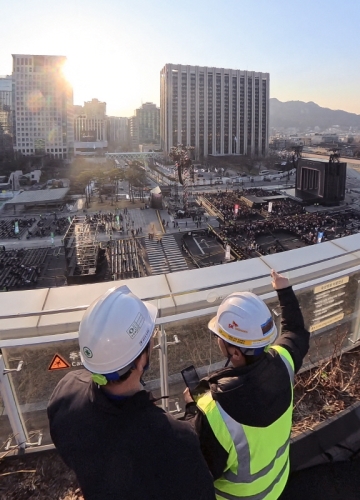
SK Telecom First Applies AI-Based Network Operations at Gwanghwamun K-Pop Concert
SK텔레콤이 3월 21일 서울 광화문 일대에서 열린 대형 K-팝 공연에 AI 기반 네트워크 운영 시스템을 처음 적용해 통신 품질을 관리했다고 밝혔다. 공연 전후 3시간 동안 모바일 데이터 사용량은 12.15TB로 직전 주말 같은 시간대보다 약 2배 늘었다. SK텔레콤은 AI 시스템 ‘A-One’을 활용해 5분 단위, 50m 단위로 트래픽을 감시하며 과부하 가능성에 대응했고, 임시 통신 시설과 현장 인력 운영도 병행했다. 밀집 행사와 외국인 이용 수요가 동시에 늘어나는 환경에서 AI 기반 자율 네트워크 운영의 현장 적용 가능성을 확인한 사례로 해석된다.
2026.03.23by 명세환 기자











