


ICT Law Regulation "Time to Implement, Not Debate"
 Published2018.01.29 17:43
Cryptocurrency Cannot Be Omitted From Future Economic Structure
An opportunity was provided to discuss issues currently problematic in establishing the foundation for the Fourth Industrial Revolution.
At the '2018 ICT Policy Forum' held at COEX on the 29th, a discussion session was held on the theme of establishing the Fourth Industrial Revolution foundation and strengthening digital capabilities. The ICT Policy Forum is where industry, academia, and media present annual policy issues.
Kang Chul-ha, Director of the Korea IT Law Research Institute, identified obstacles to data ecosystem creation as: vendor dependence on new services and products, increased risks when data analysis is commercialized for automated decision-making, social problems resulting from information concentration and asymmetry, rigidity of traditional data distribution systems, and privacy protection.
As improvement measures, he proposed: △balance between information protection and utilization, △consistency of information protection systems, △ensuring legality of data utilization, △development of new information distribution cooperation models, △global data regulation, and △building privacy and consumer trust.
He stated, "Among various improvement measures, ensuring data circulation is important. For example, data collected from IoT sensors is applied to artificial intelligence and distributed through autonomous vehicles, robots, and so on," emphasizing that "rather than individual department-centered development and regulatory measures, it is necessary to first establish a distribution network and then improve systems accordingly."

Attorney Kim Kyung-hwan from Law Firm Minhoo commented on the issue of data personal information utilization, stating "Data ownership is still a progressive topic being discussed only in Europe. What is most needed from a data perspective is creating an institutional foundation for data sharing," and pointed out that "law is needed to create different value by utilizing data others possess, but there is nothing in place."
Currently, there is no relevant law or regulation, only guidelines for personal information de-identification measures. However, the guidelines lack legal binding force and clarity, making industrial application difficult. Attorney Kim stated, "Because establishing legal grounds takes time, personal information de-identification guidelines came first. However, lacking a legal basis makes application difficult. Even if it takes time, urgent legislation on general data sharing is needed. Once sharing occurs, activation will follow naturally."
Director Kang added, "If legislation on data sharing takes time and faces difficulties, attempting cooperation models based on private sector autonomy could also be one approach."
Separating Blockchain and Cryptocurrency Difficult, But Legal Regulation and References Must Come First
Director Oh Dong-hwan from the Korea Internet & Security Agency mentioned that blockchain industry activation requires securing visibility of business cases to expand market creation, improving regulatory framework to adjust blockchain entry barriers, and establishing governance systems for core standards.
Regarding cryptocurrency and blockchain, Professor Park Sung-jun from Dongguk University stated, "Personally, I hold the position that cryptocurrency and blockchain cannot be separated. There are different prerequisite conditions between countries calling for cryptocurrency regulation," and pointed out that "overseas countries activate blockchain first and then begin regulation, while our country is going the opposite direction."
He advised, "Fundamentally, cryptocurrency is necessary because the future economic structure is moving toward P2P," and continued, "Cryptocurrency is an element that constitutes the future economic structure. Even with private blockchains, as services develop, services requiring cryptocurrency emerge. We need to have a regulatory stance with an eye toward what kind of economy we want to build."
Professor Kwon Hyuk-jun from Soonchunhyang University raised the issue of blockchain utilization from the perspective of SI companies. Stating that "when converting what was traditionally done offline to blockchain, resistance within organizations is substantial," he expressed his opinion that "when implementing blockchain, we must conduct benefit analysis to determine whether it is better to maintain existing traditional systems or implement blockchain, and present this to customers and partners."
Director Oh emphasized the importance of creating distinctive domestic blockchain cases rather than merely adopting overseas examples, stating "For blockchain to become active, cryptocurrency is necessary. However, currently, numerous debates arising from viewing cryptocurrency and blockchain together make it impossible to apply blockchain."
He concluded, "If we continue this way, we will lose leadership by year-end," and stated, "Blockchain is difficult to apply without overhauling current legal systems. Improving legal regulation and providing various references, even if cryptocurrency is applied afterward, it won't be too late."
Comments
Related news
[Discussion] Why Korea, Home to the Largest Blockchain Exchange, Cannot Create Cryptocurrency
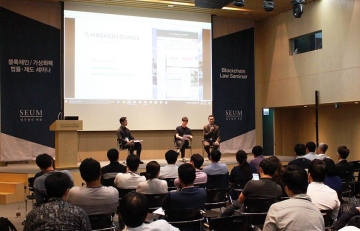
Looking at the global blockchain exchange trading volume rankings, Korean exchanges hold 3 positions in the top 10. However, when examining virtual currency rankings, there are no Korean projects within the top 100. Regarding why our country, which has the world's largest exchanges, lacks virtual currencies, attorney Jung Ho-seok from Law Firm Seum stated, "One might think it's because technology hasn't developed enough, but that's not the case," adding that it is "because legal systems and environments have not provided sufficient support." Last month, an amendment to the "Electronic Financial Transactions Act" was initiated by Representative Park Yong-jin. The bill requires virtual currency operators to maintain capital of 500 million won or more and obtain authorization from the Financial Services Commission to conduct business, and includes provisions prohibiting illegal activities such as market manipulation using virtual currencies and money laundering. There is concern about whether regulation is necessary given that the amendment leans more toward regulation than promotion and blockchain has not even been defined as currency. In response, a forum has been arranged to discuss issues surrounding blockchain regulation.
2017.09.04by 김지혜 기자

The rapidly growing autonomous driving components market: Are there opportunities for domestic companies?
"Full autonomous vehicles should not arrive until 2050. However, by around 2040, half of the cars on the road will be partially autonomous vehicles." Full autonomous vehicles are projected to take to the roads in 2050, but the penetration speed of autonomous driving technology is progressing rapidly. With 1.5 million people dying in traffic accidents annually, countries worldwide are mandating safety regulations. Accordingly, original equipment manufacturers are generating additional profits through services such as autonomous emergency braking (AEB) and lane-keeping assistance. According to Mirae Asset Daewoo, Level 3 semi-autonomous vehicles are expected to enter mass production in 2020. Rather than abrupt industry transformation as a result, it is anticipated to be a period when new technologies are integrated based on the traditional automotive industry. The growth of the Advanced Driver Assistance Systems (ADAS) market, which corresponds to Levels 1-2, is expected to reach a market size of 37 billion dollars by 2021.
2017.12.01by 김지혜 기자
Smart City/Autonomous Vehicle/Drone Deregulation Accelerates Growth
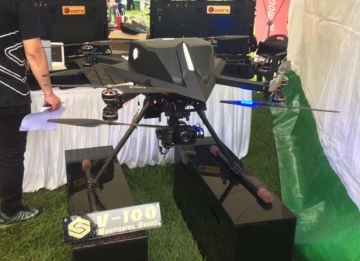
The Ministry of Land, Infrastructure and Transport has announced the direction and tasks for regulatory innovation regarding △smart cities △autonomous vehicles △drones, which are leading innovation growth initiatives. As new technologies and industries are being introduced, there are concerns about safety and security. Taking these points into consideration, measures have been reviewed to establish safety standards and enable their timely introduction. In particular, in the process of establishing these systems, the Ministry plans to have opportunities for exchanging opinions with the private sector, including industry and civic organizations, in order to build public consensus.
2018.01.23by 김지혜 기자
.jpg)
SalePoint Signs Multi-Year Partnership Agreement with AWS… Promoting Identity Security that Integrates Even AI Agents
Sailpoint has entered into a multi-year strategic partnership agreement with AWS and is moving forward with establishing an integrated governance system that manages both human and non-human identities together. The plan is to consistently manage access permissions in an environment where AI agents are increasing as work execution entities, while applying the principle of least privilege and automated policy enforcement. The two companies plan to jointly expand capabilities to manage the identities of various entities, including AI agents, within a single layer in the AWS environment. This collaboration is interpreted as a move to design security and governance together in corporate environments where AI adoption is expanding.
2026.03.26by 배종인 기자
.png)
Databricks Unveils Open AI Security Monitoring 'Lakewatch'
Databricks entered the security market on March 24 by unveiling LakeWatch, an open-source agentic SIEM. The core functionality of this product is to integrate and analyze security, IT, and business data in a single environment to support AI-based threat detection and investigation. The company explained that it reduces the limitations of existing security operations centers, which have had to forgo some data due to high cost structures, and enables large-scale data analysis and automation based on open formats and ecosystems. LakeWatch is currently offered as a private preview, with Adobe and Dropbox mentioned as early customers. Databricks also announced an expanded partnership with Anthropic as well as the acquisition of Antimatter and SiftD.ai.
2026.03.26by 배종인 기자











