



"We will create world-class smart cities within five years"
 Published2018.01.30 13:56
At the 4th Meeting of the Fourth Industrial Revolution Committee held on the 29th in a conference room on the 12th floor of KT Gwanghwamun, chaired by Committee Chair Jang Byung-gyu, the agenda of 'Smart City Promotion Strategy' was discussed.
This is the result of composing a Smart City Special Committee under the committee since November of last year, with field experts in smart cities and six related government agencies (Ministry of Land, Infrastructure and Transport, Ministry of Economy and Finance, Ministry of Science and ICT, Ministry of the Interior and Safety, Ministry of Industry and Trade, Ministry of Environment) thoroughly reviewing the smart city policy roadmap together.
Committee Chair Jang Byung-gyu of the Fourth Industrial Revolution Committee stated, "Smart cities are meaningful as a vessel capable of implementing all technologies and services of the Fourth Industrial Revolution, and the President emphasized smart cities as concrete policy tasks that citizens can experience during the committee's launch and first meeting," adding "For smart cities to establish themselves as a sustainable platform, it is most important to have open scalability by discussing solutions to urban and social problems through participation of citizens and the private sector."
The 'Smart City Promotion Strategy' will be pursued by departing from technology-centric fragmented approaches and government-led smart city (U-City) policies, moving toward sustainable cities that drive innovative growth and directions that involve diverse stakeholders including private enterprises and citizens.
To this end, three major strategies will be implemented: ① differentiated approaches by urban growth stage, ② customized technology application to enhance urban value, and ③ re-establishment of roles by stakeholders including private enterprises, citizens, and government.
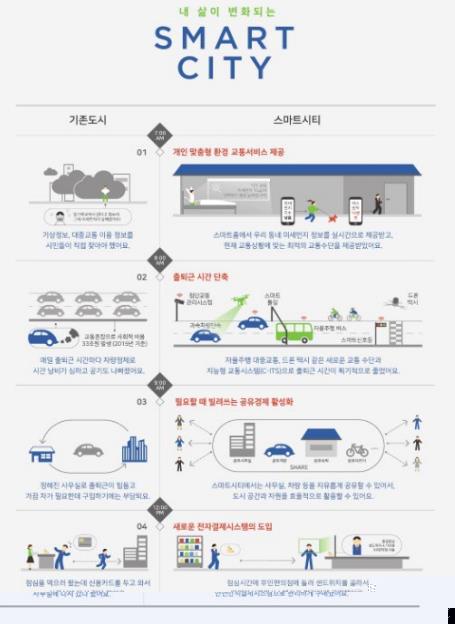
First, differentiated approaches by urban growth stage will be pursued, from newly developed smart city national pilot cities to existing cities in operation stages and aging/declining cities.
National pilot cities being newly created from a blank slate will be pursued in three directions: △test beds for new technologies, △solving urban problems and improving quality of life, and △creating innovation industrial ecosystems.
Using national pilot cities as platforms, various future technologies of the Fourth Industrial Revolution such as autonomous vehicles, smart energy, and AI will be concentrated and implemented, and data-driven smart city operations will support solving urban problems and creating new industries.
To this end, the Smart City Special Committee has been discussing optimal sites to implement the pilot city concept since November of last year, and has selected two locations this time as pilot project sites: Sejong 5-1 Living Zone (830,000 pyeong) and Busan Eco Delta City (centered on Semulmeori area, 660,000 pyeong).
Through bold regulatory reform such as regulatory sandboxes to activate private investment, consolidation of government R&D and policy budgets, examination of smart city infrastructure development, and activation of citizen participation, comprehensive support will be initiated.
Next, smart city transformation of existing cities in the mature stage of urban operation will be pursued.
Through national strategy R&D projects, data hub models will be developed to smoothly produce, manage, and share various urban information, and environments where diverse service solutions can be implemented will be created.
In aging/declining cities, a 'Smart Urban Regeneration New Deal' providing low-cost, high-efficiency improvement of living environments by applying smart solutions will be pursued annually.
Introduction of people-centered customized technology to enhance urban value
An approach considering technology levels will be pursued so that technologies embodying smart city value are widely implemented from future new cities to aging downtown areas.
In national pilot cities, future common leading technologies such as next-generation networks, big data, and AI, as well as experiential technologies such as autonomous driving, smart grids, and virtual reality will be concentrated and implemented, with demonstration and commercialization of these also pursued.
Finally, a cooperation and support system will be established for private enterprises, citizens, and government to jointly create and spread smart cities.
Innovation industrial ecosystems will be implemented through regulatory improvements to promote private investment, creation of startup incubating zones, and human resource development, and various support measures such as business model exploration will be prepared to enable private enterprises to participate with business models from the urban planning stage onwards.
Additionally, governance systems for citizen participation will be established and diverse private ideas will be applied to the field, with consideration given to crowdfunding adoption.
To this end, government support will be expanded through enactment and amendment of related laws such as the Smart City Act, promotion of smart city standardization, and support for overseas expansion and international cooperation.
Comments
Related news
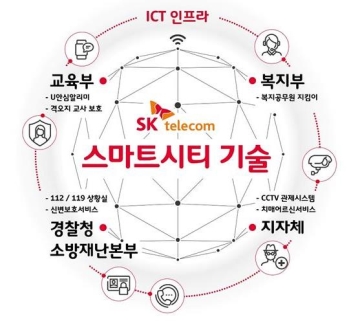
SK Telecom: "We will lead smart city development by integrating our partners under one platform."
Smart cities equipped with cutting-edge ICT technology are gaining attention as a way to resolve urban problems and build smarter cities. In response, SK Telecom is taking the lead in accelerating smart city initiatives by addressing urban challenges, expanding its scope from protecting elderly people with dementia and minors to ensuring the safety of teachers working in remote areas and protecting crime victims. SK Telecom's citizen safety network was established starting with an app called "Smart T Guardian" in 2012. Subsequently, it has evolved beyond 3G and LTE to a stage utilizing LoRa networks, and currently the number of intelligent emergency call system users has exceeded 100,000. Kim Sung-han, head of SK Telecom's IoT Solutions Division, stated, "The peace-of-mind service connecting local government CCTV with the police agency is available in five locations: Seongdong-gu in Seoul, Gangseo-gu in Busan, Daejeon, Osan, and Anyang." He added, "Suwon, Siheung, Incheon, Gwangju, and Gimhae will become available by year-end, and the service will be applied to all 25 districts in Seoul in the first half of next year."
2017.11.15by 김지혜 기자
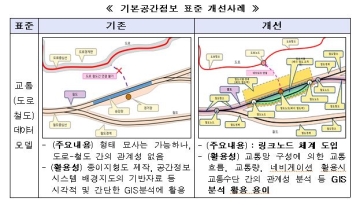
Improving the basic spatial information system to realize a smart country
The Ministry of Land, Infrastructure and Transport has confirmed the 'Spatial Information Research and Development Innovation Roadmap' and the 'Basic Spatial Information System Improvement Plan'. Spatial information is emerging as a critical foundation supporting the development of new industries such as autonomous vehicles, drones, and smart cities in the era of the Fourth Industrial Revolution. However, the current state of domestic spatial information technology stands at 74.5% compared to the world's leading level, with a technological gap of approximately three years. Research and development efforts to overcome this limitation have shown constraints, with future outlook and technological demand not being properly reflected, and development being pursued primarily in areas feasible for research and development in response to fragmented demands.
2017.12.21by 김지혜 기자
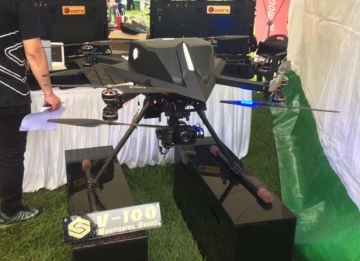
Smart City/Autonomous Vehicle/Drone Deregulation Accelerates Growth
The Ministry of Land, Infrastructure and Transport has announced the direction and tasks for regulatory innovation regarding △smart cities △autonomous vehicles △drones, which are leading innovation growth initiatives. As new technologies and industries are being introduced, there are concerns about safety and security. Taking these points into consideration, measures have been reviewed to establish safety standards and enable their timely introduction. In particular, in the process of establishing these systems, the Ministry plans to have opportunities for exchanging opinions with the private sector, including industry and civic organizations, in order to build public consensus.
2018.01.23by 김지혜 기자
Nvidia invests $5 billion in Intel
NVIDIA and Intel, leaders in global AI computing technology, are now forging ahead in providing cutting-edge solutions through NVLink-based architecture integration. NVIDIA and Intel have officially announced a strategic partnership and stated that they will jointly develop customized data center and personal computing products to accelerate diverse applications and workloads ranging from hyperscale to enterprise and consumer markets, thereby laying the foundation for the next generation computing era.
2025.09.22by 배종인 기자
.jpg)
Applied Materials Launches Environmental Protection Campaign to Mark World Cleanup Day
Applied Materials Korea (CEO Park Kwang-seon) is carrying out environmental cleanup activities with employees and their families around the Dongtan Sinricheon area on the occasion of World Cleanup Day, evolving into a company that engages with the local community beyond technological innovation.
2025.09.22by 명세환 기자











