


"Doing It Well on Its Own": The AI Market Takes Off in Earnest in 2018
 Published2018.02.02 07:50
Domestic IT companies are expected to grow in tandem with the global economic recovery.
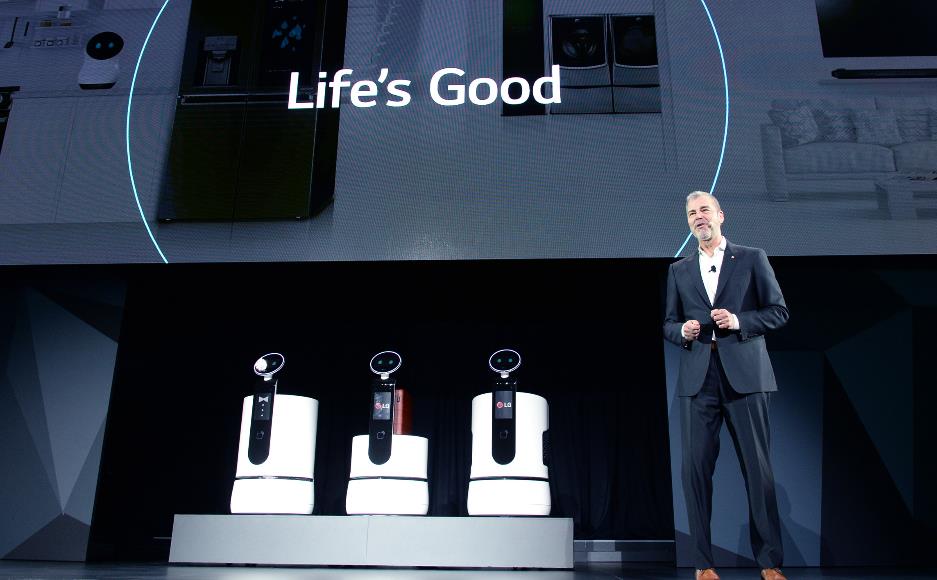
CES, where new trends and innovative technologies could be explored, has come to an end. What were the trends showcased at CES 2018?
Park Seo-ki, Director of the IT Innovation Research Institute, selected ecosystems, traffic changes, voice recognition systems, AI, and MR as the key elements of last year's CES, viewing the maintenance and evolution of these elements as the landscape of ICT in 2018. In fact, the ecosystem-based Family Hub ranked first in the U.S. home appliance market for two consecutive years, and voice recognition systems were used in most areas of the products exhibited at this year's CES.
Evolution is expected to manifest as the application and expansion of core elements into business models, taking the form of Transportation as a Service (TaaS) based on autonomous driving, Roomba, Brain-Machine Interfaces (BMI), and the proliferation of facial recognition applications. The key lies in the digitalization of daily life, such as automobiles, conversation, and cleaning. Gartner stated, "The 2018 ICT market will grow by 5.3% year-over-year, driven by increased corporate spending on Digital Transformation."
The key IT trend of 2018 is, first, TaaS, which is spreading across all industries. Toyota's 'e-Palette' enables not only autonomous driving but also services such as cooking, sales, and delivery inside the vehicle. Robomart has announced an autonomous unmanned store. The key is to lead the transformation of the commercial market using autonomous vehicles.
In addition, robots garnered significant attention at CES. Interest is growing in robots designed for specific tasks, such as the world's first cleaning robot, the Roomba. Robots like Omron Robotics' table tennis robot and Xeno's tennis bot detect people and objects to perform actions automatically. The potential for the widespread adoption of these Roomba-type robots is the reason behind predictions that AI will replace simple jobs provided by non-regular workers. There are also instances where robotic technology has been applied to delivery and collection tasks in hospitals.
Brain-machine interfaces (BMIs) that read the brain via wearables to improve work productivity and provide a comfortable sleeping environment are becoming widespread. Representative companies include Muse and BrainCo. BrainCo has released a product that operates an electronic prosthetic hand controlled by brainwaves. As a non-surgical prosthetic hand based on AI technology, it is expected to be used for both medical and occupational purposes.
Google launched a massive advertising campaign for its voice assistant at this year's CES. It appears to have felt threatened by Amazon's Alexa and Echo, which dominate the voice assistant market. As Google gradually gains market share, there are hardly any devices that do not support both companies' IoT services.
While concerns remain regarding negative outlooks, such as shrinking demand for traditional IT, uncertain cloud revenue models, and investment polarization, government support is expected to expand as digital transformation accelerates. Furthermore, the market appears poised for a positive turn, driven by increased corporate IT investment and the recovery of the global economy.
Director Park introduced companies expected to exhibit at CES 2019 and emphasized the expansion of perspectives on application fields. Representative examples include China's Royole Marley keyboard, haptic-activated Ultra Haptic, and Lumus; it was predicted that Ultra Haptic has a very high probability of being applied to commercially available autonomous vehicles. Furthermore, it was emphasized that developers interested in trends and key companies of interest should pay attention to Alibaba's Ant Financial, an O2O business in which the Chinese government has invested 1 trillion won. It was stated that their moves are so vast that they will fully realize the Fourth Industrial Revolution. In fact, they are currently acquiring and venturing into various fields.
He also said, “The size of the domestic IT market will increase in line with global growth in software and IT services. However, compared to the 150 companies from China, Europe, and others that participated in the exhibition, our growth is relatively slow.” He added, “We need to consider various factors, analyze the products and characteristics of small and medium-sized enterprises that received attention at CES, and benchmark them to proactively prepare for the future.”
Healthcare and Smart Cities: Markets to Watch in 2018
The Korea Rural Community Corporation (KRC) identified healthcare and smart cities as IT markets to watch in 2018. The healthcare sector is projected to grow by $6.7 billion by 2021, driven by the overseas expansion of major domestic hospitals and anticipated market growth by global corporations. Hospitals such as Gachon University College of Medicine and Gangnam Severance are improving their medical systems through the introduction of AI services. The smart city market is expected to grow to $1.2017 trillion by 2022, fueled by market entry by major companies and government support policies. In the case of U.S. cities, 66% are investing in smart cities.
Based on the expansion of these technologies and application fields, the IT market, which has shifted to a recovery trend since 2017, is expected to become more robust. KRG Vice President Kim Chang-hoon stated, “Assuming a recovery in the manufacturing sector, we forecast that the domestic IT market in 2018 will grow by 4.0% year-on-year to 22.3 trillion won.” He also emphasized, “Among IT services, hardware, and software, software is expected to grow the most significantly in line with the global IT market situation. Domestic software is projected to rise by 7.4%.”
관련뉴스
LG 생활가전, 구글 이어 아마존 에코 음성인식과도 연결해
LG전자 생활가전이 음성인식 인공지능 플랫폼을 계속 확장하고 있다. LG전자는 내달 1일 독일 베를린에서 개막하는 ‘IFA 2017’ 전시회에서 LG 생활가전을 아마존의 인공지능 스피커 ‘아마존 에코(Amazon Echo)’와 연동시 동작을 제어하는 것을 시연한다. ‘아마존 에코’는 아마존의 음성인식 인공지능 비서 ‘알렉사(Alexa)’를 탑재한 스피커다. LG전자는 앞서 지난 5월부터 ‘구글 어시스턴트(Google Assistant)’가 탑재된 ‘구글 홈(Google Home)’과 LG 생활가전을 연동시킨 데 이어 아마존 ‘알렉사’와도 연결시킴으로써, 더 많은 소비자들이 음성인식 인공지능 플랫폼을 활용한 스마트홈을 경험할 수 있게 됐다.
2017.08.28by 신윤오 기자
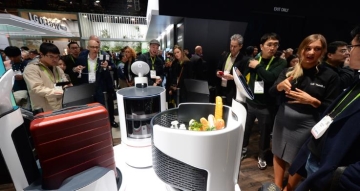
CES 2018 개막
LG전자가 CES 2018에서 로봇 포트폴리오를 총칭하는 브랜드 '클로이(CLOi)'를 공개하고 서빙 로봇, 포터 로봇, 쇼핑 카트 로봇 등 신규 로봇 컨셉 3종을 소개했다. 지난해 로봇 사업을 미래 성장동력으로 육성하겠다고 발표한 이후 인공지능, 자율주행 기술 등을 바탕으로 로봇 제품들을 지속 선보이고 있다. 관람객들이 LG전자 부스에서 LG 클로이 로봇 3종을 살펴보고 있다.
2018.01.10by 김지혜 기자
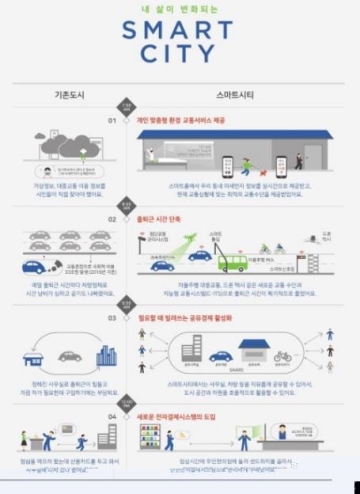
“5년내 세계 최고 수준 스마트시티 조성한다”
지난 29일 광화문KT 12층 회의실에서 장병규 위원장 주재로 열린 4차산업혁명위원회 제4차 회의에서 ‘스마트시티 추진전략’ 안건을 논의하였다. 이는 지난해 11월부터 위원회 산하 스마트시티 특별위원회를 구성, 스마트시티 분야별 전문가 및 6개 유관부처(국토부, 기재부, 과기정통부, 행안부, 산업부, 환경부)가 함께 스마트시티 정책 로드맵을 심도 있게 검토해 온 결과이다.
2018.01.30by 김지혜 기자
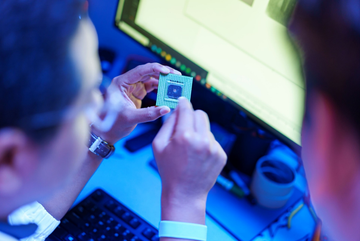
ST Microelectronics and NUS Establish Joint Research Center 'HELIX' for Edge AI
ST Microelectronics and the National University of Singapore have established the 'HELIX' joint research center aimed at implementing embedded AI in edge environments. Over a four-year period, the center will conduct research across the entire technology stack from algorithms to silicon, focusing on memory-centric architecture leveraging ST's 18nm FD-SOI technology and embedded PCM. The core objective is to implement intelligence directly in physical devices such as robots and drones while minimizing energy consumption.
2026.08.28by 배종인 기자
Ecolab and K-water Discuss Innovation Collaboration in Advanced Industry Water Management
Ecolab and the Korea Water Resources Corporation jointly discussed cooperation directions for maximizing water use efficiency in advanced industries such as semiconductors and data centers and establishing sustainable water circulation. The two companies agreed to gradually develop a long-term cooperation model that combines water resource infrastructure and water management technology to promote water efficiency optimization, water reuse, and carbon reduction.
2026.08.28by 명세환 기자











