


CEO Kim Dong-wook: "We will provide the technological capabilities required by IoT through RTOS"
 Published2018.02.13 09:00
I hope this provides educational opportunities and serves as a useful lecture for both basics and practical work.
I hope that through my lectures, you will master the usage and basics of RTOS. If possible, I also hope it will be helpful for your practical work.
Kim Dong-wook, Research Director and Development Director at Clockstone, who was selected as the Weekly Engineer by e4ds, explained the purpose of his lecture as above in an interview conducted before introducing the Real Time Operating System (RTOS).
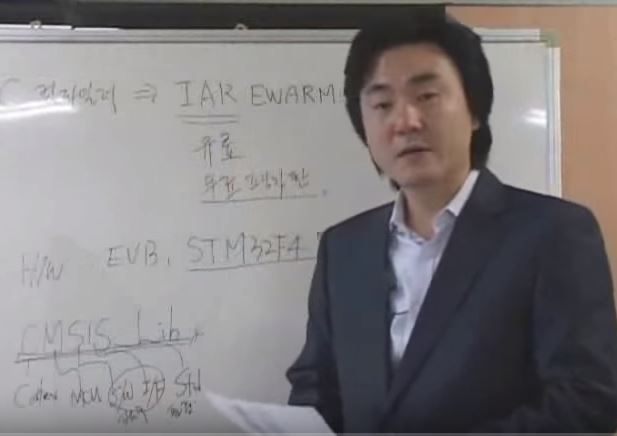
Kim Dong-wook, Research Director and Development Director at Clockstone
To seize the opportunities of the Internet of Things (IoT) era, embedded system vendors face the challenge of launching flexible and technologically advanced products that meet market demands. To address this, an RTOS is required that can provide cutting-edge features such as scalability, modularity, connectivity, security, and safety, which are necessary for Machine-to-Machine (M2M) networks and the IoT.
RTOS has been used in various fields since before the Fourth Industrial Revolution, including commercial devices such as network equipment and foldable mobile phones as well as specialized sectors like industry and aerospace. Research Director Kim Dong-wook stated, “Although it is difficult to say for sure, RTOS has declined compared to the past due to factors like Linux.” However, he stated, “As smartphones and the like enter the category of embedded solutions, the boundaries of RTOS are becoming blurred, and since traditional embedded solutions are not disappearing, demand will remain high.”
RTOSs are typically divided into commercial and free/educational types. Commercial RTOSs are utilized in actual industrial fields as mentioned above, while free RTOSs are open-source real-time embedded operating systems characterized by simplicity, portability, and conciseness. They can be used by students, individuals, and individual engineers at the small firmware level.
Kim Dong-wook, Director of the Research Institute, stated, “University students only receive comprehensive education on RTOS and lack intensive learning.” He added, “It will be suitable for university students, developers, companies, and enterprises who feel burdened by costs and lack practical experience or learning.” He further expressed his desire to “provide them with educational opportunities through educational and free RTOS, and to deliver lectures useful for the basics and practical application of RTOS.”
관련뉴스
TI Integrates SimpleLink MCUs with Amazon FreeRTOS for Fast Cloud Connectivity
TI는 개발자가 더 빠르고 안전하게 IoT 엔드 포인트를 클라우드에 연결할 수 있도록, 새로운 Amazon FreeRTOS를 SimpleLink 마이크로컨트롤러(MCU) 플랫폼에 통합한다고 밝혔다. 아마존 웹 서비스(Amazon Web Service, AWS)와 TI는 개발자들이 AWS의 IoT 서비스와 접속하고 즉시 시스템 개발을 시작할 수 있는 통합 하드웨어 및 소프트웨어 솔루션을 개발하기 위해 협력해 왔다. 지난 11월 29일 라스베이거스에서 개최된 “AWS 리인벤트(re:Invent) 2017 행사에서 아마존 FreeRTOS가 발표됐다. 아마존 FreeRTOS는 수백 만개의 디바이스에서 확장의 복잡성에 대한 걱정 없이, 마이크로컨트롤러 기반 커넥티드 디바이스를 쉽고 빠르게 배치하고 IoT 애플리케이션을 개발하는 데 필요한 툴들을 제공한다. 한번 클라우드로 연결되면 IoT 디바이스 애플리케이션은 클라우드가 제공하는 성능을 활용하거나 AWS 그린그래스(Greengrass)를 사용해 로컬에서 계속 데이터를 처리할 수 있다.
2017.12.06by 김지혜 기자
ST- AWS, 아마존 FreeRTOS용IoT 노드-클라우드 솔루션 제공
ST마이크로일렉트로닉스가 아마존 FreeRTOS기반의 아마존웹서비스(Amazon Web Services)와 협업을 진행한다고 밝혔다. 최신 추가된 아마존 FreeRTOS 상의 AWS 사물 인터넷 솔루션은 완벽한 IoT 노드-클라우드(Note-to-Cloud) 솔루션을 제공한다. 아마존 FreeRTOS는 마이크로컨트롤러 기반 커넥티드 디바이스를 안전하고 손쉽게 적용하여 수백만 개의 디바이스로 확대할 경우의 어려움을 걱정하지 않고 IoT 애플리케이션을 개발하는 데 필요한 모든 것을 제공한다. 한 번 연결이 되면 IoT 디바이스 애플리케이션은 클라우드의 모든 기능을 활용할 수 있고, AWS 그린그라스(Greengrass)를 통해 로컬 데이터 처리를 지속할 수 있다.
2017.12.07by 김지혜 기자
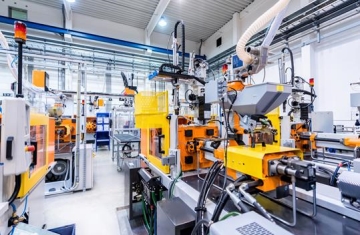
Wind River to Supply VxWorks and Linux to Omron's Industrial PCs for Manufacturing Innovation
윈드리버는 일본 오므론(Omron)에 자사의 실시간운영체제(RTOS) VxWorks 및 리눅스(Linux)를 공급했다고 밝혔다. 오므론은 산업용PC(Industrial PC, IPC) 플랫폼에 윈드리버 VxWorks와 리눅스를 적용함으로써 IIoT(산업용 사물인터넷) 비즈니스를 강화했다. 오므론은 디지털 트랜스포메이션의 일환으로 지능형 의사 결정이 가능한 산업 제어 시스템 최적화 작업을 계획했다. 오므론은 이를 위해 공장 장비를 연결하여 데이터를 추출하고 데이터 분석을 제공하는데 전문성을 보유한 윈드리버와의 협력을 결정했다. 공장에 대한 전체 시야를 확보함으로써 비즈니스 지향적인 의사결정을 수행하고, 이를 통해 효율성 및 품질을 개선하는 한편 자동화 프로세스를 향상시키기 위함이다.
2018.01.04by 김지혜 기자
.jpg)
SalePoint Signs Multi-Year Partnership Agreement with AWS… Promoting Identity Security that Integrates Even AI Agents
Sailpoint has entered into a multi-year strategic partnership agreement with AWS and is moving forward with establishing an integrated governance system that manages both human and non-human identities together. The plan is to consistently manage access permissions in an environment where AI agents are increasing as work execution entities, while applying the principle of least privilege and automated policy enforcement. The two companies plan to jointly expand capabilities to manage the identities of various entities, including AI agents, within a single layer in the AWS environment. This collaboration is interpreted as a move to design security and governance together in corporate environments where AI adoption is expanding.
2026.03.26by 배종인 기자
.png)
Databricks Unveils Open AI Security Monitoring 'Lakewatch'
Databricks entered the security market on March 24 by unveiling LakeWatch, an open-source agentic SIEM. The core functionality of this product is to integrate and analyze security, IT, and business data in a single environment to support AI-based threat detection and investigation. The company explained that it reduces the limitations of existing security operations centers, which have had to forgo some data due to high cost structures, and enables large-scale data analysis and automation based on open formats and ecosystems. LakeWatch is currently offered as a private preview, with Adobe and Dropbox mentioned as early customers. Databricks also announced an expanded partnership with Anthropic as well as the acquisition of Antimatter and SiftD.ai.
2026.03.26by 배종인 기자











