



Stratasys Utilizes 3D Printing Additive Manufacturing Technology in Luge Sleds
 Published2018.02.22 09:22
Stratasys announced that the U.S. Luge National Team utilized Stratasys FDM (Fused Deposition Modeling) 3D printing technology at the 2018 PyeongChang Winter Olympics to manufacture and test competition sleds customized for individual athletes in a faster and more cost-effective manner.
The U.S. National Team utilized various high-performance materials from Stratasys when 3D printing key layup and sacrificial tool components used in carbon fiber composite sled manufacturing. The advanced FDM technology provided by Stratasys enables a level of personalization impossible with conventional composite processing methods, and such customization capabilities are considered an important success factor in the manufacturing of competition sleds that descend at speeds up to 87 mph (approximately 140 km/h).
The U.S. National Team utilized Stratasys ST-130 sacrificial tooling material in the manufacturing process of the 'double stanchion,' a component installed at the front of the racing sled that precisely positions and secures the athlete's legs during competition. The double stanchion must be manufactured considering the athlete's physique and position within the moving sled, requiring a high degree of complexity and geometric expertise. The U.S. National Team designers utilized water-soluble ST-130 sacrificial tooling material to 3D print and assemble the mandrel and layup, then dissolve away the tooling material, completing the entire process within one week.

Following the successful manufacturing of the double stanchion, the U.S. National Team applied 3D printing technology across all areas of racing sled manufacturing. Various techniques utilized in the prototype phase, including the use of detachable tooling that adjusts the length of the sled's mid-section according to each athlete's height, were equally applied to the manufacturing of sleds used in actual competition.
Jon Owen, Technical Program Manager for the U.S. Luge National Team, stated, "Luge is an extremely challenging sport where victory and defeat are determined by subtle differences within a fraction of a second. Our athletes are expected to achieve better results through sleds manufactured with consideration for comfort and aerodynamic aspects," and explained, "Through collaboration with Stratasys, our national team has become more competitive on the world stage by undergoing design modification and track testing processes that are significantly faster and more efficient than conventional methods. Additionally, through minimized manufacturing costs and time, we were able to manufacture sleds customized to each athlete's physique while balancing both sled comfort and functionality."
Scott Sevcik, Vice President of Manufacturing Solutions at Stratasys, explained, "Stratasys customers are transcending existing limitations in performance, efficiency, and reliability through rapid tooling, prototyping, and parts manufacturing provided by 3D printing technology. This collaboration with the U.S. Luge National Team is a representative example of how additive manufacturing technology satisfies the major requirements of specialized professional customers," and stated, "We are greatly honored to support the application of FDM technology to the U.S. National Team, recognized as the best team in winter sports, and to contribute to their achieving even better results."
Related news
Siemens and HP Unify 3D Printing Components from Development to Management with a Single Software Solution
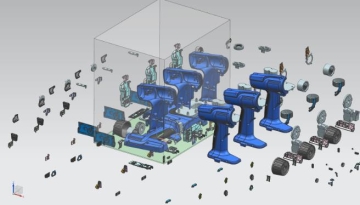
Siemens and HP announced a collaboration on 3D printing for industrial production, launching a new HP-certified additive manufacturing software module. The new software module, Siemens NX AM for HP Multi Jet Fusion, further extends Siemens' end-to-end additive manufacturing solution covering all processes from design to production, and is available through Siemens PLM software. Using the NX software module, customers can develop and manage parts for HP 3D printing projects in a single software environment. Additionally, without using other tools for time and cost-intensive data conversion, overall workflow efficiency from design to finished product can be improved. Siemens and HP are collaborating to implement a future technology roadmap that enables designers and engineers to leverage HP's 3D printing capabilities to completely reconfigure products, overcome the limitations of traditional manufacturing, and produce new products more rapidly and cost-effectively.
2017.09.11by 김지혜 기자
Ansys Acquires Additive Manufacturing Simulation Technology Developer
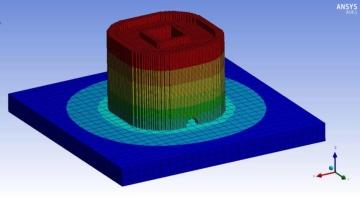
ANSYS has announced that it has acquired 3DSIM, an additive manufacturing (AM) simulation technology development company, enabling it to provide customers with the world's only complete additive manufacturing simulation workflow. 3DSIM is a company that develops high-performance simulation software for metal additive manufacturing. 3DSIM supports manufacturers, designers, and engineers in achieving optimal objectives through simulation without having to go through prototype testing. Its primary customers include aerospace and automotive OEMs (Original Equipment Manufacturing), metal 3D printer manufacturers, and universities and major research institutes. Additive manufacturing, a technology attracting attention in the 3D printing field, has primarily been used in prototype fabrication, but recently it is being directly applied to mass production of products. Various materials are being produced through additive manufacturing technology, and metal materials in particular are challenging to handle. In metal additive manufacturing processes, the lasers used can optimize metal density but can simultaneously melt the metal and cause errors. Furthermore, rapid heating and cooling during the process can induce stresses, creating a high likelihood of product deformation.
2017.11.21by 김지혜 기자

Stratasys Strengthens Smart Manufacturing in Domestic Industries Through 3D Printing Adoption
Stratasys introduced additive manufacturing solutions while announcing its business expansion strategy for the domestic market. Hwang Hye-young, Branch Manager of Stratasys Korea, introduced various additive manufacturing solutions recently unveiled and shared insights on diverse innovations led by 3D printing technology in the future manufacturing sector.
2017.12.14by 김지혜 기자
.jpg)
SalePoint Signs Multi-Year Partnership Agreement with AWS… Promoting Identity Security that Integrates Even AI Agents
Sailpoint has entered into a multi-year strategic partnership agreement with AWS and is moving forward with establishing an integrated governance system that manages both human and non-human identities together. The plan is to consistently manage access permissions in an environment where AI agents are increasing as work execution entities, while applying the principle of least privilege and automated policy enforcement. The two companies plan to jointly expand capabilities to manage the identities of various entities, including AI agents, within a single layer in the AWS environment. This collaboration is interpreted as a move to design security and governance together in corporate environments where AI adoption is expanding.
2026.03.26by 배종인 기자
.png)
Databricks Unveils Open AI Security Monitoring 'Lakewatch'
Databricks entered the security market on March 24 by unveiling LakeWatch, an open-source agentic SIEM. The core functionality of this product is to integrate and analyze security, IT, and business data in a single environment to support AI-based threat detection and investigation. The company explained that it reduces the limitations of existing security operations centers, which have had to forgo some data due to high cost structures, and enables large-scale data analysis and automation based on open formats and ecosystems. LakeWatch is currently offered as a private preview, with Adobe and Dropbox mentioned as early customers. Databricks also announced an expanded partnership with Anthropic as well as the acquisition of Antimatter and SiftD.ai.
2026.03.26by 배종인 기자











