



SUALAB Launches Upgraded Version 'SUAKITT 2.0' with 4 Improved Features
 Published2018.02.28 10:54
SUALAB has made another leap forward. By releasing 'SuaKIT' version 2.0, it has significantly improved upon the inconveniences of the previous version.
Version 1.0 of SuaKIT, a deep learning-based machine vision inspection software, introduced automated defect inspection to various manufacturing sectors by applying a case-learning deep learning algorithm. It has been praised for enabling inspection of various areas that were difficult to inspect with existing machine vision systems, and for significantly improving accuracy and speed.
In addition, SuaKIT 2.0 has taken it a step further by significantly improving four features: ▲ an Image Comparison mode that analyzes the difference between two images, ▲ a Detection mode that can detect and classify multiple objects within a single image, ▲ a Visual Labeler function in which a deep learning algorithm recommends defective areas of a product, and ▲ a Visual Debugger function that shows which area of an object the deep learning algorithm focused on for inspection.
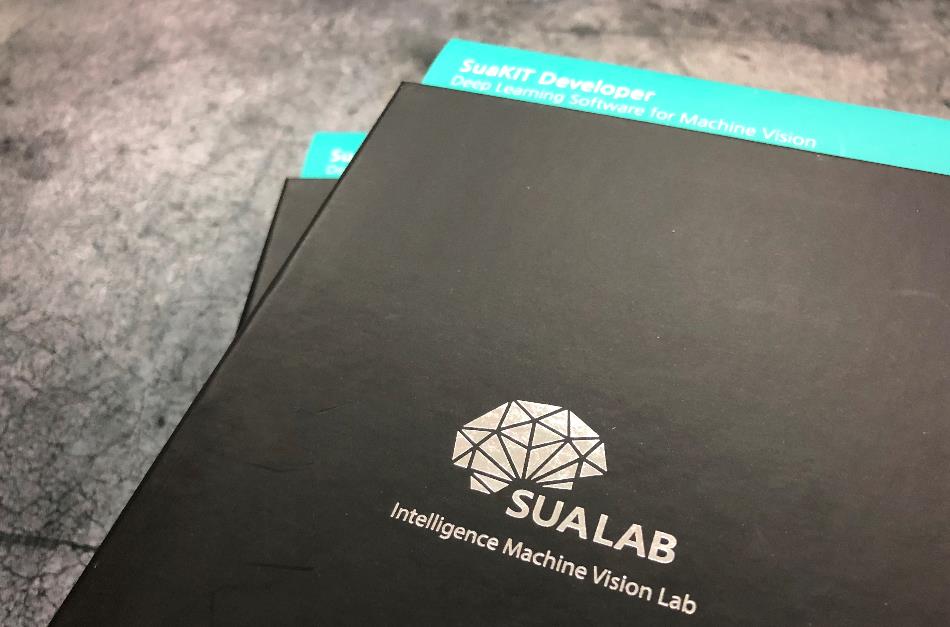
Image Comparison mode facilitates optimization tailored to changes in the product or background pattern to be inspected. Naturally, it minimizes the optimization costs that were previously added.
Detection mode is a feature that can separate each type of object when multiple types are mixed within a single image, making classification difficult. It is also possible to count the number of objects.
The Visual Labeler feature is also noteworthy. Previously, defective areas on the images of every product to be inspected had to be manually specified, but in this version, a deep learning algorithm automatically recommends defective areas. This allows for the minimization of labeling costs.
Finally, there is a Visual Debugger feature. In previous versions, it was not possible to know the criteria by which the deep learning network identified defects, but now it visualizes the areas that the deep learning algorithm focused on inspecting and informs the user. This allows users to verify whether the inspection was performed according to their intent.
"SuaKIT 2.0 is the result of actively reflecting the voices of consumers and market trends," said Song Ki-young, CEO of Sua Lab. "We will continue to constantly consider ways to improve the accuracy and speed of testing and maximize user convenience."
Comments 1
1 Comments:
Related news
SUA Lab Overcomes Machine Vision Limitations with AI
SUALAB, an AI-based smart factory solution provider, has officially launched SuaKIT, a deep learning-based machine vision inspection software. SuaKIT is based on image interpretation technology and has significantly improved inspection accuracy and speed in various domains where conventional machine vision technology was difficult to apply. Traditionally, engineers had to manually define defects in images one by one and set defect characteristic values by hand. As a result, machine vision technology could only be utilized in fields with standardized surface shapes, such as semiconductors and LCDs. Conversely, in fields with non-standardized surface shapes, such as textiles and natural leather, it was difficult to manually set defect characteristic values, so most operations relied on visual inspection.
2017.07.05by 김지혜 기자
Sualab, Achieving Smart Factories with AI
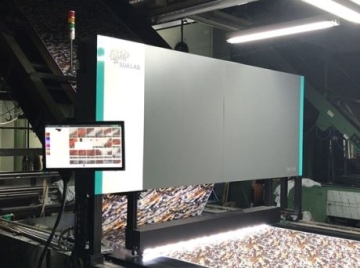
AI-based smart factory solution company 'SUALAB' officially launched 'TAS (Textile A.I. Solution) Dyeing Machine,' a textile AI inspection solution, on the 14th of last month. The TAS Dyeing Machine, which applied machine vision technology for the first time in the world to the dyeing process in the textile industry where automated inspection processes were virtually non-existent, is based on image interpretation technology and artificial intelligence technology. In the existing manual inspection for the dyeing process, the judgment criteria varied from inspector to inspector, inevitably resulting in slower overall speed. It was also impossible to detect 'continuous defects' occurring in the process in real time. Additionally, there were difficulties in securing inspection personnel, resulting in excessive labor costs and outsourced inspection expenses.
2017.09.05by 김자영 기자
Suarlab and Korea Airports Corporation are researching automated video interpretation solutions.
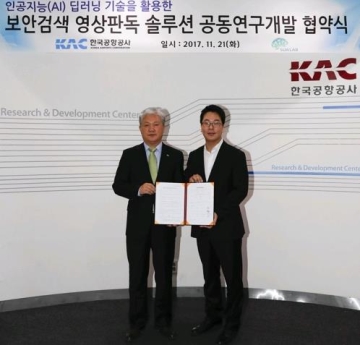
Sualab announced that it has signed a research and development cooperation agreement with Korea Airports Corporation for an automatic image interpretation solution for X-Ray security screening. Sualab will provide deep learning technology to the airport corporation, and has agreed to jointly develop an automatic image interpretation solution for X-Ray security screening, which plays the most critical role in airport security. Sualab's deep learning technology has been verified across various fields to date. The deep learning-based X-Ray security screening automatic image interpretation solution is a next-generation security screening system that can automatically read, detect, and classify hazardous materials by analyzing big data accumulated during baggage screening processes through artificial intelligence. Through the provision of Sualab's technology and solutions, it is expected that bottlenecks in security screening due to the surge in air passengers and baggage will be resolved, accuracy will be improved, human error will be minimized, and the system can be operated more efficiently going forward.
2017.11.22by 김지혜 기자
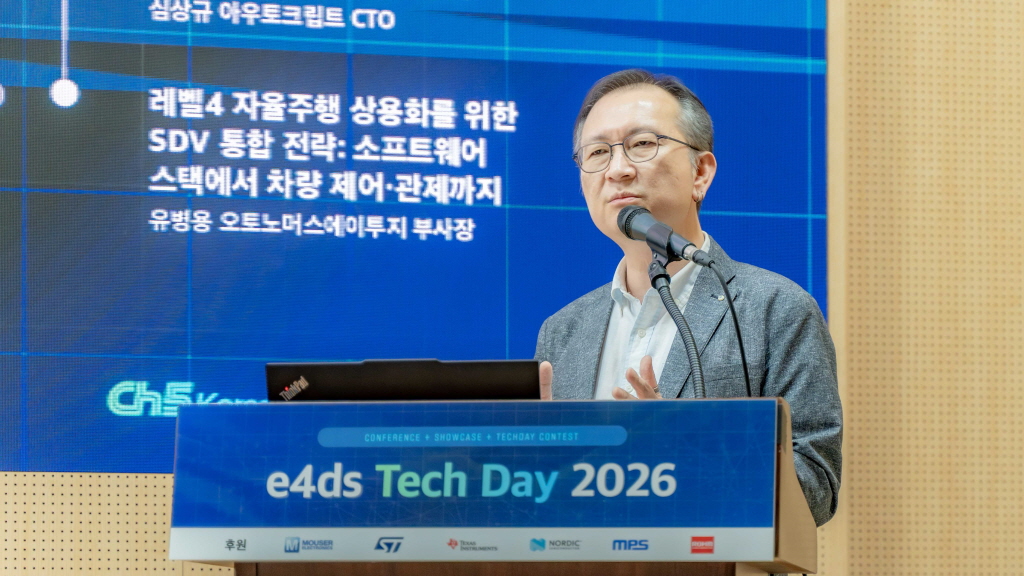
[e4ds Tech Day 2026 ⑨] Sim Sang-gyu, Autocrypt CTO: "In the Physical AI Era, Automotive Security Must Extend Beyond the Vehicle"
At e4ds Tech Day 2026, Sim Sang-gyu, CTO of Autocrypt, explained automotive cybersecurity strategies in the era of Physical AI and SDV (Software-Defined Vehicle). Automobiles are evolving as part of an ecosystem connected to AI, cloud, chargers, IoT, and robots, and he emphasized that the scope of security must expand beyond the vehicle interior to the entire connected environment. In particular, AI model tampering, adversarial attacks, OTA updates, and EV charger hacking were identified as major threats. He explained that response measures require zero trust, AI model integrity protection, intrusion detection, Security by Design and Default, and full lifecycle security management, and that proactive security system establishment beyond regulatory compliance is critical for securing future mobility competitiveness.
2026.10.12by 배종인 기자
NVIDIA to Invest $1 Billion in U.S. Science Over Next Five Years
NVIDIA has announced plans to invest $1 billion over the next five years to strengthen U.S. scientific and technological competitiveness. The company will enhance cutting-edge artificial intelligence research and development capabilities in key areas including quantum computing, healthcare, and energy security, while expanding support for higher education research institutions and cloud service providers. NVIDIA is participating as a major industry partner in the White House Office of Science and Technology Policy's Genesis Mission, and is promoting supercomputer construction in collaboration with national laboratories including Argonne and Los Alamos.
2026.10.12by 배종인 기자












좋은 정보 감사합니다