


Ministry of Science and ICT to Discover Excellent Blockchain Use Cases
 Published2018.03.09 12:03
The Ministry of Science and ICT and the Korea Internet & Security Agency announced that they will pursue pilot projects to discover excellent use cases for blockchain, a core technology of the Fourth Industrial Revolution.
Blockchain is a promising future technology that implements the Fourth Industrial Revolution by enhancing data security and transaction efficiency across various industrial sectors. The Ministry of Science and ICT has been conducting pilot projects since 2017 to promote the adoption of blockchain technology across all industries.
① Transparent Electronic Voting System (National Election Commission)
As the application of online electronic voting expands into high-value public sectors such as party primaries and university presidential elections, higher levels of security are required. By applying blockchain technology, which has the characteristic of making stored data difficult to forge or tamper with, to the electronic voting system, reliability in voting processes and results is secured and the use of online electronic voting is expanded.
② Blockchain-based Electronic Document Issuance Authentication System (Ministry of Foreign Affairs)
International opinion has continuously raised the need to establish on a blockchain basis the issuance records (1.3 million cases as of 2017) of 'Apostille certificates' separately issued by the Ministry of Foreign Affairs and Ministry of Justice for Korean-issued documents (official documents and notarized documents) to be recognized overseas.
By proactively establishing a 'blockchain-based apostille management system,' the reliability of overseas utilization of documents issued by Korea is enhanced, and international standardization of global apostille management systems is pursued.
③ Reliable Livestock Product Traceability System (Ministry of Agriculture, Food and Rural Affairs)
Traceability information is managed and disclosed to the public for all stages from cattle birth through raising, slaughtering, processing, and sales stages; however, this relies on reports from implementing entities and may contain errors, and real-time verification is insufficient.
Through the establishment of a 'blockchain-based livestock product traceability system' that collects traceability information in real time from IoT sensors and links it to blockchain, real-time sharing and verification systems for traceability information are established to enhance consumer confidence and reduce administrative burdens related to various distribution-related documents.
④ Paperless Smart Contract-based Real Estate Transaction Platform (Ministry of Land, Infrastructure and Transport)
Currently, various real estate certificates are required in real estate transactions (sales, loans, etc.), incurring social costs, and paper certificates have high possibilities of forgery and tampering, frequently leading to criminal abuse.
To address this, blockchain technology is introduced into the existing comprehensive real estate information system, and a real estate smart transaction platform that provides real estate transactions as a one-stop service through linkage with financial institutions, judicial scriveners, and licensed real estate brokers is pilot-established.
⑤ Fast and Efficient Smart Personal Customs Clearance Service (Korea Customs Service)
As personal overseas direct purchasing is increasing sharply, various participants (e-commerce companies, international express carriers, customs, etc.) face inconvenience in information sharing, with customs declarations being handwritten and transmitted in the customs process.
The smart personal customs clearance service, where multiple stakeholders participate together in blockchain, shares information generated at each distribution stage from product purchase through shipment to arrival in real time via blockchain to safely protect against forgery and tampering and efficiently improves customs clearance procedures.
⑥ Youth Activity Support Online Platform (Seoul Metropolitan Government)
Currently, various youth support projects such as youth allowance and student loan interest support programs require applicants to separately prepare and submit required documents for qualification verification at the time of application, and document verification takes over one month, which has been reviewed as an area for improvement.
The youth activity support online platform links document-issuing organizations (National Health Insurance Service, Korea Workers' Compensation & Welfare Service, universities, Seoul Metropolitan Government, etc.) via blockchain to significantly reduce the hassle of document preparation and submission and verification time required, and provides diverse customized youth support programs based on linked data.
Choi Young-hae, Director of Internet Convergence Policy at the Ministry of Science and ICT, emphasized that "blockchain is a core technology to usher in the Fourth Industrial Revolution and is a universal technology that can be applied not only to finance but also to all services requiring trust such as logistics, distribution, authentication, and electronic voting," adding "Through this pilot project, we expect the advantages of blockchain technology to be utilized in the public sector as well as be connected to demand creation in the private sector."
Comments
Related news
Musk and IBM to Establish Blockchain Joint Venture
A.P Moller-Maersk and IBM announced plans to establish a joint venture company that will leverage blockchain technology to enhance efficiency and security in international trade. The joint venture will jointly develop and provide an international trade digital platform applicable across the global shipping ecosystem, which is expected to streamline procedures and increase transparency in cargo transportation across borders and trade routes.
2018.01.17by 김학준 기자
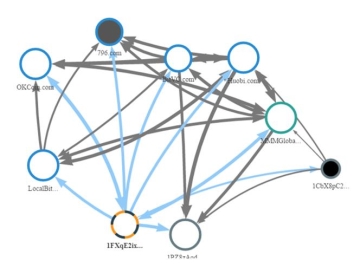
Insec Security Launches Digital Forensic Solution for Blockchain and Bitcoin Account Analysis
Insecurity announced that Chainalysis, a software specialist in bitcoin anti-money laundering, has launched Chainalysis REACTOR, a digital forensics solution for blockchain and bitcoin account analysis. Chainalysis REACTOR is a transaction analysis solution based on bitcoin wallet addresses that allows users to easily analyze all transaction logs of a wallet by entering the wallet address. As an interactive investigation tool, REACTOR enables annotations and notes to be added to investigation results, allowing simultaneous investigations through data sharing with other members of the same organization.
2018.02.21by 김지혜 기자
KT to Preempt Market by Developing Blockchain Joint Platform
KT announced that it has joined the CBSG (The Carrier Blockchain Study Group), a blockchain collaboration system among global telecommunications companies, to secure leadership in the blockchain market and take the initiative in activating the ecosystem. CBSG is a business alliance established in September 2017 with SoftBank from Japan, Sprint and TBCASoft from the United States, and FarEastOne from Taiwan as its core members, aimed at building and expanding a telecommunications-exclusive blockchain platform. Within Korea, KT and LGU+ are registered members.
2018.02.23by 김학준 기자

The financial services industry is the most active in adopting hybrid cloud.
Nutanix announced the cloud adoption status and outlook for the financial services industry through its Enterprise Cloud Index report. According to a survey of current hybrid cloud adoption rates by industry, the financial services industry's hybrid cloud adoption rate was 21%, which was higher than the industry average of 18.5%. Financial services companies are facing the challenge of providing differentiated experiences to customers through methods such as leveraging emerging technologies like blockchain, while simultaneously simplifying operations.
2019.04.02by 이수민 기자

IBM Blockchain World Wire… Real-time global financial payment network expands to over 50 countries worldwide
IBM announced on the 19th the expansion of IBM Blockchain World Wire, a real-time global financial settlement network for financial institutions. World Wire was developed to accelerate and optimize foreign exchange transactions and cross-border payment and remittance speeds. Additionally, it integrates payment message transmission, clearing, and settlement procedures into a single network while supporting network participants in selecting various types of digital assets for settlement. Starting from the 19th, the payment service area will be expanded to 72 countries, including 47 global currencies and 44 financial endpoints. Busan Bank became the first domestic bank to join World Wire.
2019.03.19by 이수민 기자











