



Nvidia Achieves Movie-Quality Real-Time Rendering with RTX Technology
 Published2018.03.20 10:11
Nvidia has announced NVIDIA RTX, a ray-tracing technology that enables content creators and game developers to perform real-time rendering at movie-quality levels.
NVIDIA RTX is the result of ten years of accumulated technological expertise in computer graphics algorithms and GPU architecture fields. It runs on NVIDIA Volta architecture GPUs and is comprised of highly scalable ray-tracing technology. To support ray-tracing through various interfaces, Nvidia has partnered with Microsoft and fully supports applications utilizing Microsoft's new DirectX Raytracing (DXR) API with RTX.
Ray-tracing has long been recognized as a complete solution capable of implementing realistic lighting, reflections, and shadows, delivering a different level of realism that surpasses what was achievable with conventional rendering techniques. Real-time ray-tracing replicates the way light reacts in the real world through optical calculations, replacing most of the techniques currently used in standard rendering and implementing more photorealistic images.
Tony Tamasi, Senior Vice President of Content and Technology at Nvidia, stated, "Real-time ray-tracing is something the graphics industry and game developers have been anticipating for decades, and NVIDIA RTX realizes that dream. GPUs are now becoming powerful enough to implement real-time ray-tracing applicable to gaming, and will usher in a new era of next-generation visuals."
Ray-tracing has been used for years in pre-rendering to implement game worlds in film-like manner. However, in the real-time interactive gaming sector, the demand for high frame rates and low latency has meant that to date, ray-tracing has been considered too computationally demanding for practical implementation. NVIDIA RTX is the technology that overcomes these limitations.
Max McMullen, Graphics and AI Development Manager at Microsoft, stated, "DirectX Raytracing represents the latest example of Microsoft's efforts to enable developers to create fantastic experiences by leveraging cutting-edge graphics innovation. Thanks to our close partnership with Nvidia regarding DirectX Raytracing and NVIDIA RTX technology, we can bring real-time ray-tracing even closer to the millions of gamers enjoying games on Windows."
Industry leaders including 4A Games, Epic Games, Remedy Entertainment, and Unity will showcase NVIDIA RTX at technical demonstrations at the Game Developers Conference being held in San Francisco this week. They are demonstrating how fantastic and vibrant graphics will be implemented in future games through real-time ray-tracing. Additionally, RTX supports Microsoft DirectX Raytracing, allowing Windows users anywhere to leverage cutting-edge DirectX Raytracing technology.
Kim Libreri, Chief Technology Officer at Epic Games, stated, "The arrival of NVIDIA RTX opens the possibility of actually implementing real-time ray-tracing. With support for the new DirectX Raytracing API, the game development community can now use powerful technology, and Nvidia is becoming the driving force leading next-generation gaming and film graphics."
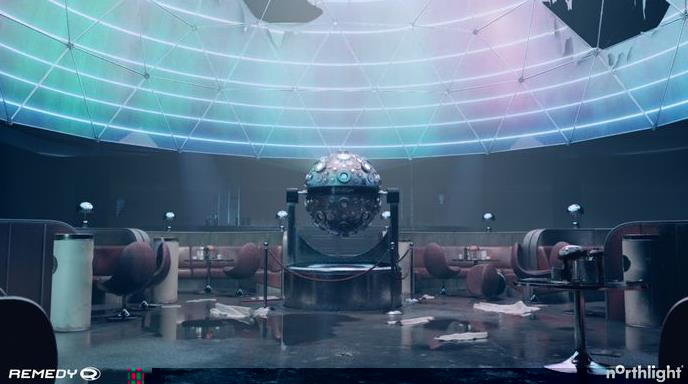
Mikko Orrenmaa, Technology Team Manager at Remedy Entertainment, stated, "Integrating NVIDIA RTX into our Northlight engine was a relatively straightforward process. While developing using only NVIDIA RTX, we were able to prototype new lighting, reflection, and ambient occlusion techniques quite rapidly, and the visual quality was significantly improved compared to conventional rasterization techniques. We have great expectations for what can be implemented through NVIDIA RTX technology in the future, and we will deliver special experiences to gamers going forward."
Nvidia announced that it will add a ray-tracing denoising module to the NVIDIA GameWorks SDK to enable game developers to actively leverage the new technology. The NVIDIA GameWorks SDK, which provides a bundle of various tools and resources for developers, can shorten product cycles for games utilizing the new Microsoft DXR API and NVIDIA RTX, and further enhance realism.
The newly updated GameWorks SDK supports Volta and next-generation GPU architectures, and implements area shadow, glossy reflection, and ambient occlusion effects with ray-tracing applied.
Through these techniques, developers can produce high-quality reflection scenes that closely resemble reality, and achieve lighting and shadow effects with accurately applied physical phenomena. When these can be utilized on industry-standard platforms including Microsoft DXR, any PC game developer will be able to implement a new dimension of realism incomparable to previous methods.
Related news
Maxim Supports NVIDIA Autonomous Driving Platform Functional Safety
Maxim Integrated announced its collaboration with NVIDIA to support NVIDIA's industry-first Level 5 fully autonomous driving platform 'DRIVE Pegasus' and 'DRIVE Xavier' for Level 4 autonomous driving. Maxim's ASIL (Automotive Safety Integrity Level) related solutions and high-performance analog integration technology include next-generation Gigabit Multimedia Serial Link (GMSL) parallel-to-serial transceiver (SerDes) technology and power system monitoring solutions. Through these, Maxim supports functional safety for NVIDIA's autonomous driving platforms.
2018.01.17by 김지혜 기자
NVIDIA Accelerates Autonomous Driving Technology with Xavier SoC
Nvidia has announced that it is moving closer to realizing autonomous vehicles through its Xavier System-on-a-Chip (SoC). Current autonomous vehicle technology is at a level where it can operate independently on congested highways during rush hours or during parallel parking, but it is not yet capable of executing autonomously in all situations. Nvidia unveiled Drive Xavier, a System-on-a-Chip (SoC), at CES 2018.
2018.01.29by 김학준 기자
NVIDIA Hosts 'GTC 2018' to Showcase AI and Deep Learning Technology Trends
Nvidia announced that it will host the Nvidia GPU Technology Conference (GTC) 2018 at the McEnery Convention Center in San Jose, California. Since its first launch in 2009, the GTC has been held annually, and reflecting the increasing demand for GPUs in machine learning, artificial intelligence (AI), data centers, and high-performance computing fields, the scale and number of participants have grown year after year. Jensen Huang, Nvidia founder and CEO, will open GTC 2018 with a keynote address on the theme of "The Future of Computing." At GTC 2018, Nvidia and AI experts from various fields around the world will gather to present hundreds of sessions sharing the latest technology trends and success stories. Under 12 major topics including ▲deep learning and artificial intelligence, ▲accelerated analytics, ▲virtual and augmented reality, ▲automated machinery and innovative robotics, ▲HPC and supercomputing, ▲developer tools, ▲GPU virtualization, ▲IVA & smart cities, ▲autonomous driving technology, ▲data centers and cloud, ▲AI for business, and ▲gaming, over 600 presentation sessions will be offered, allowing participants to see how cutting-edge topics leading future technological innovation are being applied in the industry and driving innovation.
2018.02.28by 김학준 기자
.jpg)
SalePoint Signs Multi-Year Partnership Agreement with AWS… Promoting Identity Security that Integrates Even AI Agents
Sailpoint has entered into a multi-year strategic partnership agreement with AWS and is moving forward with establishing an integrated governance system that manages both human and non-human identities together. The plan is to consistently manage access permissions in an environment where AI agents are increasing as work execution entities, while applying the principle of least privilege and automated policy enforcement. The two companies plan to jointly expand capabilities to manage the identities of various entities, including AI agents, within a single layer in the AWS environment. This collaboration is interpreted as a move to design security and governance together in corporate environments where AI adoption is expanding.
2026.03.26by 배종인 기자
.png)
Databricks Unveils Open AI Security Monitoring 'Lakewatch'
Databricks entered the security market on March 24 by unveiling LakeWatch, an open-source agentic SIEM. The core functionality of this product is to integrate and analyze security, IT, and business data in a single environment to support AI-based threat detection and investigation. The company explained that it reduces the limitations of existing security operations centers, which have had to forgo some data due to high cost structures, and enables large-scale data analysis and automation based on open formats and ecosystems. LakeWatch is currently offered as a private preview, with Adobe and Dropbox mentioned as early customers. Databricks also announced an expanded partnership with Anthropic as well as the acquisition of Antimatter and SiftD.ai.
2026.03.26by 배종인 기자











