



You Must Consider 'This' Before Implementing a Smart Factory
 Published2018.03.26 09:43
When you need to consider how, why, and what before incorporating technology
Countries such as Germany and the United States are taking the lead in exploring solutions to respond to the Fourth Industrial Revolution, and among them, Germany's Industry 4.0 is garnering global consensus. Excluding Germany and the United States, which are leading the Fourth Industrial Revolution, other countries, including Korea and its companies, focus on individual technologies such as AI, machine learning, and IoT for field implementation, but they fall short in forming an overall platform. This is the difference from Germany, which is leading the Fourth Industrial Revolution. Germany has spearheaded standardization and taken the lead in structuring platforms.
Smart factories differ from traditional factories in terms of reliability, agility, connectivity, intelligence, and proactiveness. Many companies are attempting to adopt them because they ensure trust in the management of production operations and enable factories, which were previously passive entities, to perform proactive responses.
Looking at the case of Adidas's Speed Factory in Germany, the proportion of actual factory manufacturing is only 1%. This is because contract manufacturing in Asia offers significant cost-saving benefits. It can be seen as a more valid reason to increase corporate value rather than improve production efficiency. Nevertheless, the reason it is considered an industry standard and reference model is that it can increase business value.
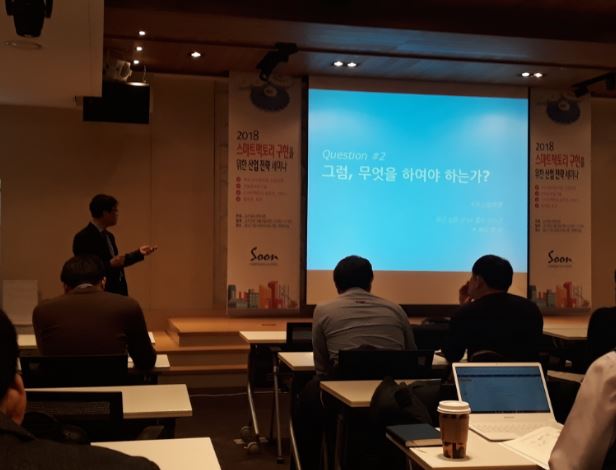
Furthermore, although Audi has been actively attempting to introduce smart factories—such as switching from the conventional conveyor system to a cell system for customized production and providing work standards existing in file form via worker terminals (HMI) and augmented reality 3D goggles—actual operational effects have not been announced. On the contrary, there have been issues with mass production, and productivity has actually decreased compared to the conventional conveyor system. The case of the German company demonstrates that factory implementation should be carried out cautiously, following an understanding of the perspectives from which value should be placed, rather than simply focusing on productivity.
Kim Seung-taek, a director at Deloitte Consulting, stated, “Rather than vaguely adopting new ICT technologies, companies should review proven models by considering various factors such as their current position and culture.” He added, “We must share strategies to enhance efficiency, moving beyond the concept of perceiving a ‘smart factory’ as the advancement of a single technology or the simple quantitative expansion of factories.” He further emphasized, “Before integrating technology, it is necessary to contemplate how, why, and what.”
In Korea, the government, public institutions, and the media emphasize the significant development of the Fourth Industrial Revolution and smart factories and announce growth, but this is limited to individual elements that make up the industrial sector, such as IoT, AI, and deep learning. The tendency to package the brilliant achievements of smart factories while maintaining a different approach from Germany, which leads the Fourth Industrial Revolution by prioritizing standards and platforms, makes independent development difficult.
What is the downside of technological adoption? First, we are proceeding with projects solely focused on blindly pursuing smart factories and the Fourth Industrial Revolution. There is no clear "to be," or purpose. Without a clear goal on how and what to utilize, we are merely emphasizing the application of individual technologies such as AI, deep learning, and 5G.
Introducing ICT technology without a concrete strategy carries significant risks. If the mere adoption and utilization of IT technology is perceived as a smart factory, the manufacturing site will become nothing more than a facade. We must avoid vague adoption and identify the problems arising from the changes. We were able to upload data using existing information technology; this is not a new technology. However, the reason it was not utilized was its low efficiency. While we tend to focus unconditionally on IT technology, establishing the foundation of OT at the lowest level must be prioritized.
Won Il-min, General Manager of Hilscher Korea, stated, “The core of a smart factory is increasing efficiency by sending data from the lowest level of the industrial site to the top level.” He further emphasized, “We must consider not just large amounts of data, but also the methods of gathering, collection, and transmission.”
Only by mastering the fundamentals, starting with operational skills necessary for manufacturing such as manufacturing technology, business processes, and standards, will factory operations be able to transcend hierarchical boundaries.
So what should be done? To increase efficiency, there are things you 'want to do' and things you 'can do' depending on the circumstances. However, first of all, there are things that 'must be done'. Kim Seung-taek, a director at Deloitte Consulting, stated, “The unconditional introduction of a factory leads to failure,” adding, “Production visibility must be secured through clear goals. In other words, if plans are established based on an understanding of the current level and introductions are avoided for promotional purposes, it can lead to the expected results.”
관련뉴스
[Talking about Industrial IoT⑥] Will B&R, combining OPC-UA and TSN, become a smart factory turbo engine?
OPC-UA is a technology from the OPC Foundation that enables reliable connectivity between equipment (robots, sensors, etc.) and across stations up to the enterprise level in automation facilities utilizing various industrial protocols. It aims to establish a future smart industrial system capable of integrating diverse systems and operating autonomously with standardized specifications. OPC-UA meets new industry requirements such as security, data loss prevention, redundant data connectivity, and the use of complex data structures. It offers scalability, high availability, and internet capabilities while maintaining independence from operating systems and programming languages. Additionally, it supports a wide range of systems from PLCs in the production field, including embedded systems in control devices, to MES and ERP (Enterprise Resource Planning) in enterprise servers.
2018.02.05by 명세환 기자
스마트 팩토리, 설계에서 제조까지 데이터 대동단결!
스마트팩토리에서 중요한 부분은 R&D 연구소와 제조업의 연계성이다. 이를 위해 제조에 필요한 기술 데이터를 축적해야한다. 국내 스마트팩토리는 기술 수준은 상당부분 증가했으나 원활한 데이터 공유를 위한 회로 관리, CAD 기술 확보는 아직 미흡한 단계이다. 전자부품연구원(KETI)에서 발표한 ‘스마트 팩토리 수준 비교서’를 보면 ERP, MES, 네트워크, PLC 등은 최대 90%까지 기술 수준이 오른 반면, CAD는 20%에 그쳤다. CAD기술 발전이 더딘 이유 중 가장 큰 문제는 많은 비용이 들어간다는 것이다. 데이터 일원화를 하려면 인트라넷과 네트워크를 구축하고 공장 내 수많은 센서를 설치해야 하는데 이를 위한 비용은 중소기업이 자체적으로 감당하기 어렵다. 그 다음 문제는 데이터 전환에 따른 왜곡이다. 연구 단계에서 산출한 데이터가 제조업에 전해지는 과정에서 회로는 거버, 도면, 페이퍼 등으로 바뀐다.
2018.02.09by 김학준 기자
[Speaking of Industrial IoT⑧] Hilscher: "We must create meaningful data by combining IT and OT."
At IIoT Innovation day 2018, Hilscher, a German company that can be considered the starting point of Industry 4.0, will participate in a seminar with the theme of communication from the work site to the cloud through IIoT. Hilscher's perspective on IIoT is to collect data from various edge points through the convergence of IT and OT to create meaningful information. Hilscher will present methods on how to elevate data from the lowest level of the field to the highest level, along with the advantages and disadvantages of these approaches. Additionally, the seminar will focus on conveying how to collect data and what information should be transmitted for efficiency, rather than emphasizing the volume of data sent. Furthermore, it will be possible to learn about Hilscher's IIoT strategy, technological solutions, and approaches. Prior to the seminar, an interview was conducted with branch manager Won Il-min to understand the areas on which Hilscher is placing emphasis.
2018.03.06by 김학준 기자
Ecolab and K-water Discuss Innovation Collaboration in Advanced Industry Water Management
Ecolab and the Korea Water Resources Corporation jointly discussed cooperation directions for maximizing water use efficiency in advanced industries such as semiconductors and data centers and establishing sustainable water circulation. The two companies agreed to gradually develop a long-term cooperation model that combines water resource infrastructure and water management technology to promote water efficiency optimization, water reuse, and carbon reduction.
2026.08.28by 명세환 기자
에이치에너지, 녹색기술인증 획득…솔라온케어 가동률 99.82%
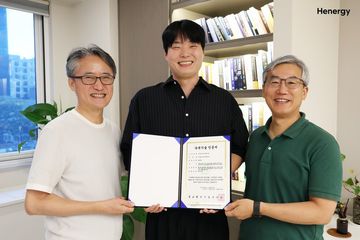
에이지에너지가 태양광 발전예측 및 I-V커브 이상진단 기술로 중소벤처기업부 녹색기술인증을 획득했다. AI 기반 자산관리 플랫폼 솔라온케어는 전국 3,000개 이상 발전소에 적용되어 99.82%의 시스템 가동률과 3.7% 발전성능 개선을 달성했다. 실시간 데이터 분석을 통해 모듈 노화와 부분 음영 등 미세한 손실을 조기에 감지하고 관리함으로써 발전 수익을 보호한다.
2026.08.25by 명세환 기자











