


Huawei Consumer Business Group Announces '2017 Performance Results'
 Published2018.04.04 14:56
Expanding Recognition, Influence and Market Share in the High-end Market with P and Mate Series
Huawei announced its 2017 performance results. Last year's total revenue reached 603.6 billion yuan, representing a 15.7% increase compared to 2016, while net profit reached 47.5 billion yuan, marking a 28.1% increase year-over-year.
In particular, Huawei and the Honor brand demonstrated sharp growth momentum. Huawei shipped a total of 153 million smartphones including the Honor brand last year, with annual revenue of 237.2 billion yuan, up 31.9% compared to the same period of the previous year.
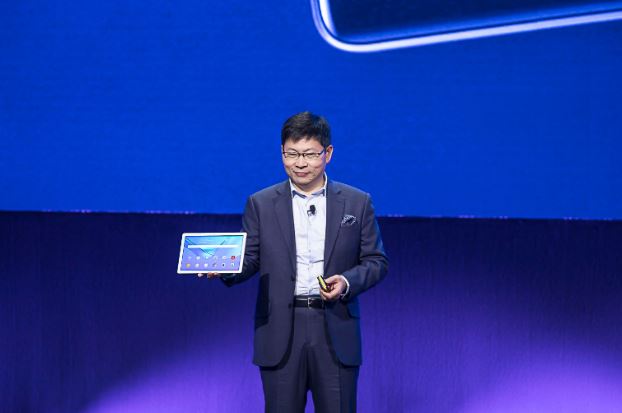
Creating Synergy between Huawei and Honor Brands
In 2017, based on Honor's dual-brand strategy, Huawei introduced a diversified flagship product portfolio to the market. Huawei, which emphasizes innovative features and user experience, achieved significant results in the high-end market by providing products and services that deliver end-to-end experiences to more customers. The Honor brand established itself as an online-exclusive mobile brand highly preferred by young customers, based on sophisticated new technologies.
In 2017, Huawei's flagship products—the Huawei P series and Huawei Mate series—gained popularity among consumers worldwide and enhanced the company's influence in the global high-end market.
Huawei's smart devices also received positive feedback in each region. Huawei products, including Honor, maintained the largest market share in the Chinese smartphone market and were selected as a recommended brand in China's mobile phone industry by Chnbrand, a brand evaluation organization that publishes the China Consumer Net Promoter Score (C-NPS), making it the first Chinese brand to receive this distinction. Huawei smartphones received high evaluations from consumers in European countries such as Germany, Finland, Denmark, Spain, and Italy, with both market share and preference increasing. Huawei was ranked as the second most considered brand in some European countries.
Enhanced User Experience in All Aspects
As market share and brand awareness continued to increase, Huawei focused on improving user experience. Huawei consistently enhanced user experience by focusing on product innovation, mobile services, channel transformation, and customer service, thereby strengthening its foundation as a premium global brand.
The Huawei Mate 10 series is equipped with an AI camera, AI-based smart battery management, an intelligent assistant, and intuitive high-touch features. EMUI 8.0 uses artificial intelligence technology to reduce Android lag and optimize smartphone operation. In terms of mobile services, Huawei AppGallery provides a four-stage security verification mechanism that prevents app security risks for users, establishing a safer and more stable app platform. Throughout 2017, approximately 6.1 billion downloads occurred on Huawei AppGallery, which offers over 600 paid apps across 18 categories.
There was also notable growth in Huawei's proprietary apps and software. Huawei Pay supports services from over 66 banks and is compatible with over 20 smartphones and smartwatches. Huawei Pay can be used for public transportation in Beijing, Shanghai, Guangzhou, Shenzhen, Suzhou, Wuhan, Guangxi, and several other cities. Huawei Video, Huawei Music, and Huawei Reader are chosen by many consumers, and through Skytone, an overseas data service, mobile internet access without a SIM card is available in over 80 countries and regions.
Along with superior mobile services, Huawei's user base continues to expand. As of Q4 2017, Huawei Mobile Services users exceeded 340 million, a figure that includes 30 million users outside of China. As of December 2017, Huawei operates over 45,000 retail outlets, a 10% increase compared to the previous year.
In the customer service sector, Huawei continuously expands service coverage and makes efforts to develop various types of services to provide customers with more convenient and personalized service experiences.
Future-Oriented Open Ecosystem
Today's smartphones stand at an important gateway to entering tomorrow's intelligent world. Beyond simply 'smart' features, they will evolve into entities that are 'intelligent,' and smartphones will transcend being personal tools to naturally extend as part of the body, providing AI-based services. Through machine learning and data analysis, intelligent mobile devices will perform diverse roles in daily life—acting as housekeepers, personal trainers, nurses, drivers, secretaries, and teachers—ultimately providing consumers with more thoughtful and differentiated experiences.
Under this vision, Huawei's Consumer Business Group is developing intelligent products and ecosystems. It unveiled the 'Kirin 970' AI chipset equipped with a Neural Network Processing Unit (NPU). This chipset was incorporated into the Huawei Mate 10 series, resolving computational performance bottlenecks and presenting new possibilities that enable human-machine interaction. The Kirin chipset serves as the foundation of the HiAI ecosystem, and this ecosystem, reflecting Huawei's unique artificial intelligence technology related to chipsets, devices, and cloud, integrates the Kirin chipset, EMUI smart engine, and smart services into an AI mobile computing platform.
Based on intelligent devices, smart home plays the most significant role in daily life. Huawei's Consumer Business Group is advancing the construction and operation of the 'HiLink Smart Home Ecosystem' through ecosystem development in three stages. The first stage is to increase connectivity of all devices. The second stage is to realize full connectivity where humans, devices, and services operate within close proximity. The third stage is intelligent connectivity, where each device possesses independent learning capabilities and enables mutual information sharing across diverse application scenarios.
In 2018, Huawei will continue innovation in core technologies such as artificial intelligence and AR/VR that reflect consumer needs, transitioning smart devices into intelligent devices. Huawei's 'end-to-end' technology will maximize synergy between chipsets, devices, and cloud, and ultimately aims to provide consumers with new user experiences and lead innovation in the smart device industry.
Related news
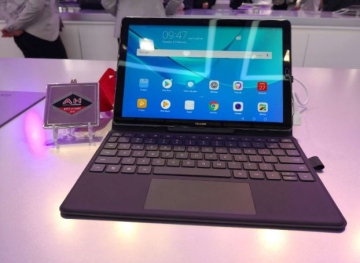
Huawei Wins Global Media Award at MWC 2018
Huawei announced that the MateBook X Pro and Huawei MediaPad M5 series won awards across a total of 33 categories at the MWC 2018 Awards. The product series unveiled at MWC 2018 was evaluated as expanding the foundation of Huawei's smartphone competitiveness to flagship notebooks and tablets. Android Headlines Android Headlines awarded the "Best of MWC" to the Huawei MediaPad M5, recognizing its surround-sound audio performance specialized for multimedia content. Android Headlines is a global website covering Android-related news, IT reviews, and business, with 3.83 million readers.
2018.03.08by 김학준 기자
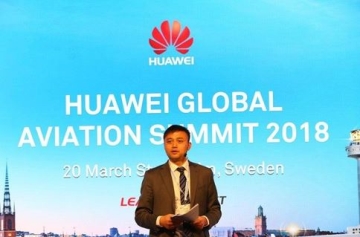
[Foreign Press Briefing] Ensuring Passenger Safety with Smart Airport ICT Solutions
Huawei Ensures Passenger Safety with Smart Airport ICT Solution Huawei introduces a smart airport ICT solution for visualized efficient airport operations, safety, and customized passenger services. The Huawei solution supports the construction of smart airports in the aviation industry by improving operational efficiency and safety while optimizing passenger experience. Huawei's smart airport visualization safety solution provides 4K intelligent cameras connected through broadband video backhaul using a passive optical network. Based on this foundation, intelligent panoramic surveillance technology, facial recognition cameras, and other systems manage and ensure safety in public spaces such as terminals and airfields, as well as in airport facility operations.
2018.03.27by 김학준 기자
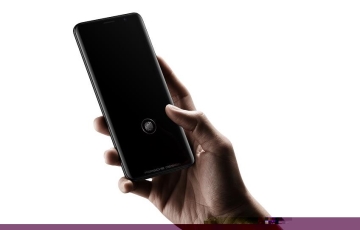
Huawei Unveils Porsche Design Huawei Mate RS
Huawei's Consumer Business Group and Porsche Design unveiled the sophisticated and high-performance PORSCHE DESIGN HUAWEI Mate Race Sport smartphone at an Unpacked event held at the Grand Palais in Paris, France on March 27 (local time). The PORSCHE DESIGN HUAWEI Mate Race Sport showcases the future of mobile technology through the world's first dual fingerprint design featuring an in-screen fingerprint sensor, the integration of the Kirin 970—the world's first AI smartphone processor—and a Leica triple camera with 40MP image capture capability.
2018.03.29by 김지혜 기자
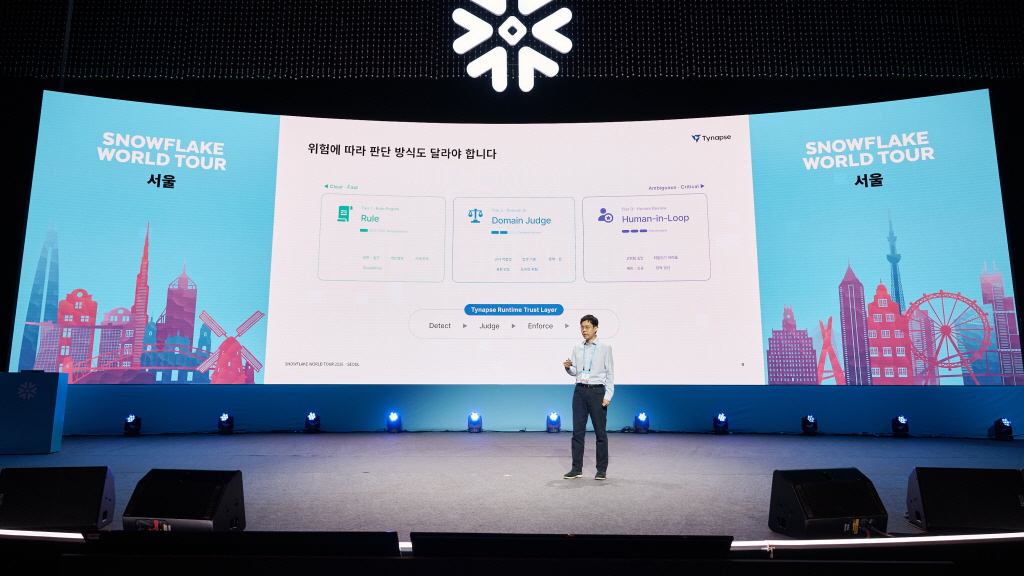
The Problem with AI is Not Performance, but Trust
CEO Kang Min-seung emphasized at Snowflake's World Tour Seoul that generative AI has entered a phase where "trust" rather than accuracy becomes the key competitive advantage. As AI is applied to various tasks including consultation, risk management, and operational automation, incorrect data, erroneous responses, and bias are creating actual business risks. He pointed out that enterprises must build a trust layer above AI. To achieve this, accurate data management, semantic structuring, governance, and prompt security are essential. He explained that AI is not merely an automation tool but a technology that reorganizes the entire organization's workflows and decision-making systems. Snowflake provides a platform that supports this trust-based AI operation, emphasizing that enterprises should build "trustworthy AI" rather than "intelligent AI."
2026.08.28by 배종인 기자
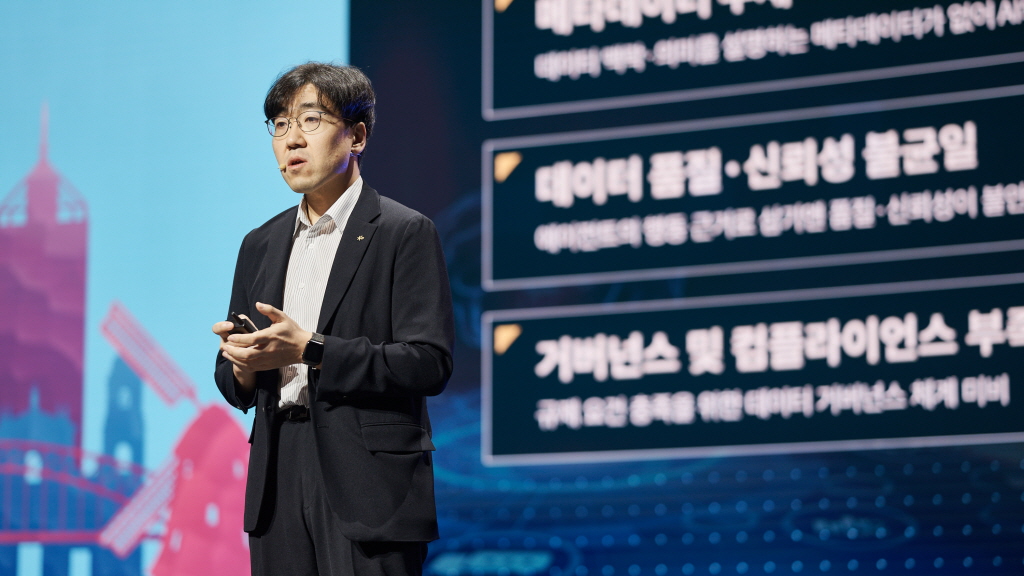
The Decisive Factor for AI Agents in Finance: "Trustworthy Data Infrastructure"
The key to spreading AI agents in the financial sector is establishing a trustworthy data system. KB Kookmin Bank is operating over 100 AI agents by 2025 and is promoting expansion to 300. AI is automating repetitive tasks across various areas such as consultation, risk management, wealth management, and relationship management. However, if data quality, governance, and semantic structuring are insufficient, errors and risks increase. KB is building an AI-Ready organization through a multi-model strategy of GPT, Gemini, and Claude, as well as a Snowflake-based data system. The bank emphasized that AI has entered a phase where it restructures not just simple automation but the entire work process and decision-making system.
2026.08.28by 배종인 기자











