


Do electric buses run on wireless charging?
 Published2018.04.12 17:03
The Korea Advanced Institute of Science and Technology (KAIST) showcased smart wireless charging technology applicable to various fields at 'EV Trend 2018,' which opened on the 12th.
Wireless charging electric buses save 38% on fuel costs compared to diesel and 33% compared to CNG. They are attracting attention because the battery weighs only one-third as much as plug-in or battery swapping charging methods.
Wireless charging methods for electric vehicles can also be applied to railways, ships, trams, drones, and home appliances. After successfully commercializing the electric vehicle wireless charging method (OLEV), the Korea Advanced Institute of Science and Technology (KAIST) is applying it to bus routes 180 and 195 in Gumi City.
Until now, electric buses have faced issues regarding weight and cost due to the inclusion of batteries weighing over 1 ton. Charging also required a long time, and the short driving range was a stumbling block to commercialization. Wireless charging is a method designed to solve these existing battery problems by charging while passengers are boarding and alighting at bus stops. It is advantageous for commercialization because it allows for charging in a short period of time.
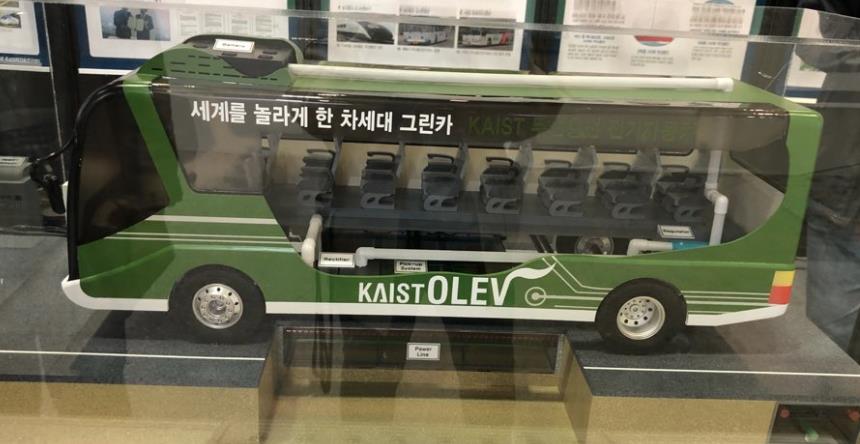
It is a principle that utilizes Magnetic Resonance Imaging Technology (SMFIR) to efficiently collect magnetic fields generated from power lines buried beneath the road through a current collector mounted on the underside of the vehicle, converting them into electrical energy for charging. For commercial operation, a separation distance of 20 cm, power transmission efficiency of 85%, current collection capacity of 100 kW, and electromagnetic safety for the human body of up to 62.5 mG must be secured.
To apply this to buses, power supply rails must be installed in sections of approximately 5% of the entire route, including the starting point, terminal, bus stops, intersections, and parking lots. It is also necessary to install batteries and a current collector on the vehicle's undercarriage.
Starting with the operation of an elephant train at Seoul Grand Park in 2011, the Korea Advanced Institute of Science and Technology (KAIST) has been operating wireless charging electric buses in Gumi City in 2014 and Sejong City in 2015. In 2016, the number of buses was increased and continues to be used to this day.
In addition to applications in buses, research is being conducted on technologies such as wireless charging railway technology, trams, buildings, and wireless charging systems using drones.
1 Comments:
관련뉴스
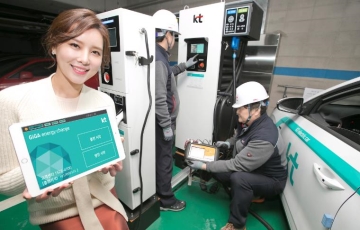
KT, 전기차 배터리 활용한 전력수요관리 사업모델 발굴한다
KT가 경기도 성남시 분당사옥에 V2G(Vehicle to Grid, 양방향 충전) 테스트베드를 구축하고, 개발/실증을 거쳐 EV-DR(전기차의 배터리자원을 활용한 전력수요관리) 사업모델 실증을 진행한다고 밝혔다. V2G는 전기차 배터리에 충전된 전력을 다시 방전하여 전력부족 상황에 대응할 수 있는 기술로, 지난 1월 산업통상자원부 업무보고에서도 주요 에너지 신서비스로 지목되었다.
2018.02.12by 김지혜 기자
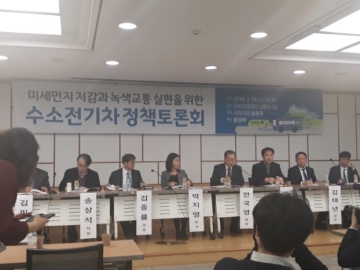
Commercialization of hydrogen electric vehicles requires building technological capabilities and 'this' first.
Recent consecutive high concentrations of fine particulate matter have become problematic. Without wearing a mask, even breathing becomes difficult. Accordingly, the national and local governments are implementing countermeasures such as the odd-even car system, mandatory mask wearing during outings, emergency reduction measures, and closure of public institution parking lots. However, these remain one-time measures. Additionally, in this process, fine particulate matter causes direct damage to public health and safety. In response to this, a hydrogen fuel cell vehicle policy discussion forum was held to establish countermeasures and realize fine dust reduction and green transportation. Experts from various fields participated to discuss domestic and international hydrogen vehicle prospects and methods for realizing green transportation, while presenting content and opinions on policy formulation. In Korea, more than 10% of greenhouse gas emissions occur in the transportation sector, which is mainly centered on internal combustion engine vehicles, and more than 30% of fine particulate matter emitted in the Seoul metropolitan area comes from diesel vehicles. The public and private sectors view a 30% reduction as an important matter in establishing an eco-friendly infrastructure, and accordingly, they are focusing attention on measures to expand the supply of eco-friendly vehicles.
2018.04.06by 김학준 기자
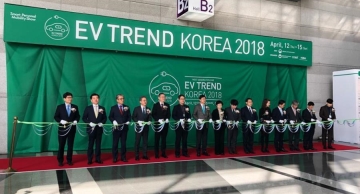
The Current State and Future of Electric Vehicles! 'EV Trend Korea 2018'
E-Mobility, 전장품, 충전 인프라와 국내외 전기차 관련 최신 제품과 동향 파악 및 잠재 고객을 접할 수 있는 전기자 전문 엑스포 ‘EV TREND KOREA 2018’이 12일 개최했다. 4월 12일을 시작으로 15일까지 나흘간 서울 강남구 삼성동 코엑스에서 진행되는 EV TREND KOREA 2018은 대한민국 대표 전기차 엑스포로서 전기차와 모빌리티 전시회가 동시에 개최해 마케팅 효과를 높이고 다양한 트레드 및 기술을 살펴볼 수 있다. 환경부가 주최하는 이번 전시회는 ▲전기자동차, 하이브리드카 등 ‘E-Mobility’ ▲모터, 드라이빙시스템, 트랜스미션을 포함한 ‘전장품’ ▲ESS, UPS와 같은 ‘충전인프라’ ▲관련 인증 및 생산설비 측정기기, R&D 연구기관 등의 ‘인프라/서비스’와 ▲친환경 타이어, 연료절감기 및 ‘관련 용품’을 선보인다. 또한, ▲보험, 대출, 카드회사가 참여해 ‘EV 생활상품’도 소개했다.
2018.04.12by 김학준 기자
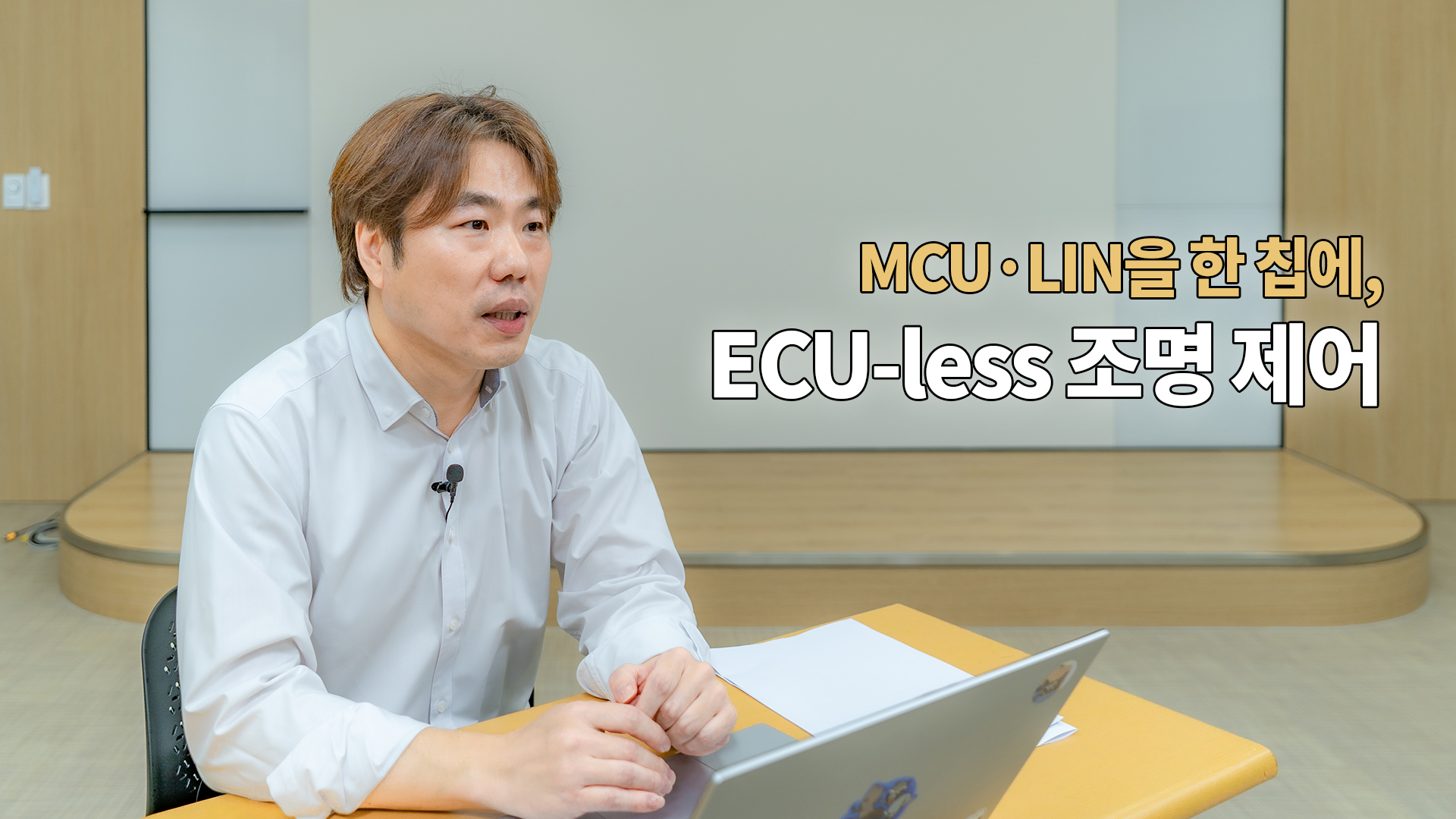
A single misaligned light means 'defect'… Vehicle interior lighting now guarded by semiconductors and software
자동차 실내조명이 '보조 조명'의 자리를 벗어나고 있다. 색상과 애니메이션으로 브랜드 아이덴티티를 드러내고 운전자 취향을 담아내는 사용자 경험(UX)의 핵심 요소로 올라서면서, LED 실내 앰비언트 시장도 빠르게 커지는 중이다. 이에 관하여 '미래 자동차를 밝히는 지능형 LED 실내 조명 솔루션' 이라는 내용으로 기술 웨비나 세션을 발표하는 최영재 다보코퍼레이션 연구위원을 앞서 만나, 시장의 온도와 설계 요구의 변화를 들었다.
2026.08.28by 명세환 기자
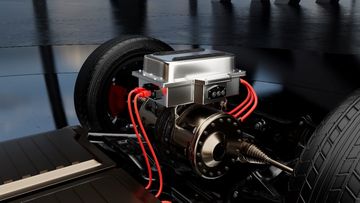
TI, HEV·EV 트랙션 인버터용 다축 코어리스 전류 센서 TMCS2100-Q1 공개
Texas Instruments가 HEV·EV 트랙션 인버터용 다축 코어리스 홀 효과 전류 센서 TMCS2100-Q1을 공개했다. 수평·수직 자기장을 동시에 측정하는 다축 센싱 기술로 기존 단일 축 센서 대비 최대 20배 높은 정확도를 달성하며, 버스바 무개조 설계로 기계 설계 유연성을 확보했다. 800V 아키텍처 확산에 따른 고정확도 요구 충족과 소형화를 동시에 구현한다.
2026.08.27by 배종인 기자












도로에 매설할려면 비용이 만만치 않을텐데...ㅜ.ㅡ