



To increase electric vehicle charging speed using silicon carbide (SiC)
 Published2018.04.17 17:09
Electric vehicles are being launched one after another worldwide due to environmental concerns. Driving range, a major drawback of electric vehicles, is also increasing. As a result, they have become competitive against internal combustion engine (ICE) vehicles.
An important measure of the success of electric vehicles is consumer acceptance. Given that the price of lithium-ion batteries is decreasing and regulatory support is available in various countries, consumers are more interested in increasing charging speed and reducing charging time than in the price of electric vehicles.
It takes less than five minutes to fill the fuel tank of an ICE vehicle. Electric vehicles take a long time to charge their battery packs, and there are also problems finding charging stations.
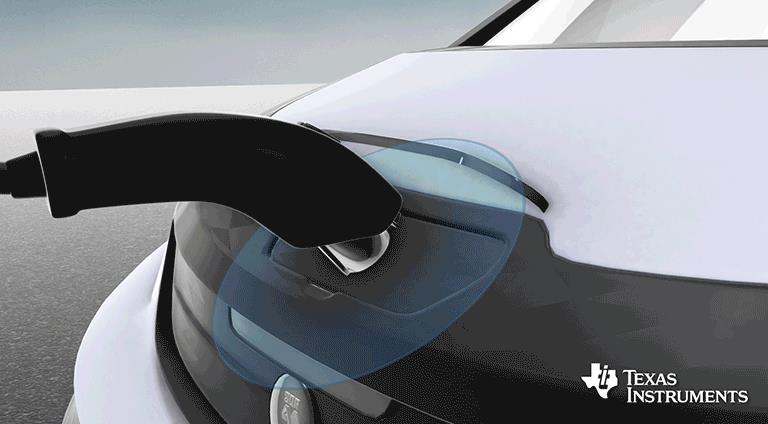
Then, what other methods can be used to increase electric vehicle charging speed? Efficient power delivery and increasing power levels are among the ways to speed up charging. Batteries are charged using a constant current method to prevent damage, but due to varying regulations across countries, increasing the current may be ineffective or even impossible. Furthermore, increasing the current can lead to wiring harness issues and increase the vehicle's weight.
Therefore, a realistically feasible solution is to increase the voltage to 400V or higher. By using silicon carbide (SiC), a wide bandgap technology, in power semiconductors, power can be efficiently transmitted at high voltages.
SiC is a broadband bandgap semiconductor that has emerged as a disruptive material capable of replacing silicon-based power switches (MOSFETs and IGBTs). Many automotive companies and charging system manufacturers are already adopting SiC. SiC has low losses, high efficiency, and can withstand high voltages. Therefore, as battery voltages in electric vehicles (over 400V) increase and power levels rise with onboard chargers (over 10kW) and offboard DC chargers (over 50kW), the use of SiC as a power semiconductor switch is increasing.
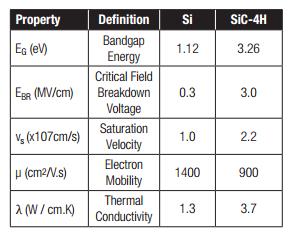
Due to its superior material properties, SiC has low losses and can operate at high voltages. As shown in Table 1, compared to silicon, it has lower on-resistance, higher thermal conductivity, enables high breakdown voltage, and has a faster saturation rate.
To fully utilize these characteristics, it is also important to understand how SiC power devices are driven. Controllers control switching on and off, enabling efficient power transfer across the entire power electronic circuit. A gate driver acts as the interface between the controller and the power device. The gate driver functions like an amplifier, taking the controller signal, amplifying it, and driving the power device.
Selecting a suitable gate driver is very important to utilize the outstanding characteristics of SiC FETs. This is because the requirements are different from when driving silicon MOSFETs or IGBTs.
At the APEC 2018 exhibition held in San Antonio, TI showcased a complete ecosystem using SiC solutions ranging from solar power to automotive charging. It presented a 6.6kW totem pole PFC reference design with 98.5% efficiency for HEV/EV onboard chargers, an automotive dual-channel SiC MOSFET gate driver reference design with 2-level turn-off protection, and a 10kW 3-phase 3-level grid-connected inverter reference design for solar string inverters.
Comments
Related news

Commercialization of hydrogen electric vehicles requires building technological capabilities and 'this' first.
Recent consecutive high concentrations of fine particulate matter have become problematic. Without wearing a mask, even breathing becomes difficult. Accordingly, the national and local governments are implementing countermeasures such as the odd-even car system, mandatory mask wearing during outings, emergency reduction measures, and closure of public institution parking lots. However, these remain one-time measures. Additionally, in this process, fine particulate matter causes direct damage to public health and safety. In response to this, a hydrogen fuel cell vehicle policy discussion forum was held to establish countermeasures and realize fine dust reduction and green transportation. Experts from various fields participated to discuss domestic and international hydrogen vehicle prospects and methods for realizing green transportation, while presenting content and opinions on policy formulation. In Korea, more than 10% of greenhouse gas emissions occur in the transportation sector, which is mainly centered on internal combustion engine vehicles, and more than 30% of fine particulate matter emitted in the Seoul metropolitan area comes from diesel vehicles. The public and private sectors view a 30% reduction as an important matter in establishing an eco-friendly infrastructure, and accordingly, they are focusing attention on measures to expand the supply of eco-friendly vehicles.
2018.04.06by 김학준 기자
Autonomous vehicle sensors must increase MIMO and multi-path precision and reduce prices
Safety is an inherent requirement in autonomous vehicles. Regarding the direction of radar and lidar technologies to achieve this, researcher Lee Sun-young from the Electronics and Telecommunications Research Institute stated, "Radar must focus on precision enhancement based on MIMO technology and multi-path improvement, while lidar must continuously address the issues of expensive equipment and low resolution." Domestic and international companies are targeting the commercialization of autonomous vehicles by 2020. According to a market research firm, demand for autonomous vehicles is projected to increase during 2020-2025. Aligned with this, while companies continue research and development, the Tesla collision accident last month and Uber's recent fatal accident have caused vehicle owners and many people to develop anxiety and skepticism regarding Tesla's Autopilot and full commercialization of autonomous vehicles. Autopilot is Tesla's autonomous driving system in which radar and lidar, cameras, sensors and other components continuously monitor the vehicle's surroundings and independently perform calculations to prevent accidents and collisions. Autopilot is divided into four levels: Level 1 where driving is conducted without sensor assistance, Level 2 with sensors playing a supporting role, Level 3 where autonomous driving is possible in specific sections, and Level 4 where complete autonomous driving is possible.
2018.04.09by 김학준 기자
Why LiDAR for Autonomous Vehicles?
For autonomous vehicles to become a reality, multiple technologies are required. Dozens of systems must be fulfilled, including HDA (which automatically maintains inter-vehicle distance), Lane Departure Warning System (LDWS), Lane Keeping Assist System (LKAS), Blind Spot Detection (BSD), AEB, ACC, and others. The ultimate goal of all these technologies is defined as 'safety'. To realize this technology, development of LiDAR performance and technical capabilities is necessary. LiDAR is a sensor that uses light to determine distance and velocity. Interest in LiDAR is increasing due to growing demand in industrial fields requiring distance information, such as unmanned mobile objects, autonomous vehicles, safe operation, drones, robots, and machine vision. LiDAR form factors are evolving into fixed-type, beam-splitting, 360-degree scanning, and multi-channel types. The Korea Electronics Technology Institute (hereinafter KETI), a government-funded research institution, is developing all four types and leading efforts to advance Korea's LiDAR market.
2018.04.13by 김학준 기자

[Technical Contribution] Caltera: "Evolution of Precision Sensing, UWB Infrastructure Enhances Parking Safety"
Discussing new possibilities in parking assistance and precision sensing with UWB, Lee Sang-min, Korea Branch Manager at Caltera.
2026.10.23by 편집부
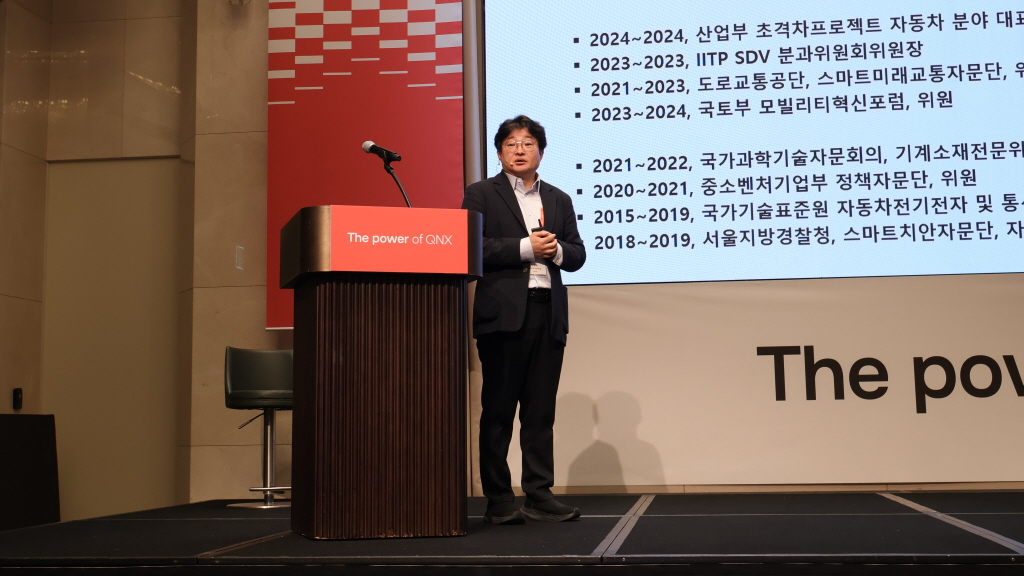
Professor Jeong Gu-min from Kookmin University, "QNX RTOS will become an important foundational technology in the physical AI era"
As software-defined vehicles (SDV) establish themselves as a new standard in the automotive industry, forecasts indicate that future competitiveness will be determined not by vehicle hardware but by software platforms and AI utilization capabilities. With the automotive industry rapidly transitioning to centralized architecture and AI-based development systems, an analysis suggests that how effectively vehicle platforms can be simplified and operated cost-efficiently will become core competitiveness for next-generation SDV and AI-defined vehicles. Professor Jeong Gu-min from Kookmin University emphasized at QNX TechForum Korea 2026 that "the automotive industry is now shifting from hardware competition to software ecosystem competition," highlighting that API-centric platforms and AI utilization will determine success or failure in the future automotive industry.
2026.10.23by 배종인 기자











