


Accelerating the pace of innovation and growth in future vehicles
 Published2018.05.18 15:41
The government held the "2018 Republic of Korea Innovation Growth Report" at the Magok Research and Development (R&D) Complex and announced the results of fostering the future vehicle industry.
The report meeting was held on this day to review the performance of the eight leading innovative growth projects that the government is prioritizing and to discuss ways to expand the results.
First, a demonstration of the hydrogen bus's fine dust reduction effect was presented. Hydrogen vehicles remove over 99.9% of fine dust in the air through multi-layer filters, membrane humidifiers, and gas diffusion layers, emitting only clean air.
The demonstration involves injecting an amount of fine dust equivalent to the amount an adult male would inhale for about 200 years into a balloon connected to the intake of a hydrogen bus, and then checking the color and smell of the clean air accumulated in a balloon connected to the exhaust port.
A hydrogen bus purifies 4.86 kg of air per kilometer traveled, or 418,218 kg per year (assuming 86,000 km traveled annually). This is equivalent to the air that 76 adults breathe in for a year. Assuming all 6,951 city buses in Seoul are replaced with hydrogen buses, this would provide air for approximately 530,000 people.
The government is doing its best to create new sources of growth and jobs in future vehicle sectors such as electric, hydrogen, and autonomous vehicles. To promote the spread of electric and hydrogen vehicles, we are focusing on technological development and infrastructure expansion, and providing top-level incentives such as budget and tax benefits.
While focusing on developing technologies to improve driving range and shorten charging times, we have also reorganized purchase subsidies to differentiate payments to promote technological innovation, and expanded the tax deduction limit (from KRW 2 million to KRW 3 million) (January 2018).
In addition, the mandatory purchase ratio of eco-friendly vehicles for public institutions has been increased (from 50% to 70%, January), and the number of new electric cargo vehicles has been allowed to increase. In addition, the Postal Service Headquarters is focusing on expanding the market by promoting the conversion of 10,000 two-wheeled vehicles for postal delivery to ultra-small electric vehicles ('18-'20).
In particular, with the increase in electric cargo vehicles permitted, private logistics companies plan to replace 3,500 delivery vehicles with electric trucks.
To prepare for the era of full-scale commercialization of autonomous vehicles, we are supporting the domestic development of core components such as cameras and radar, and are training master's and doctoral level experts.
In December 2017, a highway environment equipped with 5G communication facilities was given priority for construction/opening at Hwaseong K-City, an autonomous driving test bed, and a total of 1,351 km of high-precision road maps were constructed and provided free of charge to approximately 360 companies and universities.
In addition, the procedure for obtaining a temporary operating permit for autonomous vehicles, which allows for test driving on all roads nationwide, has been simplified, significantly increasing the number of autonomous vehicles permitted from 30 at the end of 2017 to 45 currently.
The electric vehicle market has entered a period of full-scale expansion, with demand more than doubling every year and exceeding the purchase subsidy budget for the first time this year.
In particular, electric buses, micro electric vehicles, chargers, etc.There are cases of small businesses entering the electric vehicle market, and electronics companies such as LG Electronics are also securing new sources of growth by focusing on investing in future vehicle component technology.
The era of commercialization of autonomous vehicles is becoming more visible, with Hyundai Motor Company successfully demonstrating and test-driving Level 4 autonomous driving, and telecommunications companies such as SKT successfully demonstrating 5G-based autonomous cooperative driving.
MCNEX, a mobile phone camera manufacturer, has entered the smart car camera market, supplying products to global companies such as Peugeot, Volvo, and Citroën, achieving a market share of 5th place. The future car sector is expected to continue to provide new growth opportunities for Korean IT companies.
Venture company 'Smart On Communication' is also creating a service industry that utilizes big data, such as collecting vehicle data, analyzing driving characteristics, and selling customized engine oil.
To further accelerate the expansion of these private sector achievements, the government plans to smoothly implement the Future Vehicle Innovation Growth Strategy announced on February 2nd.
While focusing on supporting the development of electric and hydrogen vehicles that are comparable to internal combustion engine vehicles, the government also plans to expand the number of rapid chargers by 1,500 per year to 10,000 by 2022.
In particular, we plan to accelerate market expansion through the 'Public Transportation Electric Vehicle Conversion Project', which selects pilot cities and converts 100% of buses and trucks within the pilot cities to electric hydrogen vehicles by 2030.
While focusing on the development of nine core autonomous vehicle component technologies, the company plans to complete the autonomous driving test bed, K-City, this year and smoothly establish related systems in time for commercialization.
관련뉴스
Commercialization of hydrogen electric vehicles requires building technological capabilities and 'this' first.
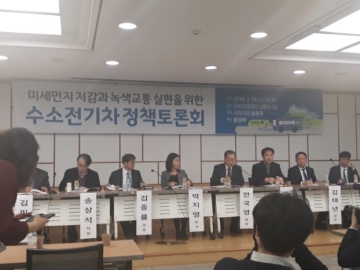
Recent consecutive high concentrations of fine particulate matter have become problematic. Without wearing a mask, even breathing becomes difficult. Accordingly, the national and local governments are implementing countermeasures such as the odd-even car system, mandatory mask wearing during outings, emergency reduction measures, and closure of public institution parking lots. However, these remain one-time measures. Additionally, in this process, fine particulate matter causes direct damage to public health and safety. In response to this, a hydrogen fuel cell vehicle policy discussion forum was held to establish countermeasures and realize fine dust reduction and green transportation. Experts from various fields participated to discuss domestic and international hydrogen vehicle prospects and methods for realizing green transportation, while presenting content and opinions on policy formulation. In Korea, more than 10% of greenhouse gas emissions occur in the transportation sector, which is mainly centered on internal combustion engine vehicles, and more than 30% of fine particulate matter emitted in the Seoul metropolitan area comes from diesel vehicles. The public and private sectors view a 30% reduction as an important matter in establishing an eco-friendly infrastructure, and accordingly, they are focusing attention on measures to expand the supply of eco-friendly vehicles.
2018.04.06by 김학준 기자
The Current State and Future of Electric Vehicles! 'EV Trend Korea 2018'
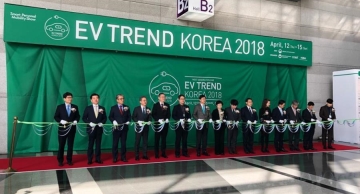
E-Mobility, automotive electrical components, charging infrastructure and the latest products and trends related to domestic and international electric vehicles were on display at 'EV TREND KOREA 2018,' a specialized electric vehicle expo where potential customers could be reached, which was held on the 12th. Running from April 12th through the 15th over four days at COEX in Samseong-dong, Gangnam-gu, Seoul, EV TREND KOREA 2018 serves as South Korea's representative electric vehicle expo, simultaneously hosting electric vehicle and mobility exhibitions to enhance marketing effects and showcase various trends and technologies. Hosted by the Ministry of Environment, this exhibition showcases ▲'E-Mobility' including electric vehicles and hybrid cars ▲'automotive electrical components' including motors, driving systems, and transmissions ▲'charging infrastructure' such as ESS and UPS ▲'infrastructure/services' including related certifications, production equipment measurement instruments, and R&D research institutes, and ▲'related products' such as eco-friendly tires and fuel-saving devices. Additionally, ▲insurance companies, loan providers, and credit card companies participated to introduce 'EV lifestyle products.'
2018.04.12by 김학준 기자
EV charging rates are now the same regardless of season or time.
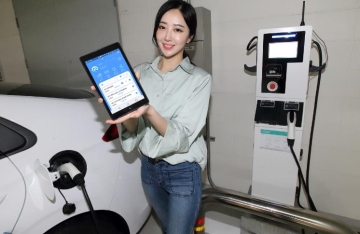
KT, a domestic electric vehicle public charging service operator, announced that it will change its EV charging rates from a seasonal and time-based differentiated pricing model to a single unified rate effective May 1st. Until now, KT had applied differentiated EV charging rates ranging from a minimum of 130 won/kWh (summer off-peak hours) to a maximum of 337 won/kWh (summer peak hours), with an average rate of 190 won/kWh. The company has now unified the rate to 170 won/kWh regardless of season or time of day, making it easier for EV users to understand and more convenient to use.
2018.04.24by 김지혜 기자

A single misaligned light means 'defect'… Vehicle interior lighting now guarded by semiconductors and software
Automotive interior lighting is moving beyond its role as 'auxiliary lighting.' As it becomes a core element of user experience (UX) that expresses brand identity through color and animation while reflecting driver preferences, the LED interior ambient lighting market is growing rapidly. In connection with this, we met in advance with Choi Young-jae, Research Director at Dabo Corporation, who will present a technical webinar session on "Intelligent LED Interior Lighting Solutions Illuminating Future Vehicles," to hear about market trends and changes in design requirements.
2026.08.28by 명세환 기자
TI, HEV·EV 트랙션 인버터용 다축 코어리스 전류 센서 TMCS2100-Q1 공개
Texas Instruments가 HEV·EV 트랙션 인버터용 다축 코어리스 홀 효과 전류 센서 TMCS2100-Q1을 공개했다. 수평·수직 자기장을 동시에 측정하는 다축 센싱 기술로 기존 단일 축 센서 대비 최대 20배 높은 정확도를 달성하며, 버스바 무개조 설계로 기계 설계 유연성을 확보했다. 800V 아키텍처 확산에 따른 고정확도 요구 충족과 소형화를 동시에 구현한다.
2026.08.27by 배종인 기자











