



A national pilot city for future smart cities will soon be established.
 Published2018.05.18 16:16
The Ministry of Land, Infrastructure and Transport held a meeting to review the achievements and future plans following the announcement of the smart city promotion strategy, and to discuss development plans for smart cities, including national pilot cities.
The government is promoting the creation and expansion of smart cities so that the new changes of the Fourth Industrial Revolution can be integrated into cities, making the cities themselves a driving force for innovative growth and improving the quality of life for citizens.
To this end, we are focusing on the National Pilot City Development Project, a leading model for future smart cities, and R&D for building data-based smart cities, while simultaneously pursuing efforts such as regulatory improvements and international cooperation.
The government plans to streamline the project implementation system by selecting a Master Planner (MP) to lead the development of the pilot city and forming a dedicated support team. Furthermore, the government intends to work toward preparing a basic conceptual plan and implementation plan within the year, centered around the MP, so that site development can commence in the first half of next year.
In addition, the government is also pursuing demonstration-type research and development that includes data-based intelligent urban operation—the core of smart cities—the development of citizen-centric services through the linkage and utilization of various data such as transportation, energy, and the environment, and the verification of new business models.
After completing the formation of an operating committee for the project ('18. 2.), etc., a public call for proposals to select two demonstration cities has been conducted since last March (March 30 – May. 29.) is currently underway, and in the second half of this year, a project site will be selected and full-scale research will begin.
The creation and expansion of smart cities in existing and aging cities is also continuing. First, among the Urban Regeneration New Deal target sites, at least five are selected annually as 'Smart City-type Urban Regeneration' project sites to provide consulting and additional budget support.
Meanwhile, we are listening to suggestions and focusing on regulatory improvements to enable various private companies to participate in the creation and expansion of smart cities. In this regard, an amendment to the Smart City Act was proposed (March 2018), which includes various special provisions to foster new industries and the introduction of innovation growth promotion zones to attract private investment through the relaxation of location regulations and licensing matters.
In addition, efforts to support the overseas expansion of domestic companies are also being made through international cooperation, such as proposing smart city cooperation to Vietnam and Singapore (March 2018) and signing a ministerial-level memorandum of understanding with Peru (March 2018).
In particular, we plan to attend the 'ASEAN Smart City Network*' workshop held in Singapore starting May 22 to introduce Korea's smart cities and discuss specific cooperation plans with 10 ASEAN countries.
An official from the Ministry of Land, Infrastructure and Transport stated, “We are implementing the ‘Smart City Promotion Strategy’ announced last January without any setbacks,” adding, “To create national pilot cities, we are thoroughly reviewing measures to achieve new challenges and innovations by having various stakeholders, including private companies and citizens, participate together from the urban planning stage. We plan to develop a basic conceptual plan to realize this as soon as possible by concentrating the capabilities of relevant ministries and agencies, led by the master planner.”
관련뉴스

Call for Proposals for 'Themed Specialized Complex' Project to Transform Established Urban Areas into Smart Cities
국토교통부는 전국 지방자치단체를 대상으로, 3월 27일부터 5월 2일까지 스마트시티 추진전략에 따른 테마형 특화단지 마스터플랜 수립 지원대상을 공모한다고 밝혔다. 스마트시티 “테마형 특화단지 지원사업”은 기성시가지에 다양한 스마트 서비스를 적용하여 교통·에너지·방범 등의 생활편의를 개선하고, 지역 고유의 산업·문화적 경쟁력 강화를 추진하기 위한 마스터플랜 수립을 지원하는 사업이다.
2018.03.27by 김지혜 기자
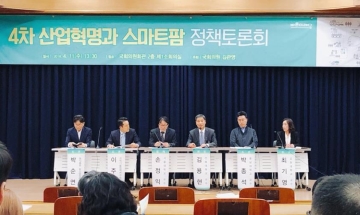
In the era of smart farms, what issues need to be resolved to activate them?
As ICT technology advances, various industrial fields from autonomous vehicles to smart cities are being integrated with this technology, and we are entering the era of the Fourth Industrial Revolution. Agriculture is also experiencing a 'smart' trend. In response, we held a discussion identifying issues for activating smart farms. As rural areas in our country face aging populations, the agricultural population is declining, and new interests such as urban agriculture and returning to farming are emerging. Smart agriculture refers to intelligizing, networking, quantifying, and automating agriculture by adopting big data, IoT, and other technologies. A smart farm is a farm that implements ICT in fields such as greenhouses and livestock facilities to measure the growth environment of crops, livestock, and fish in real-time remotely and manage them efficiently according to specific objectives.
2018.04.16by 김지혜 기자
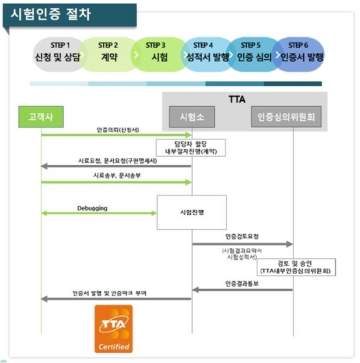
Smart City Integrated Platform Standard Established... Certification Available Starting May
Local governments are promoting smart city integrated platform projects, and standards and certification systems related to the integrated platform have been established to allow private solution companies to participate. Certification will commence on May 2nd. The Ministry of Land, Infrastructure and Transport established function specification standards related to basic functions of smart city integrated platforms, interoperability standards for service linkage, and test specification standards for certification testing as industry organization standards in October of last year. The Korea Information and Communications Technology Association (TTA), a professional certification body, will now conduct the certification. Previously, only integrated platforms developed through government research and development (R&D) were utilized in local government integrated platform projects. However, going forward, integrated platforms from private companies that have received certification will also be able to participate in these projects.
2018.05.02by 김지혜 기자
Nvidia invests $5 billion in Intel
NVIDIA and Intel, leaders in global AI computing technology, are now forging ahead in providing cutting-edge solutions through NVLink-based architecture integration. NVIDIA and Intel have officially announced a strategic partnership and stated that they will jointly develop customized data center and personal computing products to accelerate diverse applications and workloads ranging from hyperscale to enterprise and consumer markets, thereby laying the foundation for the next generation computing era.
2025.09.22by 배종인 기자
.jpg)
Applied Materials Launches Environmental Protection Campaign to Mark World Cleanup Day
어플라이드 머티어리얼즈 코리아(대표 박광선)가 ‘세계 청소의 날(World Cleanup Day)’을 맞아 동탄 신리천 일대에서 임직원 및 가족과 함께 환경 정화 활동을 펼치며, 기술 혁신을 넘어 지역사회와 함께하는 기업으로 거듭나고 있다.
2025.09.22by 명세환 기자











