



Hitachi Vantara Launches Platform Specialized in Data Recovery
 Published2018.05.23 15:14
Hyosung Information Systems announced that Hitachi Vantara has released the latest platform 'HDID' (Hitachi Data Instance Director) v6.5, specialized in data recovery.
HDID v6.5 already supports customers in protecting critical databases and applications using the latest snapshot and replication technologies. This latest version enables organizations to repurpose unstructured backup data and generate revenue without impacting the primary operating environment.
Hitachi Vantara is pursuing a 'Data Center Modernization Strategy' that accelerates enterprise digital transformation by focusing on agile infrastructure, AI operations, and modern data protection. Hitachi's modern data protection technology, combined with Hitachi storage, automates integrated data protection and supports snapshot-based immediate protection, disaster recovery, Instant Restore/Full Recovery, and CDM (Copy Data Management) capabilities.
Combined with Hitachi's HAD (Hitachi Automation Director), data protection functionality is automatically configured based on data protection service level agreement (SLA) profiles, and by meeting SLAs through data protection monitoring and re-execution, autonomous data centers are implemented.
In Korea, Hitachi's data protection solution HDID has been provided as a core solution included in 'Live Protector,' a real-time integrated data protection solution package, and has expanded its scope to include disaster recovery, storage replication solutions, and operational management in addition to data protection functions provided by traditional backup solutions. In other words, it now has the characteristics of a more complete true integrated data protection solution capable of implementing data protection, disaster recovery, and storage automation with a single solution. Additionally, HDID provides modern data protection and automated recovery support services that meet stringent data availability and service level requirements.
The newly introduced latest HDID can be integrated and utilized with object storage 'HCP' (Hitachi Content Platform) as a storage repository for long-term file system backups. The value of backup data is only realized when the data is recovered, but backup data continues to generate increasing storage capacity and recurring costs. HDID v6.5 manages long-term retention and data discovery and analytics through cutting-edge data protection technology, flexible replication services that enable backup data repurposing, and governance replication services.
HDID v6.5 transfers file system backup data to HCP in native file or object format. The backed-up data can then be used by HCI (Hitachi Content Intelligence) and Hitachi's Pentaho analytics software to provide compliance-related and search capabilities, data-driven insights, and other new data management use cases.
Furthermore, by working in conjunction with storage replication solutions, it provides fast and reliable block-based data protection techniques and provides an environment where stored backup images can be directly utilized for development, inquiry, and test servers, realizing efficient cost savings based on stability and providing an optimal data governance service environment integrating file and block systems.
Peter Sjoberg, Vice President of Data Intelligence Global Field and Industry Solutions at Hitachi Vantara, stated, "Traditionally, backup data has remained dormant, occupying storage space only until a disaster occurs. An increasing number of organizations want to create enhanced value from backup data and develop various use cases such as data discovery and business analytics. Hitachi Vantara's HDID, through integration with HCP and a comprehensive data intelligence portfolio, will enable enterprises to effectively leverage these capabilities."
With the release of HDID v6.5, organizations can more efficiently utilize backup data to support various tasks including data discovery, governance and compliance, analytics, and DevOps, thereby meeting the requirements of customers, data management professionals, and backup administrators.
Comments
Related news
Hitachi Vantara Announces AI Operations Software and Flash Storage Portfolio
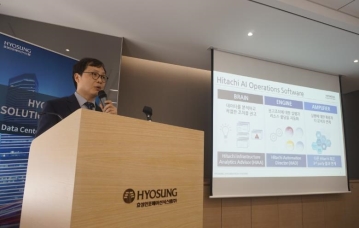
Hyosung Information Systems announced that Hitachi Vantara has launched innovative new products to modernize data centers. Through this update, Hitachi has unveiled a new high-performance storage system in its storage product lineup that guarantees 100% data availability, as well as cross-platform AI analytics and IT automation software. The new all-flash and hybrid Hitachi Virtual Storage Platform (VSP) systems and AI operations software form the foundation of the data center modernization initiative that enables customers to reduce costs and improve operational efficiency through superior agility and automated capabilities. Developers can integrate Docker and Red Hat OpenShift containers with orchestration capabilities in Swarm and Kubernetes, enabling higher flexibility while running more workloads on a single unified platform.
2018.05.11by 김지혜 기자
.jpg)
SalePoint Signs Multi-Year Partnership Agreement with AWS… Promoting Identity Security that Integrates Even AI Agents
Sailpoint has entered into a multi-year strategic partnership agreement with AWS and is moving forward with establishing an integrated governance system that manages both human and non-human identities together. The plan is to consistently manage access permissions in an environment where AI agents are increasing as work execution entities, while applying the principle of least privilege and automated policy enforcement. The two companies plan to jointly expand capabilities to manage the identities of various entities, including AI agents, within a single layer in the AWS environment. This collaboration is interpreted as a move to design security and governance together in corporate environments where AI adoption is expanding.
2026.03.26by 배종인 기자
.png)
Databricks Unveils Open AI Security Monitoring 'Lakewatch'
Databricks entered the security market on March 24 by unveiling LakeWatch, an open-source agentic SIEM. The core functionality of this product is to integrate and analyze security, IT, and business data in a single environment to support AI-based threat detection and investigation. The company explained that it reduces the limitations of existing security operations centers, which have had to forgo some data due to high cost structures, and enables large-scale data analysis and automation based on open formats and ecosystems. LakeWatch is currently offered as a private preview, with Adobe and Dropbox mentioned as early customers. Databricks also announced an expanded partnership with Anthropic as well as the acquisition of Antimatter and SiftD.ai.
2026.03.26by 배종인 기자
Ecolab Expands AI Data Center Cooling Business Through Acquisition of CoolIT
Ecolab has agreed to acquire CoolIT Systems, a liquid cooling company for AI data centers, for approximately $4.75 billion. The transaction is expected to close by Q3 2026, subject to regulatory approvals. CoolIT has been supplying direct-to-chip cooling-based coolant distribution units, cold plates, and manifolds, serving hyperscale data centers and colocation operators as customers. This acquisition is a measure to address the high-heat and high-density server environments created by AI proliferation. Ecolab plans to combine its water management and digital monitoring capabilities with CoolIT's hardware technology to expand its data center cooling business.
2026.03.26by 명세환 기자
Arm Unveils First Data Center CPU Targeting 'Agentic AI' Era… Securing Both Cost-Effectiveness and Scalability for Large-Scale AI Infrastructure
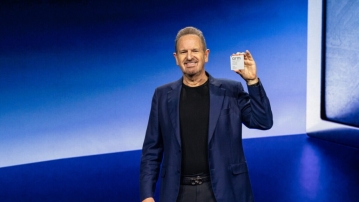
Arm has unveiled the 'Arm AGI CPU,' the first data center CPU that simultaneously secures cost-efficiency and scalability for large-scale AI infrastructure, marking a new turning point in artificial intelligence (AI) infrastructure as it targets the 'agentic AI' era.
2026.03.25by 배종인 기자











