


Infineon Provides TPM 2.0 Open Source SW Stack
 Published2018.09.04 16:00
Open source meeting TCG TSS ESAPI specifications

Infineon Technologies announced on the 4th that it is providing a new open-source software stack. This makes it easier for developers to use Trusted Platform Module (TPM) 2.0. TPM is a standardized hardware-based security solution for securing various applications, including industrial, automotive, and network equipment.
This software stack is the first open-source TPM middleware to meet the Trusted Computing Group (TCG) Software Stack (TSS) Enhanced System API (ESAPI) specifications, providing useful tools for the open-source community.
“The demand for security in IoT, IIoT, Industry 4.0, and automotive applications is growing. The availability of the open-source TSS ESAPI layer has made TPM 2.0 integration easier for all types of applications,” said Michael Roeder, Director of Technology Engineering and Services at Avnet Silica.
By making the TSS ESAPI layer available to everyone, Infineon contributes to making security integration easier and promoting its widespread adoption. It also connects security specialists through the Infineon Security Partner Network (ISPN). ISPN provides a diverse range of software libraries to meet the needs of various applications and platforms.
Infineon funded the development of ESAPI by the Fraunhofer Institute for Security and Information Technology (SIT), a long-standing partner. The ESAPI layer developed with Infineon funding is based on the SAPI layer developed by Intel and includes a new API layer designed to facilitate the use and integration of TPMs. This enables applications to establish a connection with the TPM, create a secure connection between the host CPU and the TPM, and authenticate using Message Authentication Codes (HMAC).
This stack, based on the ESAPI layer, supports OpenSSL. By using Infineon's OPTIGA TPM, it can secure SSL/TLS-enabled device communications through a standardized interface. It utilizes TPM 2.0 as the secure key store for OpenSSL. This allows keys to be protected from vulnerabilities such as the Heartbleed bug.
The TSS stack and ESAPI layer are provided under a generous two-clause BSD license, offering high flexibility and accessibility for anyone. ESAPI is designed to achieve the high levels of quality and stability required for advanced embedded and IoT systems and has undergone extensive community validation. For industrial and automotive customers, the code was developed through iterative integration and testing based on industry standards, thorough two-person proofreading, and static code analyzers such as clang and Coverity. The stack was tested and verified using Infineon's OPTIGA TPM SLB 9670 and the latest TPM specifications. In the future, we plan to improve support for Cryptsetup/LUKS disk encryption and provide a TPM tool that supports ESAPI.
Andreas Fuchs, project leader at Fraunhofer SIT, said, “The launch of TSS marks a turning point in improving the security of embedded systems in industrial, automotive, and smart homes using TPM 2.0.”
For application developers, Infineon provides the OPTIGA TPM SLB 9670 Iridium board, and allows for rapid development by downloading TSS code from GitHub. Additionally, there are plans to provide source code packages for Infineon AURIX and Arduino microcontrollers in the near future.
Comments
Related news
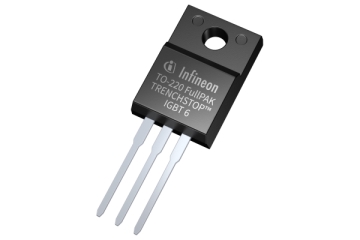
Infineon IGBT6 capable of controlling motors up to 1kW
Infineon has launched the 650V TRENCHSTOP IGBT6 for compact motor drives up to 1kW. The IGBT6 with 650V blocking voltage is optimized for general-purpose drive applications used in BLDC motors.
2018.08.23by 이수민 기자

Siemens PLM Software's solution for enhancing engineer collaboration and communication
Siemens PLM Software announced "System Modeling Workbench for Teamcenter" to expand its model-based systems engineering product portfolio. The software is planned to integrate SysML, a universal modeling language for engineering, and Capella, an open-source modeling tool, into Teamcenter.
2018.08.23by 이수민 기자
Infineon Solidifies Top Position in 2017 Power Semiconductor Market
Infineon took the top spot in the global power semiconductor market in 2017. Infineon maintained the leading position in the overall market including power ICs and recorded a growth rate of 15.1%, which exceeds the industry average.
2018.08.29by 이수민 기자
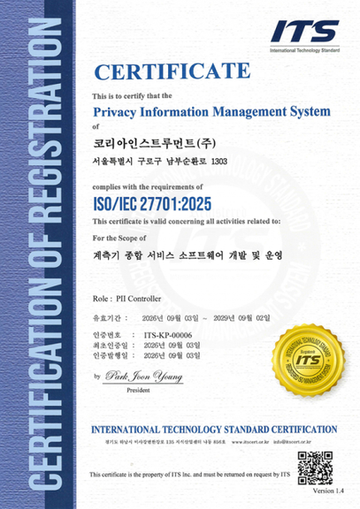
Korea Instrument, KOLAS Accredited Calibration Agency First to Simultaneously Acquire ISO/IEC 27,001·27,701
Korea Instrument has become the first among KOLAS accredited calibration agencies to simultaneously acquire ISO/IEC 27,001 and ISO/IEC 27,701 certifications. Through its proprietary platforms CWIZ Enterprise and CWIZ Partners, the company has embedded information security and personal data protection requirements across all business processes including customer information, equipment data, and calibration reports, with plans to continuously advance its management system through regular audits and security inspections.
2026.10.12by 배종인 기자

TeamViewer One, IT Incident Automation Workflow and Resolution Center Enhanced
TeamViewer has added IT incident automation capabilities and an advanced Resolution Center to its integrated digital workplace management platform 'TeamViewer ONE'. Recurrent service disruptions, configuration errors, and capacity shortages are automatically handled according to preset policies, and device status verification through script deployment can be managed in a unified interface, significantly reducing repetitive tasks for IT teams.
2026.10.12by 배종인 기자











