

.png)

[Weekly IT Asia] 'Huawei's Tightening Encirclement' - Will Google Stop Providing Android Technology Support to Huawei? and more
 Published2019.05.20 13:59
Will Huawei Smartphones No Longer Support Google Play Store?
Google has decided to halt technical support and cooperation related to its services with Huawei, according to Reuters and other foreign media reports on the 20th.
Google plans to block Huawei's access to applications and services such as Google Play Store and Gmail for smartphones that Huawei will launch in the future. If this policy is implemented, significant damage is inevitable for Huawei, which uses Google's Android OS.
However, since Google is still in internal discussions regarding this decision and detailed implementation measures, there remains a possibility that mitigated measures may be taken, according to foreign media reports.
The U.S. Department of Commerce placed Huawei and 68 of its affiliated companies on the list of restricted trading entities on the 16th. Accordingly, Huawei and the relevant affiliated companies must obtain permission from U.S. authorities when conducting component transactions with American companies.
Toshiba Memory and Western Digital Agree on Joint Investment in Japan's Kitakami Manufacturing Plant
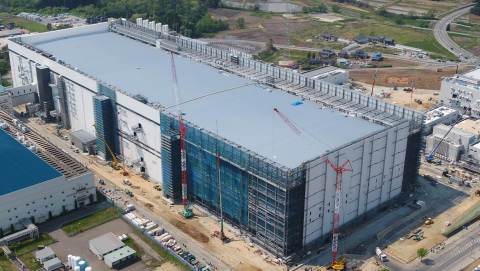
Toshiba Memory Corporation and Western Digital finalized an official agreement on the 20th to jointly invest in the K1 manufacturing plant that Toshiba Memory is currently constructing in Kitakami, Iwate Prefecture, Japan.
The K1 manufacturing plant is scheduled to produce 3D flash memory in response to rapidly increasing demand related to data storage for applications such as data centers, smartphones, and autonomous vehicles, and is expected to be completed in the fall of 2019.
Through joint capital investment in the manufacturing plant by the two companies, 96-layer 3D flash memory is expected to begin production from the beginning of 2020, with full-scale production anticipated to commence from the second quarter of the same year.
Toshiba Memory and Western Digital plan to maintain their respective memory businesses at the industry's highest levels through strengthening technological competitiveness, joint development of 3D flash memory, and capital investment tailored to market trends.
Samsung Electronics Unveils Commercial Display Solutions at Southeast Asia InfoComm
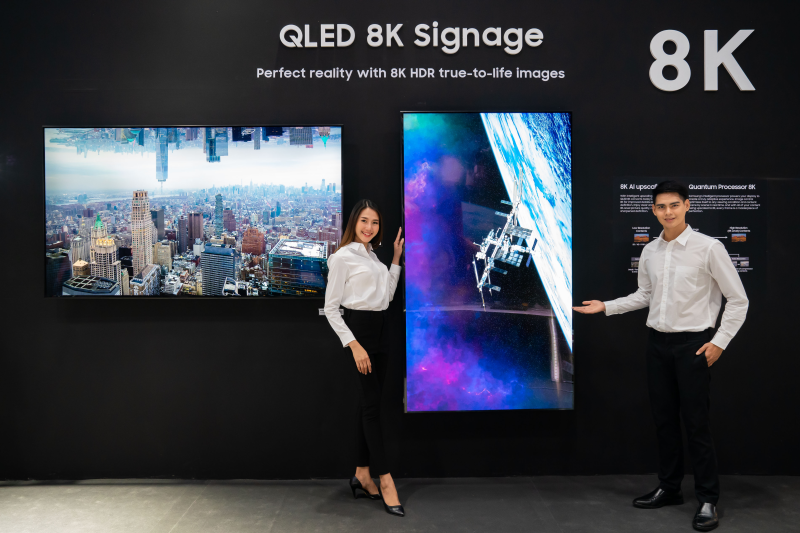
Samsung Electronics showcased various innovative products at the 'InfoComm SouthEast Asia 2019,' a specialized display exhibition held in Bangkok, Thailand from the 15th to 17th.
AVIXA (Audiovisual and Integrated Experience Association), which hosts the commercial display exhibition 'InfoComm,' has been organizing regional exhibitions in four regions including Southeast Asia, India, and China (Beijing, Chengdu) separately from the main exhibition starting this year, with 'Southeast Asia InfoComm' being the first such event. The Southeast Asia InfoComm brought together 167 companies and approximately 10,000 industry professionals to showcase the latest technologies and seek business opportunities.
Samsung Electronics' 2019 model 'The Wall Professional' displayed at the exhibition is a screen that implements ultra-high definition by applying micro LED technology and features an 'Infinity Design' with no bezels and slim thickness, allowing size adjustments according to user needs. In addition to commercial applications, it can be utilized as a home cinema or digital art gallery in luxury residences and resorts.
Furthermore, Samsung Electronics also displayed ▲QLED 8K signage equipped with Quantum Processor 8K, an AI image enhancement engine ▲VMR-U series video wall solutions with slim bezels featuring high-performance SoC functionality ▲dual-sided semi-outdoor displays.
Meanwhile, according to market research firm IHS Markit, Samsung Electronics has maintained the top position in the commercial display market in Southeast Asia for 10 consecutive years from 2009 to 2018.
Hangzhou IC Projects Attract 163 Million Yuan Investment in First Quarter Alone
The Hangzhou Investment Promotion Bureau announced on the 17th that Hangzhou's Integrated Circuit (IC) projects attracted investment of 163 million yuan, equivalent to approximately 28.036 billion Korean won, in the first quarter alone this year. This represents a 24.1% increase compared to the previous year.
Hangzhou, one of China's IC design hubs, is home to 122 IC companies, including numerous market leaders. Examples include Hangzhou C-SKY Microsystems, Hangzhou Silan Microelectronics, Sage Microelectronics, and Hangzhou Zhongke Microelectronics.
Hangzhou recorded a net inflow rate of scientific and technological talent of 12.6%, which is higher than Shanghai's 2.07% and Beijing's 0.24%.
Facing the information economy era, Hangzhou proposed special policies regarding related project promotion and special funding for IC companies in July 2018 to ensure the IC industry plays its proper role. Hangzhou's IC industry encompasses design, manufacturing, packaging and testing, materials, equipment, and other sectors throughout the entire industrial ecosystem.
An official from the Hangzhou Investment Promotion Bureau stated, "Hangzhou leads among Chinese cities in design aspects of embedded CPUs, microwave and mmWave ICs, and digital audio and video," and added, "The Hangzhou Investment Promotion Bureau plans to continue promoting IC industry development through collaboration with related associations and companies."
Guizhou Achieves Groundbreaking Improvement in Expressway Toll Payment System with Mobile Payments
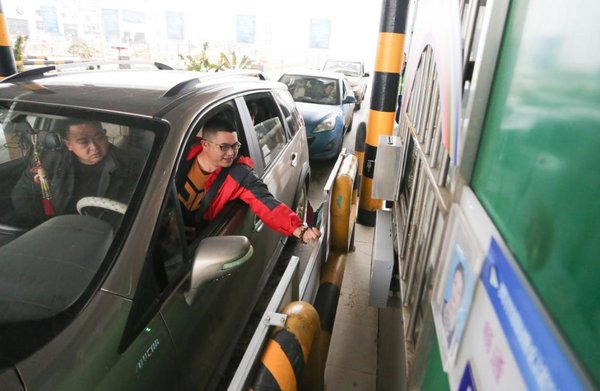
is paying expressway toll using WeChat payment service
As of December 2018, 13 expressway toll collection booths in Guizhou had adopted WeChat payments, and approximately 2,000 of the 3,738 expressways in Guizhou had installed QR code scanning equipment.
In an interview with Global Times, driver Su stated, "When passing through the Guiyang North toll collection booth, I don't need to receive coins and can pay with WeChat, which saves a lot of time."
According to an announcement from the Guizhou Provincial Transportation Department, all 441 expressway toll collection booths in Guizhou have been enabled to accept WeChat payments starting in early 2019. This allows payment via QR code and passage through toll booths in just 5 seconds.
In the future, major payment methods such as regional mobile payment apps, Alipay, and China UnionPay QuickPass will also be introduced to this toll payment system. Moreover, soon the expressway toll collection booths in Guizhou will integrate mobile payments with the electronic toll collection (ETC) system, realizing contactless payments. This will enable drivers to pay tolls and pass through toll gates without stopping.
Mobile payments provide convenience not only to drivers but also to local administration. An employee working at a local toll collection booth stated in an interview with Global Times, "Thanks to mobile payments, we can save on labor costs and administrative expenses, and we no longer face the risk of receiving counterfeit currency."
Simultaneously, mobile payments have significantly improved vehicle flow efficiency in Guizhou. Each mobile transaction saves 10 to 15 seconds. Additionally, Guizhou's adoption of mobile payment methods at expressway toll collection booths is also an environmentally friendly approach. An average of 0.002 liters of fuel can be saved per vehicle that no longer needs to queue and wait.
Related news
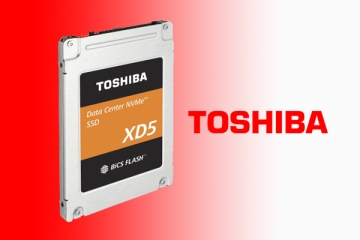
Toshiba Unveils 2.5-inch NVMe SSD Targeting Data Centers
Toshiba has strengthened its data center NVMe SSD product lineup by adding a 2.5-inch form factor offering. The new PCIe Gen3x4 NVMe SSD uses a 2.5-inch form factor with 7mm height to complement the M.2 22110 product. It can be widely deployed across various applications including data centers. The new product is launched in three capacity options: 960GB, 1920GB, and 3840GB. It delivers sequential read performance up to 2700MB/s and sequential write performance up to 895MB/s within a 7W active power envelope. The product is designed for read-intensive applications such as NoSQL databases, big data analytics, and streaming media.
2019.03.16by 이수민 기자
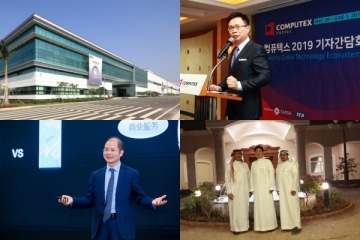
[Weekly IT Asia] Arm China to Introduce Mentor Questa / LG Electronics to Focus Smartphone Production Lines in Vietnam
Mentor announced that Arm China has adopted Questa Simulation, a semiconductor design defect and error verification solution, for the development of next-generation low-power MCU cores. LG Electronics is consolidating and relocating its smartphone production line in Pyeongtaek, Gyeonggi Province to the 'LG Hi-Pont Campus,' and reassigning the Pyeongtaek smartphone production workforce to its life appliance manufacturing plant in Changwon. POSTECH, an optical communication specialist based in Ansan, signed an MOU with a local partner to establish a joint venture in Saudi Arabia. TWTC, which organizes the global ICT exhibition Computex Taipei, held a press briefing at its Seoul Sogong-dong office and introduced key details about Computex 2019. Huawei announced its strategy in the automotive sector. Huawei stated that it will not manufacture automobiles but will focus on ICT, and will support automotive OEMs in manufacturing better vehicles.
2019.04.29by 이수민 기자
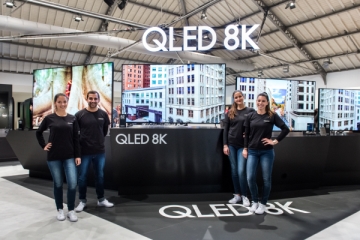
Samsung Electronics Demonstrates 8K Broadcasting Using Existing Equipment in Europe
Samsung Electronics conducted Europe's first 8K satellite broadcast transmission and reception demonstration in Luxembourg together with European satellite broadcaster SES Astra. The demonstration was carried out in a format where 8K ultra-high-definition video was transmitted through SES Astra's satellite network and received and broadcast on a QLED 8K TV. This method is significant in that it utilized existing satellite broadcast transmission equipment, reception dish antennas, and the basic tuner built into the QLED 8K TV without requiring any additional equipment for 8K broadcasting. The receiver mounted on the QLED TV basically supports DVB-S2, which is a transmission standard widely used for HD and 4K UHD satellite broadcasting in Europe, Korea, and other regions.
2019.05.17by 이수민 기자

Intel Unveils Next-Generation 'Core Ultra Series 3' and vPro Platform for Enterprise PCs
Intel has officially unveiled the "Intel Core Ultra Series 3" for next-generation enterprise PCs and the latest vPro platform, addressing a wide range of demands from enterprise notebooks to high-performance workstations.
2026.03.26by 배종인 기자

ROHM Launches ESD Protection Diode Compatible with High-Speed Interfaces of 10Gbps or Higher
Semiconductor specialist ROHM has developed the 'RESDxVx series' of ESD (electrostatic discharge) protection diodes capable of responding to next-generation high-speed data communication environments exceeding 10Gbps, simultaneously enhancing both signal quality maintenance required in high-speed interfaces and IC protection performance.
2026.03.26by 배종인 기자











