



KT Begins Field Testing of 5G-V2X Technology on Real Roads
 Published2019.06.17 10:47
| Connection to Autonomous Driving/C-ITS Platform via 5G Communications
| High-capacity Data Transmission Possible Without Communication Distance Constraints
KT announced on the 17th that it has conducted field testing of 5G-V2X (Vehicle to Everything) technology on actual roads.
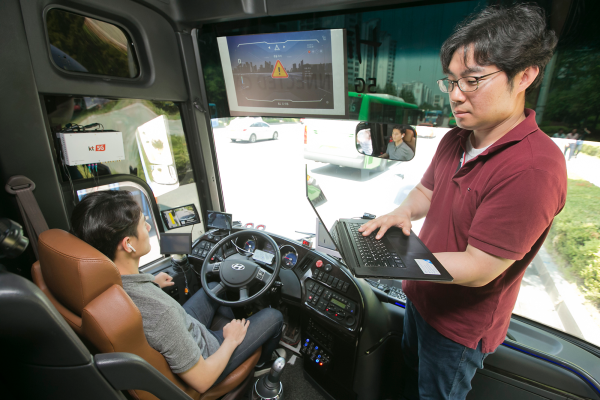
in Gangbuk, Seoul using an autonomous bus
KT verified scenarios such as forward collision warnings and pedestrian alerts by installing 5G-V2X terminals in vehicles in the Gangbuk district of Seoul.
Vehicles connect to the C-ITS (Cooperative Intelligent Transport System) platform through the 5G network to receive traffic information necessary for driving.
C-V2X is a technology that identifies and delivers situations in real-time between vehicle-to-vehicle, vehicle-to-pedestrian, and vehicle-to-traffic infrastructure communications.
Since communication occurs directly between vehicle terminals without passing through base stations, there are communication distance constraints, and transmission of large-volume messages is not possible.
Smartphones do not support C-V2X technology, so vehicle-to-pedestrian communication is currently not possible.
5G-V2X overcomes these limitations by combining C-V2X with 5G communication technology.
Utilizing 5G's ultra-low latency and high-capacity data transmission characteristics, various sizes of data can be transmitted without communication distance constraints, and communication between pedestrians and vehicles is also possible using 5G.
KT plans to first verify basic functions focused on vehicle safety using V2X messages through the 5G network, and subsequently expand to functions such as video transmission and other high-capacity data transmission capabilities.
This 5G-V2X technology field testing is being conducted as part of the autonomous driving demonstration project under the Giga Korea initiative, and KT is collaborating with IT Telecom for technology development.
Field testing is scheduled to be completed by 2019, and in 2020 demonstration projects combined with autonomous driving services will be conducted in three regions: Seoul, Daegu, and Pangyo.
Lee Sun-woo, Director of KT's Infrastructure Research Institute, stated, "This 5G-V2X technology field testing is a stage to verify the results of KT's continuous development in preparation for the autonomous driving era," and added, "Going forward, KT will demonstrate its technological capabilities by applying core technologies such as 5G-V2X, autonomous driving, and the C-ITS platform to various demonstration projects."
Ok Kyung-hwa, Head of KT's Software Development Division, remarked, "KT's autonomous driving/C-ITS platform is the first platform to support both direct communication and V2X using the 5G commercial network," and stated, "We plan to continuously enhance it to support safe cooperative driving of fully autonomous vehicles."
Comments
Related news
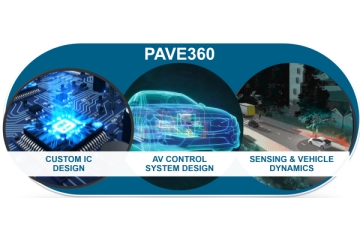
Siemens Announces PAVE360, New Validation Program to Lead the Popularization of IC Design and Development for Autonomous Vehicles
Siemens introduced PAVE360, a pre-silicon autonomous validation program designed to accelerate the development of autonomous vehicle platforms. PAVE360 provides a comprehensive collaborative environment that enables multiple suppliers to work together across the automotive industry ecosystem to develop next-generation automotive chips. PAVE360 extends beyond processors to enable digital twin simulation that spans automotive hardware and software subsystems, complete vehicle models, sensor data fusion, traffic flow, and ultimately smart city simulation in which autonomous vehicles will operate.
2019.05.29by 이수민 기자
The KRnet Conference 2019, which explores the future of internet technology in the era of the Fourth Industrial Revolution, will be held.
The KRnet Conference 2019, hosted by the Ministry of Science and ICT and jointly organized by nine related organizations including the Korea Internet & Security Agency, will be held for two days from the 24th to the 25th at the InterContinental Seoul COEX Hotel in Samseong-dong, Seoul. KRnet 2019, organized to introduce the latest technology trends related to the Internet both domestically and internationally and to explore the future technological development direction of the Internet, has been held annually since July 1993, beginning with the first Korean Academic Computer Network Workshop. Marking its 27th edition this year, KRnet 2019, under the theme "Creating Better for the Future," is expected to feature approximately 70 technical sessions, lectures, and discussions related to future technology trends and collaborative development directions, covering 5G, AI and big data, security, autonomous vehicles, humanities convergence, IoT, cloud and edge computing, immersive content, blockchain, open source, and more.
2019.06.05by 이수민 기자
NVIDIA to Hold AI Conference on July 1st to Explore AI Trends
Nvidia will hold Nvidia AI Conference 2019 over two days, July 1st and 2nd, at the Seoul COEX Convention Center. The Nvidia AI Conference is an annual event where leading domestic and international experts from various fields including AI, deep learning, autonomous vehicles, high-performance computing (HPC), and robotics gather to share the latest AI-related technologies and trends. On the first day of the event, DLI (Deep Learning Institute) will conduct hands-on training using the latest GPU-based deep learning frameworks. On the second day, a conference will be held introducing the current state of the latest AI and deep learning technologies and various industry case studies.
2019.06.11by 이수민 기자
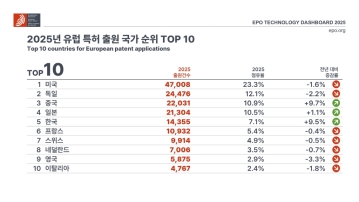
European Patent Applications Surpass 200,000 for the First Time… South Korea Maintains 5th Place, Led by Batteries and Telecommunications
According to the European Patent Office (EPO)'s 'Technology Dashboard 2025', European patent applications last year reached 201,974, surpassing 200,000 for the first time. Korean companies and inventors filed 14,355 applications, representing a 9.5% increase from the previous year and maintaining 5th place by country. Battery, digital communication, and semiconductor technologies led the growth, with Samsung ranking as the top EPO applicant for the second consecutive year and LG reaching 3rd place. The presence of major domestic cities such as Seoul, Suwon, and Yongin was also confirmed. It was also revealed that Korea's European patent strategy is expanding beyond individual technologies to span the entire industry.
2026.03.24by 명세환 기자
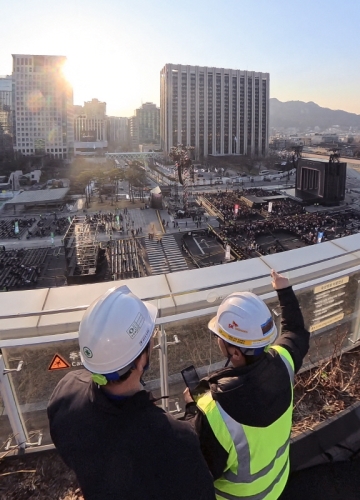
SK Telecom First Applies AI-Based Network Operations at Gwanghwamun K-Pop Concert
SK Telecom announced that it applied an AI-based network operation system for the first time at a large-scale K-pop concert held in the Gwanghwamun area of Seoul on March 21st, managing communication quality throughout the event. Mobile data usage during the three hours before and after the concert reached 12.15TB, approximately doubling compared to the same time slot the previous weekend. SK Telecom monitored traffic using the AI system 'A-One' in five-minute and 50-meter units to respond to potential overload situations, while also operating temporary communication facilities and on-site personnel in parallel. This case is interpreted as confirmation of the practical applicability of AI-based autonomous network operation in an environment where demand from dense events and foreign users increases simultaneously.
2026.03.23by 명세환 기자











