


3 Reasons Why 5G Can't Be Called 5G, Even Engineers Know It!
 Published2019.07.02 00:49
3 Reasons Why 5G Can't Be Called 5G, Even Engineers Know It!
“In reality, it seems that low-latency service as perceived by users is not possible.
“The low latency communication between the user and the server attached to the base station seems to be working well and is a good technology, but there are still issues to be resolved before it can become a practical low latency service between the end-to-end.”
2019 KRnet ETRI Dr. Taesik Jeong Presenting
Why can’t we call current 5G true 5G?
To understand why the current 5G service is not a true 5G service, it can be easily understood by comparing it with the services used by 4G mobile communication users, such as 3GPP LTE and LTE-A, which we are familiar with.
Although current 5G mobile terminal users claim to be experiencing speeds of up to 20 Gbps based on data released by telecommunications companies, the actual usage cases by users are not much different from the services used via existing 4G LTE, such as movie downloading, face-to-face communication, and accessing and playing high-speed games. In the industry, it appears to be about the level of test runs of 5G-based autonomous vehicles. Although it is said to provide an actual VR service, it is closer to a VOD server that you watch after downloading rather than a VR service through real-time streaming between end-to-end.
However, the 5G service that we initially heard of requires a large amount of real-time data communication that is difficult to compare with the services we are using now, such as VR/AR, AI Assistant, Auto Vehicle, Smart City, Robot, Disaster, etc. as shown in the figure below. In other words, a service that can comply with a delay of between 1ms and 10ms and handle a speed of 80Mbps to 2Gbps per second end-to-end. This is what we first called 5G.
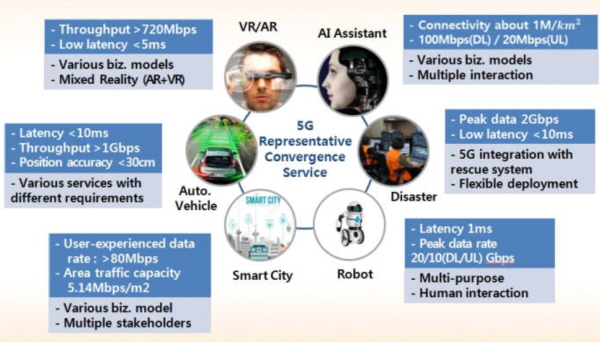
Early 5G Key Predicted Use Cases
- Delay issues
First, the most important point that the 5G we use cannot be called 5G in terms of engineering is that it cannot be networked based on low latency between 1ms and 10ms between end-to-end. In order to guarantee natural real-time communication between people and people, and people and objects, a latency of 10 to 15ms must be guaranteed to enable natural communication. In the network, a latency of less than 2ms must be guaranteed because the delay in traffic movement between systems must be taken into account. In the case of wired networks, it is said that current optical cables guarantee 0.5ms per 1km. In this case, real-time performance can be guaranteed up to 400 km, so it can be said that real-time performance on the wire is currently sufficiently guaranteed.
However, in the current 5G, the end-to-end delay time is 39.9ms based on the current H.264 capture image transmission standard when viewed wirelessly, so real-time is not guaranteed between users or in remote locations. Unlike general communications, this can easily lead to loss of life or large asset damage in mission-critical fields.
To solve these problems, telecommunications companies are applying computing services that analyze, process, and store data at the edge, such as MEC (Multi Access Edge Computing). In other words, instead of transmitting all data exchanged by users to a centralized cloud, only the data deemed necessary at the edge is transmitted to the cloud, and most of it is processed at the edge, reducing latency, and this technology is being applied to high-bandwidth applications.
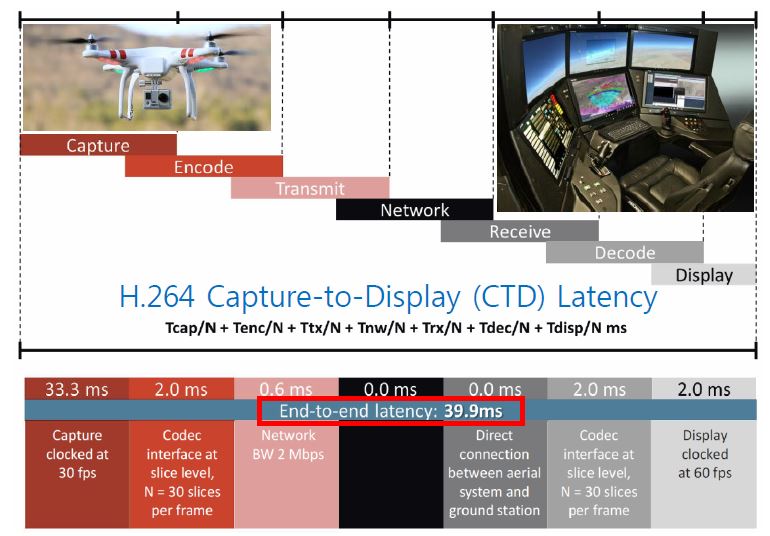
The end-to-end latency figure currently stands at 39.9ms based on H.264 screen capture.
- Issues with inadequate standards
Second, high-precision networking technology for stable provision of remote control-based industrial convergence services has not even been established as a standard yet.
Current industrial networking technology, called TSN, can be considered the fastest and most reliable next-generation industrial networking technology based on Ethernet. The IEEE 802.1 TSN Task Group is establishing standards, and is currently determining various types of environmental requirements for linking 5G communications with TSN technology and developing them by dividing them into branches.
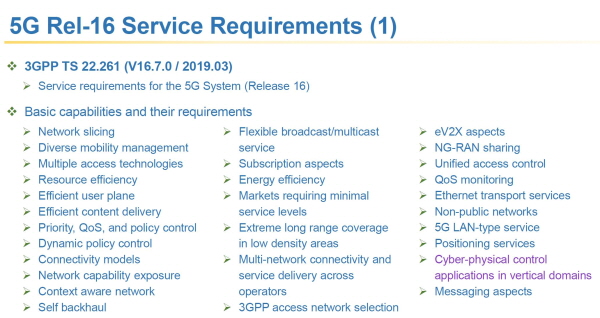
IEEE 5G Service Requirements
“5G is wireless communication. It transmits information to numerous nodes wirelessly. Because it is wireless, the real-time and time determinism of 5G cannot satisfy the precision of machines. Also, it is not possible to use 5G for internal machine communication. “Therefore, to bring 5G data down to the OT domain, it must be used in conjunction with TSN.”
This is the industrial world's view on 5G from B&R Vice President Sa Jae-hoon's interview with our magazine in April.
In order for the 5G communications currently in use to be integrated into industrial fields such as smart factories, the standardization work on TSN technology for 5G support in IEEE must be completed.
Currently, IEEE has been conducting standardization on TSN since 2012, and IETF has also been conducting standardization work on IP/MPLS-based DetNet technology to expand the functions of TSN since 2014.
According to ETRI, which is developing technology for TSN in Korea, there are currently no products (chipsets, endpoints, switches) that fully support TSN as TSN is currently in the process of international standardization.
Looking at the current IEEE standard status of TSN, time synchronization, traffic losslessness, and packet scheduling have been completed, but control and profiling for actual field use are in the initial stages, and it is impossible to implement the part of connecting 5G and TSN in industrial fields by linking with actual 5G.
- Infrastructure issues
Third, high-availability networking technology for real-time interactive, high-precision remote control services is still lacking.
No matter how much the delay time is reduced in the network, if a fault occurs on the line and packet loss occurs, the service must retransmit the packet again, and in this case, delay may occur due to the retransmission. Additionally, data collected in real time may be in a critical situation where it cannot be resent if lost.
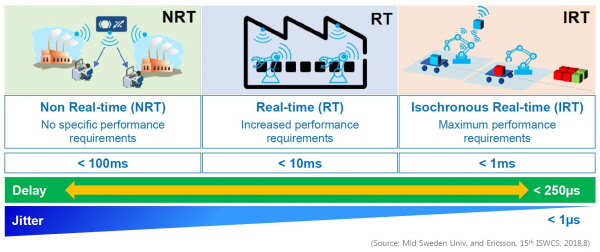
Delay speed for mission-critical cases in smart factories
In this way, it is not only important to reduce delay time, but technologies such as data survivability, which is availability in the network, must also be developed in parallel.
Existing survivability technologies are traditionally used to protect voice services, providing a quality that ensures that users do not experience any disconnection when making a call within 50ms in the event of a call interruption.
At this level of survivability technology, practical data recovery can be considered difficult for mission-critical services.
In some cases, there are mission-critical situations that require a recovery speed of 2ms or lossless operation, so existing protection switching technologies cannot help but have difficulties in real-time interactive and high-precision remote control.
Dr. Taesik Jeong of ETRI, who presented a 5G solution for ultra-low latency at KRnet 2019, said, "If data protection and switching technology so far has only transmitted data when a lot of traffic is collected, in the future, protection and switching technology suitable for real-time critical services between end-to-end should be developed, and a network should be built to secure as many backup resources as possible to ensure high data survivability, and a corresponding technology mechanism should be prepared." He added, "In addition, it is necessary to study efficient survivability mechanisms or methods in terms of actual construction costs."
Which media in the pastIn the past, he said, “What is 5G?” and “5G is both a technical term and a marketing phrase.” In order for South Korea’s telecommunications technology, which launched the world’s first 5G service in 2019, to become “5G that engineers can call 5G,” the three basic elements of ultra-high-speed communications, “low latency, communication standards, and infrastructure,” must come together to establish itself as a 5G with a high degree of technological perfection.

관련뉴스
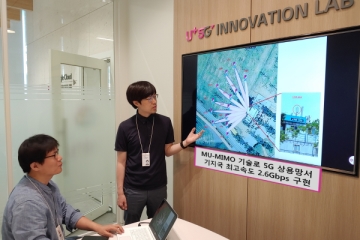
LG U+ Achieves Highest Speeds at 5G Base Stations with MU-MIMO
LG유플러스가 5G 핵심기술인 MU-MIMO를 5G 상용망에 활용해 기지국 최고속도를 구현했다. LG유플러스는 서울 여의도에서 13대 이상의 5G 단말로 동시 접속속도를 측정, 2.6Gbps 이상의 AAU 속도를 구현했다. MUMIMO는 5G 핵심 기술 중 하나로, 여러 단말이 동시 접속해도 속도 저하를 막아주는 기술이다. 빔포밍을 통해 전파를 원하는 곳에, 원하는 모양으로 만들어 전송하기 때문에 전파 간섭을 줄여 고객 체감 속도를 높일 수 있고 AAU 데이터 처리 용량도 늘어난다. 다수의 안테나 소자를 활용해 출력 세기를 따로 높이지 않아도 채널 용량을 배 이상 끌어올릴 수 있어 AAU 용량을 향상시키고 기지국 커버리지 내 수용 단말 수와 체감 속도를 늘릴 수 있다.
2019.06.10by 이수민 기자
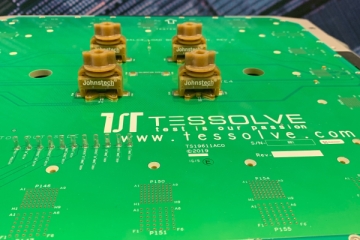
National Instruments, Tesolve, and JonesTech have jointly developed a quad-site mmWave 5G package test solution.
National Instruments (NI), Tessolve, and JonsTech jointly unveiled a quad-site mmWave 5G package test solution. One of the key components of the mmWave 5G package test solution is NI's semiconductor test system. NI recently added multisite mmWave test capabilities for 5G power amplifiers, beamformers, and transceivers. The solution is characterized by modularity featuring reusable software with a modular mmWave radio head and baseband/IF instrumentation, which is also a strength, enabling it to handle additional mmWave frequency bands in the future.
2019.06.13by 이수민 기자
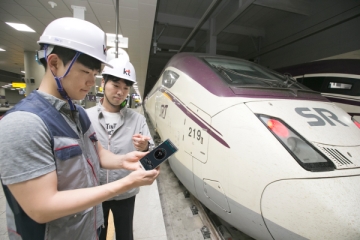
KT to Significantly Expand 5G In-Building Coverage to 1,000 Locations
KT announced that it will launch 5G services in large buildings such as major KTX stations and Gimpo Airport that are frequented by many customers. Since February 2018, KT has been preparing 5G in-building repeater equipment with domestic small and medium-sized partner companies, and completed the development for the first time in the country last January after approximately 10 months. Subsequently, KT will begin full-scale equipment deployment after undergoing thorough quality verification processes with small and medium-sized partners and major equipment developers. In-building services require equipment installation in complex building interiors with limited space, so infrastructure construction is generally carried out jointly through consultation among the three telecommunications carriers. To date, 119 in-building locations have been confirmed for joint construction by the three carriers and are currently under development, with KT overseeing 95 of these, which represents 80%.
2019.06.24by 이수민 기자
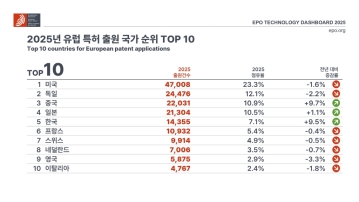
European Patent Applications Surpass 200,000 for the First Time… South Korea Maintains 5th Place, Led by Batteries and Telecommunications
유럽특허청(EPO)의 ‘기술 대시보드 2025’에 따르면 지난해 유럽 특허 출원은 20만1974건으로 처음 20만건을 넘었다. 한국 기업과 발명가의 출원은 1만4355건으로 전년보다 9.5% 증가해 국가별 5위를 유지했다. 배터리와 디지털 통신, 반도체가 증가세를 이끌었고, 삼성은 2년 연속 EPO 최대 출원 기업, LG는 3위에 올랐다. 서울·수원·용인 등 국내 주요 도시의 존재감도 확인됐다. 한국의 유럽 특허 전략이 개별 기술을 넘어 산업 전반으로 확장되고 있다는 점도 드러났다.
2026.03.24by 명세환 기자
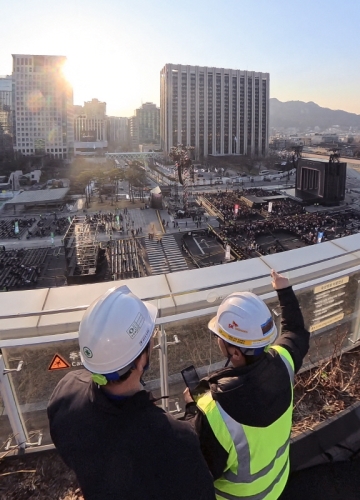
SK Telecom First Applies AI-Based Network Operations at Gwanghwamun K-Pop Concert
SK텔레콤이 3월 21일 서울 광화문 일대에서 열린 대형 K-팝 공연에 AI 기반 네트워크 운영 시스템을 처음 적용해 통신 품질을 관리했다고 밝혔다. 공연 전후 3시간 동안 모바일 데이터 사용량은 12.15TB로 직전 주말 같은 시간대보다 약 2배 늘었다. SK텔레콤은 AI 시스템 ‘A-One’을 활용해 5분 단위, 50m 단위로 트래픽을 감시하며 과부하 가능성에 대응했고, 임시 통신 시설과 현장 인력 운영도 병행했다. 밀집 행사와 외국인 이용 수요가 동시에 늘어나는 환경에서 AI 기반 자율 네트워크 운영의 현장 적용 가능성을 확인한 사례로 해석된다.
2026.03.23by 명세환 기자











