


Korean Analytical Science Society launches Materials and Components Analysis Technology Advisory Panel
 Published2019.08.11 09:01
| When analytical challenges are submitted to the analysis technology advisory panel
| Task forces composed of field experts will provide solutions
Ultra-high purity hydrofluoric acid used in semiconductor processes is a chemical that etches thin films one hundred-thousandth the thickness of a human hair without impurities.
Hydrofluoric acid, which became a topic of discussion in the Korea-Japan trade conflict, poses difficulties in selecting alternatives because while production technology is important, there is an absence of analysis technology to verify purity.
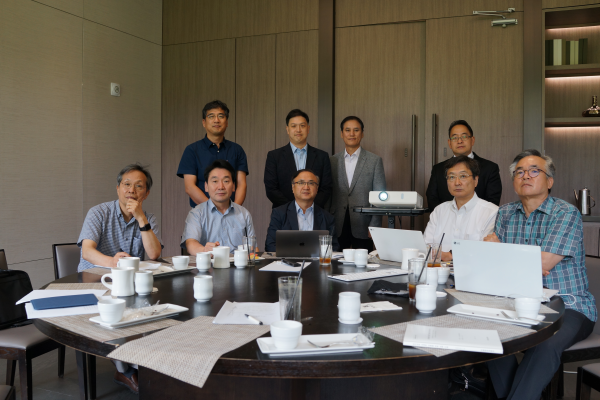
jointly launched the Materials and Components Analysis Technology Advisory Panel
On the 8th, the Korean Analytical Science Society and the Korea Research Equipment Industry Association jointly launched the 'Materials and Components Analysis Technology Advisory Panel' to assist domestic companies facing difficulties due to Japan's removal from the whitelist and export restrictions.
This emergency analysis technology advisory panel is composed of approximately 50 analytical science experts from academia, industry, and research institutions across various fields, centered on the Separation Analysis Research Committee under the Korean Analytical Science Society, along with analysis equipment development experts from the Korea Research Equipment Industry Association.
The ultra-high purity hydrofluoric acid problem occurred because domestic expertise in hydrofluoric acid purity analysis is lacking, making it impossible to conduct preliminary verification of substitutes from China, Russia, and domestic alternatives.
When analytical challenges arising from industrial operations are submitted to the analysis technology advisory panel, task forces composed of experts in relevant fields will provide optimal solutions.
Historically, the domestic industry has frequently commissioned analysis from advanced country research institutions such as the United States, Japan, and Europe, spending tens of millions to hundreds of millions of won per project during the process of developing new technologies and products. Beyond the issue of high analysis costs, there is an unavoidable risk of exposing our companies' know-how and strategies overseas.
Cho Nam-jun, President of the Korean Analytical Science Society, stated, "Just as analytical science played a key role in past reverse engineering research and development, analytical scientists must take active steps in the localization of advanced materials and components."
Lee Deok-hee, President of the Korea Research Equipment Industry Association, remarked, "The development of new analytical science technologies and research equipment are essentially inseparable, and cooperation between experts in these two fields will greatly contribute to the advancement of Korea's cutting-edge industries."
Related news

ETRI Successfully Develops Graphene Composite Material with Excellent Electromagnetic Shielding Capabilities
With the recent surge in electronic devices around us, demand for electromagnetic shielding technology is increasing. The Electronics and Telecommunications Research Institute (ETRI) has developed lightweight electromagnetic shielding material with high electrical conductivity by adding MXene to graphene composite material. The shielding material developed this time achieved the world's highest level of electromagnetic shielding effectiveness (99.9999994%) among nanocomposite users. It can detect resistance changes due to pressure variation with high performance, and can also serve as a pressure measurement sensor. Traditionally, electromagnetic shielding material was developed primarily using metals such as copper. The research team overcame these limitations by adding titanium carbide, a type of MXene, to graphene-polymer composite material.
2019.07.26by 이수민 기자

Measures to Strengthen Competitiveness of Materials, Parts, and Equipment Industry Targeting Japan Announced: "Breaking Away from Externally Dependent Industrial Structure"
Of South Korea's total trade deficit of $24.1 billion in 2018, the materials, parts, and equipment sector accounted for $22.4 billion, comprising the majority. Among these, South Korea has maintained a prolonged trade deficit with Japan. In early July, Japan imposed restrictions on its exports of semiconductor core materials to South Korea. By the end of August, South Korea was excluded from Japan's whitelist (preferential export-import countries). In response, the government established a competitiveness strengthening initiative for the materials, parts, and equipment industry to address structural vulnerabilities, including high dependence on Japan. The government's initiative focused on building inter-company cooperation models, promoting ladder policies that connect development to mass production, diversifying methods for timely concentrated investment and technology acquisition, and providing package support that enables prompt production and facility investment.
2019.08.05by 이수민 기자
As the Korea-Japan trade conflict intensifies… What will be the impact on our semiconductor industry?
The semiconductor market experienced a boom for two years through 2018 due to increased demand in the server and mobile sectors. However, from the second half of 2018 onward, with increased supply in the memory market, stagnant demand, and the U.S.-China trade dispute, semiconductor demand was expected to weaken, and growth in 2019 entered a declining trend. June semiconductor exports recorded a double-digit decline for six consecutive months as both memory and system semiconductor exports declined in tandem. Export volume reached $8.41 billion, representing a 25.3% decrease compared to the same month of the previous year. The Japanese government is threatening the domestic semiconductor industry by implementing regulations, including strengthening export procedures for materials that domestic semiconductor companies have high dependence on. Domestic semiconductor companies such as Samsung Electronics and SK Hynix are focusing on securing supply chains through measures such as circumventing imports via overseas factories and identifying alternative import sources in response to Japan's export restrictions.
2019.08.05by 이수민 기자
Nvidia invests $5 billion in Intel
NVIDIA and Intel, leaders in global AI computing technology, are now forging ahead in providing cutting-edge solutions through NVLink-based architecture integration. NVIDIA and Intel have officially announced a strategic partnership and stated that they will jointly develop customized data center and personal computing products to accelerate diverse applications and workloads ranging from hyperscale to enterprise and consumer markets, thereby laying the foundation for the next generation computing era.
2025.09.22by 배종인 기자
.jpg)
Applied Materials Launches Environmental Protection Campaign to Mark World Cleanup Day
Applied Materials Korea (CEO Park Kwang-seon) is carrying out environmental cleanup activities with employees and their families around the Dongtan Sinricheon area on the occasion of World Cleanup Day, evolving into a company that engages with the local community beyond technological innovation.
2025.09.22by 명세환 기자











