


Efficient Building Energy Management—Operational Intelligence Comes Before Equipment!
 Published2019.09.30 19:03
Johnson Controls Korea, which achieved double-digit sales growth compared to last year, presented greenhouse gas reduction as the most critical issue for smart buildings through a press briefing, as it currently has the most significant impact on the environment.
The primary culprits of greenhouse gas emissions are mostly industrial factory zones and energy consumption in urban buildings. In the case of factory zones, reducing energy consumption is directly linked to reduced production, making it difficult to implement.
However, buildings are different. Since 46.6% of buildings' primary energy use is attributable to heating and cooling, if energy consumption is managed efficiently and intelligently, substantial efficiency gains can be achieved.
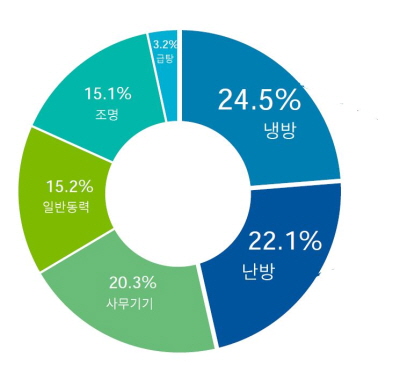
Buildings' primary energy sources account for 24.5% and 22.1% for cooling and heating, respectively
BEMS (Building Energy Management System)
In Korea, BEMS is mandatorily applied to public institution buildings of 10,000m2 or larger. However, according to Lee Gang-hyun, General Manager of Johnson Controls, merely installing BEMS does not ensure efficient energy consumption management. Although domestic smart building-related legislation exists, supervisory oversight focuses solely on whether BEMS equipment is being used, with no verification of energy management efficiency actually being conducted.
No matter how sophisticated the equipment, if it is not used intelligently, it becomes merely superficially appealing. Johnson Controls is promoting domestic provision of its CPO solution as a means to enhance this intelligent efficiency.
CPO was applied to Stanford in 2015 and has achieved a 45% reduction in total energy consumption, with approximately 500 million won in annual energy savings being realized.
Johnson Controls states that it will provide this CPO free of charge by the end of this year, prioritizing locations where Johnson Controls products are already in use.
Energy Optimization Solution with Intelligent Algorithm
CPO's algorithm operates on a very simple definition: "achieving the optimal cooling level required by the building with the least amount of energy." Lee Gang-hyun emphasized that Johnson Controls' simple system definition creates the most efficient intelligent mechanism, and introduced the company's specific optimization products and processes.
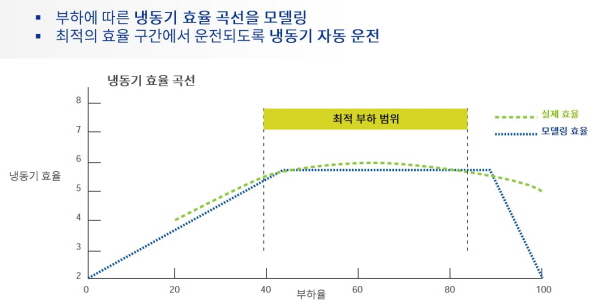
Efficiency curve modeling graph for achieving optimal chiller efficiency
70% of Energy Used in Heating and Cooling is Chiller Operating Energy
The core of an intelligent energy reduction solution is "understanding chiller manufacturing technology and, based on that, how precisely and in real-time can operational response to site conditions be achieved?" Brad Buckwalter, President and CEO, states: "Johnson Controls Korea's Metasys automatic control system and York chiller manufacturing technology, in combination with the aforementioned CPO, can deliver optimal energy efficiency."
In 2019, Johnson Controls secured major orders for heating and cooling control systems at a domestic mega-scale IT company's data center, an integrated disaster management platform for a specialized distribution enterprise, and large-scale orders for sprinkler systems and chillers at a semiconductor facility—a critical strategic industry in Korea. Building on this momentum, Johnson Controls Korea has established a 2020 strategy to provide systems for greenhouse gas reduction, currently a pressing issue, based on the three key smart building concepts of connectivity and Building Energy Management System BEMS.
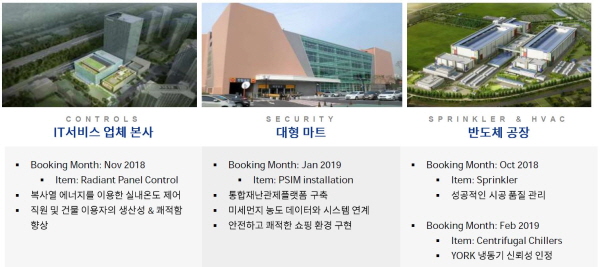
Johnson Controls' representative 2019 sales orders
Brad Buckwalter, President and CEO of Johnson Controls, stated: "While interest in smart buildings and eco-friendly buildings continues to grow, trust and awareness of building automation and energy reduction solutions remain insufficient. Johnson Controls Korea will spare no effort in support, leveraging our diverse expertise to create safer and smarter spaces."

Comments
Related news
.jpg)
Enhancing Smart Factory Production Efficiency with Factory-Customized IIoT Solutions
The rapid digitalization of smart factories, smart buildings, data centers, and energy grids provides the potential for enterprises to convert various data they own into business opportunities. Accordingly, Schneider Electric showcased integrated solution technology capabilities in the smart factory sector with its architecture platform EcoStruxure as the main concept at the Smart Factory and Automation Industry Exhibition 2019. Pro-face, Tricon CX, Process Safety Advisor, and Panel Comprehensive Monitoring Solution, among others, captured the attention of visitors as customized solutions suited to individual factory circumstances.
2019.04.15by 이수민 기자

Johnson Controls Launches Cloud-Based Building Integration Platform JEM 2.0
Johnson Controls launched its open integrated analytics platform Enterprise Management JEM 2.0. JEM 2.0 is a cloud-based platform supporting diversity, enabling integrated building management through a single management window. Energy, asset, occupancy and general building management. The JEM 2.0 platform leverages artificial intelligence (AI) and machine learning technologies to analyze enterprise building data.
2019.07.10by 명세환 기자
.jpg)
[Webinar Key Q&A] How to Effectively Use Smart Meters to Measure Ultra-Precise Power Usage in Smart Buildings
Continuous changes in the energy sector are making it increasingly difficult to optimize power reliability, energy costs, and operational efficiency in critical power environments such as hospitals, data centers, airports, and factories. Utility power grids are becoming increasingly dynamic, facility distribution systems are growing more complex, and network stability faces threats from cyber attacks. As competition intensifies and environmental regulations become stricter, the requirements for energy efficiency and business sustainability are higher than ever. To address these challenges, new digital tools designed to respond more quickly to opportunities and risks related to power system reliability and operations are needed.
2019.09.01by 이수민 기자
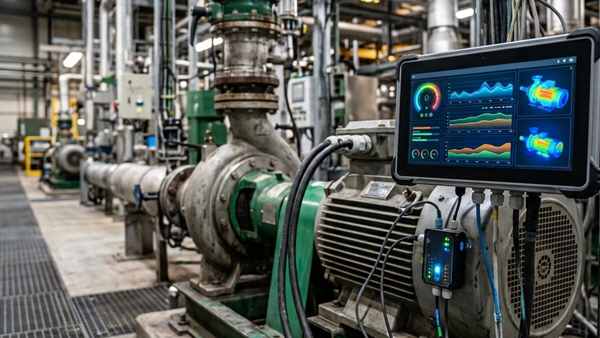
[Technical Contribution] Mouser: "AI Agents Help Accelerate and Standardize Industrial Field Maintenance Operations"
Abhishek Jadhav from Mouser Electronics discusses how to leverage agentic AI for predictive maintenance in industrial automation.
2026.10.23by 편집부
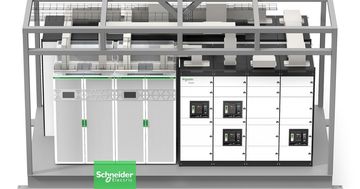
Schneider Electric Unveils Modular Power Solution for AI Data Centers
Schneider Electric has launched prefabricated power modules and power skids for AI data centers, jointly developed with NVIDIA. Based on the GB300 NVL72 reference design, the solution applies standardized design and factory pre-fabrication methods to build power infrastructure in as little as 6 months. Galaxy VXL UPS technology is integrated, with capacity options ranging from 2MW to 2.5MW.
2026.10.23by 배종인 기자











