


Implementation of lowest-power 32-bit system with groundbreaking microcontroller architecture
 Published2012.10.05 11:00
October 5, 2012 – Silicon Laboratories Inc. (NASDAQ: SLAB, Country Manager Jong-Chan Lee), a global leader in high-performance analog-intensive mixed-signal ICs, today introduced a family of microcontrollers (MCUs) based on the industry's lowest-power ARM® Cortex™-M3 processors, along with the first-in-class power-aware development tools. Through mixed-signal innovation, the Precision32 SiM3L1xx MCUs and development environment enable developers to reduce power consumption to 175 µA/MHz in active mode and below 250 nA in standby mode while the Real-Time Clock (RTC) is operating at a 3.6V power supply. These ultra-low-power mixed-signal MCUs are ideal for smart metering, utility monitoring, home automation, wireless security, asset tracking, personal medical devices, and other power-sensitive applications powering the Internet of Things (IoT).
Ultra-low power MCUs are a core component of IP-enabled devices connected to the IoT. Experts predict that by 2020, the IoT will comprise 500 billion intelligent devices capable of automatic sensing, monitoring, processing, controlling, and communicating over wireless networks. Since numerous AI-powered end nodes will be battery-powered or harvested from energy sources, these end nodes require highly energy-efficient MCUs, such as SiM3L1xx devices, that can optimize system-level power consumption.
The SiM3L1xx family is the most efficient 32-bit MCU product in the industry, designed to achieve groundbreaking ultra-low power operation based on an ARM Cortex-M3 processor running up to 50 MHz. The newly introduced Precision32 mixed-signal MCU was developed to reduce power consumption compared to many 8-bit MCUs through the application of power-saving peripherals and an innovative architecture, enabling developers to use high-performance 32-bit cores in their low-power embedded designs without shortening battery life.
Active mode power savings are achieved through a number of key innovations. For example, dynamic voltage scaling regulates the voltage of internal devices according to changes in conditions. High-efficiency, highly integrated DC-DC buck converters reduce active mode power by up to 40% compared to competitor 32-bit MCUs. Dedicated peripherals, such as the data transmission manager, AES encryption block, and real-time encoder, accelerate RF protocol processing for wireless applications while significantly lowering system power without CPU intervention.
Advanced Direct Memory Access (DMA) can reduce protocol-related power consumption by up to 90% and enables a wake-up time of 4 microseconds by maintaining RAM and register states. This MCU family also incorporates a patented LCD controller featuring a charge redistribution architecture that can reduce display power consumption by nearly 40% without impacting performance.
The SiM3L1xx MCU significantly reduces sleep mode power consumption by optimizing on-chip peripherals (Charge Pump, RTC, sensor interface, sleep mode UART, comparator, and LCD controller) for minimum power consumption. The Charge Pump reduces analog sleep current by up to 35% and digital sleep current by up to 50% by generating a power-efficient input voltage for the device circuitry in sleep mode. The SiM3L1xx MCU supports multiple alarm RTCs for clocking and interrupts, a sleep mode UART for low-power device communication, and an integrated sensor interface that provides sensor stimulation and measurements while the MCU is in sleep mode. The automatic sensor interface continues to count even in sleep mode and can activate the MCU after the count is exceeded or when the count reaches a programmable limit.
The SiM3L1xx and its development support tools were designed with the overall system power budget in mind. To minimize system-level power, the SiM3L1xx MCUs feature advanced peripherals that reduce power consumption by other ICs within the system, as well as patented voltage conversion technology. For example, a high-efficiency DC-DC converter lowers the overall system operating current. Overall power consumption can be minimized by configuring the output voltage to the lowest setting allowed by other IC components connected to the MCU. This technology is particularly useful in battery-powered applications, such as smart meters, and can be an innovative technology capable of extending battery life by up to 20 years.
PowerAware Precision32 Development Tool
Silicon Labs' free Eclipse-based IDE and app builder software includes an industry-first feature that predicts power consumption and provides a setup guide to achieve the lowest system power.
• The Power Estimator allows you to graphically view the total provided current and the additional current of active peripherals. Individual peripheral current values clearly show where current is being consumed, and the pie chart displays the power usage of each peripheral as a percentage of the total current. The Power Estimator automatically updates the design based on configuration changes, enabling designers to optimize for the lowest power consumption in each mode.
• Power Tips provides software configuration guides to help developers optimize current consumption. This feature automatically appears within the App Builder when the cursor is placed over a configuration setting. Being able to view power optimization tips while configuring the MCU can significantly save development time.
App builder software also facilitates developers' work by enabling efficient peripheral selection and pin-out customization and initialization for Precision32 MCUs.
"Low-power design is particularly challenging because developers must consider numerous different application-specific optimizations to meet their desired low-power targets," said Mike Salas, Vice President and General Manager of the Microcontroller Family at Silicon Labs. "The newly announced Precision32 mixed-signal MCU family is unique in the industry because it provides developers with the flexibility to optimize their designs for the lowest power at the system level by offering unprecedented advanced peripherals, an innovative architecture, and PowerAware design tools."
Richard York, Director of Embedded Processors at ARM, stated, “Technological momentum is being formed in an environment where a wide range of power-sensitive connected devices can be implemented to constitute the ‘Internet of Things.’ Silicon Labs is leading a significant industry trend by providing groundbreaking, energy-efficient microcontrollers based on the ARM Cortex-M3.” “We expect that advanced MCUs, such as Silicon Labs’ Precision32 SiM3L1xx MCU family, will make a significant contribution to the development of the Internet of Things market in this market,” he said.
Price and supply
Silicon Labs' SiM3L1xx MCUs are currently in mass production and supplied in 5.5 mm x 5.5 mm QFN TQFP packages equipped with 32 to 256 kB of flash memory. The SiM3L1xx MCU products are priced starting at US$2.55 per 10,000 units. Comprehensive integrated development kits are available for the SiM3L1XX-B-DK (LCD excluded) and SiM3L1XXLCD-B-DK LCD kits at US$99 each (Manufacturer's suggested retail price).

관련뉴스
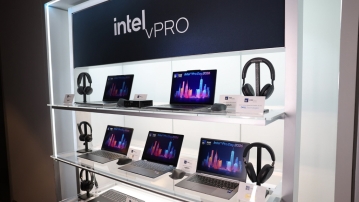
Intel Unveils Next-Generation 'Core Ultra Series 3' and vPro Platform for Enterprise PCs
인텔이 차세대 기업용 PC를 위한 ‘인텔 코어 Ultra 시리즈 3’와 최신 vPro 플랫폼을 공식 발표하며, 기업용 노트북부터 고성능 워크스테이션까지 폭넓은 수요 충족에 나섰다.
2026.03.26by 배종인 기자
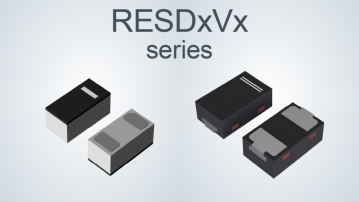
ROHM Launches ESD Protection Diode Compatible with High-Speed Interfaces of 10Gbps or Higher
반도체 전문 기업 로옴(ROHM)이 10Gbps를 넘어서는 차세대 고속 데이터 통신 환경에 대응할 수 있는 ESD(정전기 방전) 보호 다이오드 ‘RESDxVx 시리즈’를 개발하며, 고속 인터페이스에서 요구되는 신호 품질 유지와 IC 보호 성능을 동시에 끌어올렸다.
2026.03.26by 배종인 기자
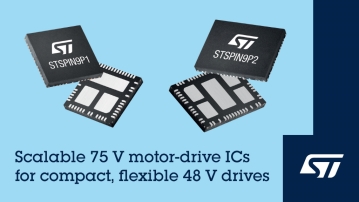
ST Launches 75V Drive IC Targeting 48V Industrial Motor Driving
ST마이크로일렉트로닉스가 48V급 산업용 구동 시스템 설계에 맞춘 75V 모터 드라이브 IC ‘STSPIN9P’ 시리즈를 공개했다. 새 제품군은 하프 브리지와 풀 브리지 구조로 구성돼 모터 종류와 출력 조건에 따라 설계를 확장할 수 있도록 한 것이 특징이다. 전원 회로와 보호 기능, 전류 감지 회로를 칩에 통합해 시스템 구성을 단순화했으며, 최대 500W급 애플리케이션까지 대응하도록 설계됐다. 회사는 레퍼런스 디자인과 데모 보드도 함께 제공해 산업 자동화, 로보틱스, 펌프, 팬, 조명, 섬유 기계 등에서 개발과 평가를 지원할 계획이다.
2026.03.26by 배종인 기자

Nordic supports security updates for the entire lifecycle of IoT devices at a single fixed cost
Nordic Semiconductor, a global leader in low-power wireless connectivity solutions, has unveiled a single fixed-cost licensing model that delivers FOTA (Firmware Over-the-Air) and device management capabilities throughout the device lifecycle via nRF Cloud, and introduced a new firmware update solution to prepare for the enforcement of the European Union's Cyber Resilience Act (CRA).
2026.03.26by 배종인 기자

Practical Training in Low-Noise, Low-Power Circuit Design All in One Place… Training Fee Support
고감도 아날로그 회로와 센서 기반 시스템 설계 역량을 강화할 수 있는 ‘2026 고급 엔지니어 실무 마스터 클래스’가 오는 4월16일 서울 가산동 e4ds 컨퍼런스 센터에서 열린다. 이번 과정은 온라인이 아닌 오프라인 유료 실습 교육으로 진행되며, 현장 중심의 심화 학습을 원하는 엔지니어를 대상으로 한다. 이번 교육은 텍사스 인스트루먼트(Texas Instruments)가 교육비를 지원해 정가 25만원에서 10만원 할인 된 15만원에 참가할 수 있다.
2026.03.26by 배종인 기자











