


"Small form factor power design can be simplified with a single chip."
 Published2020.04.21 12:30
Power design for electronic devices has become more challenging than in the past.
Micromodules and component integration simplify power supply design.
With the rapid growth of data usage due to advancements in 5G, AI, and IoT, processor performance is increasing day by day. Conversely, the electronic devices that house these processors are shrinking. This is due to the growing demand for products that offer a wealth of functionality and high performance in a small form factor.
Developers who need to develop high-performance, compact electronic systems face many challenges, especially when designing power supplies.
Processor power requirements have increased, and PCB space constraints have complicated thermal design requirements. Across the industry, the number of dedicated power supply engineers has decreased, leading to a decline in design expertise. Even if a design is successfully completed, finding optimal components is crucial, and time-to-market constraints mean there's no room for compromise.
So, wouldn't it be possible to use pre-fabricated power supplies to deliver electronic devices that meet the market's performance needs within development deadlines?

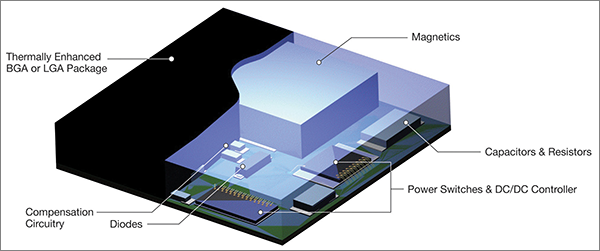
Analog Devices' (ADI) µModule® power products are packaged solutions that integrate high-performance analog ICs, power switches, and passive components. Micro-module power products are designed to optimally integrate these components to deliver high performance in a small installation space.
We asked Taemin Ahn, a manager at Shinbang Electronics, a distributor of power products such as ADI, about how micro modules can function as power supplies with the performance customers want.
Q. What is the concept behind ADI's micro modules?
A. Micro modules are products that optimize all ADI products, rearranging and modularizing them for customer use. Micro modules include small buck converters, boosters, battery chargers, and LED drivers, all of which are currently being developed and released. All products integrate passive components, enabling simple power supply design.
Micro modules are currently known as single-chip power solutions. However, the ultimate goal of the ADI micro module team is to provide customers with a simple, optimized solution that maximizes the integration of power and other peripheral components, enabling them to implement diverse functions on a single chip. As part of this effort, ADI has also released micro modules with added power and interface functionality, and is currently shipping them.
Q. What utility do micro modules provide in terms of power system management?
A. Heat generation can be a factor that determines the operating limits of internal and external components. ADI's micro modules generate less heat per unit volume than competing products. This allows for a smaller heatsink size while maintaining the same power consumption, and eliminates the need for additional grounding within the PCB. Developers can optimize circuit area and reduce the need for heat dissipation when designing regulator power circuits. This not only reduces development time but also optimizes design resources.
Q. How is the heat generated inside the micro module controlled?
A. The component that generates the most heat within a micromodule is undoubtedly the inductor. Starting with the second-generation micromodule regulator, a heatsink was attached to the inductor and exposed externally to control heat. Starting with the third-generation, the inductor itself was exposed outside the package, allowing it to function as a heatsink.
Q. Given the large number of components integrated, there are likely to be EMI/EMC issues within the micro module. How did you address these?
A. For ADI's micro modules, we first integrated EMI filters to achieve low EMI. Next, we focused on reducing EMI emissions during circuit design by introducing ADI's patented Silent Switcher technology. Accordingly, we are releasing products that can satisfy not only CISPR22 (EN55022) Class B but also CISPR25 Class 5, a standard used in automobiles.
Q. With the micro module product line now in its third generation, there must be a variety of application cases. Could you share some representative examples?
A. Micro modules can be used in a wide range of applications. For example, semiconductor inspection equipment includes systems that utilize FPGAs, and micro modules are used in these systems.
As manufacturing processes become more integrated and energy efficiency becomes increasingly important, major semiconductor manufacturers are continuously releasing low-power semiconductors. This trend is leading to a growing number of applications requiring low voltage and high current.
Beyond semiconductor testing equipment, another market segment is 5G communications equipment. This market also requires core input voltages of less than 1V and currents exceeding 100A for the main chipset. The ability to vary the output voltage when switching to sleep mode is also required.
ADI's micromodule regulators not only convert voltage but also provide easy digital control of input/output current, voltage, and temperature.
Q. For which engineers are micromodules particularly useful?
A. Many engineers face challenges when designing power systems, such as noise and EMI. Micro modules simplify these issues. If the inductor or FET is incorrectly placed on the outside, a lot of EMI noise or other noises can be introduced, so this device can be said to perfectly cover such parts.
Comments
Related news
Infineon Launches 1-Channel TDI Gate Driver IC
Every time a power MOSFET in an SMPS is turned on or off, parasitic inductance can cause overshoot beyond zero potential, which may incorrectly trigger the gate driver IC. To prevent such issues, Infineon has launched the EiceDRIVER 1EDN TDI single-channel gate driver.
2020.04.10by 이수민 기자
.png)
Considerations When Implementing Power Solutions for 5G Cells
To fully realize the advantages of 5G, designers must power the components contained in small-cell 5G installations with advanced power supply solutions. Without employing appropriate power management solutions, a wide range of risks can emerge, ranging from inefficiency to thermal issues and other performance-related problems.
2020.04.14by 이수민 기자
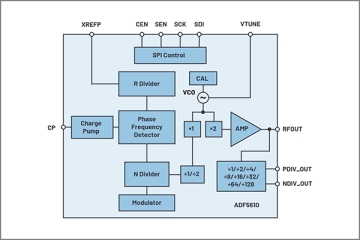
Choosing the right wideband synthesizer for your communications and measurement systems
With demands for high bandwidth and fast data rates, requirements for system frequency and modulation speed continue to increase. Low power characteristics have also become important. Now developers must meet these requirements without sacrificing electrical performance or functionality. ADI's microwave wideband synthesizer, the ADF5610, integrates a PLL and VCO to address this.
2020.04.17by 이수민 기자

Intel Unveils Next-Generation 'Core Ultra Series 3' and vPro Platform for Enterprise PCs
Intel has officially unveiled the "Intel Core Ultra Series 3" for next-generation enterprise PCs and the latest vPro platform, addressing a wide range of demands from enterprise notebooks to high-performance workstations.
2026.03.26by 배종인 기자

ROHM Launches ESD Protection Diode Compatible with High-Speed Interfaces of 10Gbps or Higher
Semiconductor specialist ROHM has developed the 'RESDxVx series' of ESD (electrostatic discharge) protection diodes capable of responding to next-generation high-speed data communication environments exceeding 10Gbps, simultaneously enhancing both signal quality maintenance required in high-speed interfaces and IC protection performance.
2026.03.26by 배종인 기자











