


GaN power semiconductors with high power density and low heat generation: "100% in-house development reduces price."
 Published2020.07.28 17:11
High performance is achieved by increasing power density and controlling heat generation.
TI Strengthens GaN-Based Power Semiconductor Portfolio
Power semiconductors are semiconductors that supply, control, and convert power, and are key components responsible for the operation and performance of electronic products.
With the advent of the Fourth Industrial Revolution, the number of advanced power-consuming fields, such as 5G, AI, IoT, autonomous vehicles, robots, and solar power generation, is increasing, making power semiconductors capable of handling high output and high voltage increasingly important.
Texas Instruments (TI), a leader in analog ICs, has been focusing on power semiconductors this year and continues to add product lines that improve power density. On July 2nd, an online press conference was held and the BQ25790 and BQ25792 buck-boost battery charger ICs were unveiled.

Vice President Mark Garry and Manager Samuel Wong [Photo = TI]
We wrote to Samuel Wong, product manager for power management solutions, Mark Gary, vice president of the BSR business unit, and Masoud Beheshti, general manager of GaN solutions product management, all of whom work in TI's power semiconductor division, to ask them about TI's unique power semiconductor roadmap.
◇ Overcoming overheating with a high-current clip package with low thermal resistance
When asked what TI's strengths are compared to other companies with significant expertise in power semiconductors, such as Infineon, ON Semiconductor, and STMicroelectronics, TI responded with a broad technology portfolio that provides design flexibility, small form factor, high performance, and strong ruggedness.
In addition, the company stated that it will help customers solve design challenges related to power density, low standby current, low EMI, low noise, and insulation through competitive analog power products.
In the first half of this year, TI launched products such as ▲TPS546D24A DC/DC buck converter ▲UCC12050/40 isolated DC/DC power supply ▲TPSM53604 DC/DC buck power module ▲BQ25790/92 buck-boost battery charger. All released products emphasized high power density, low EMI, and low heat generation as their advantages.
TI explained that in the Korean market, the UCC12050/40 isolated DC/DC power supplies are being used in various end-equipment where power density and efficiency are important, such as industrial equipment, motors, trains, medical devices, servers, communication platforms, electronic meters, and aircraft.
Additionally, the BQ25790/92 buck-boost battery charger is being adopted in end devices such as smart speakers and portable medical devices, providing customers with high power density and fast charging speed experience, he added.
Increasing power density inevitably leads to increased heat generation. To control this, TI explained that its products use high-current clip packages that provide extremely low thermal resistance to the PCB.
TI's Source-Down FET technology allows for a single, large ground pad on the bottom of the IC package, resulting in lower thermal resistance. Integrated MOSFETs with low Rds(on) dissipate less energy within the package. Furthermore, the TPS546D24A DC/DC buck converter, which incorporates TI's thermal suppression technology, boasts excellent Safe Operating Area (SOA) performance.
◇ GaN devices, 100% in-house developed, ensure price competitiveness.
Silicon (Si) has been primarily used as a power semiconductor material since the 1960s. However, it does not meet recent requirements due to issues such as switching loss, speed, and durability.
As the need for new semiconductor materials that overcome the limitations of silicon grows, power semiconductor devices that adopt silicon carbide (SiC) and gallium nitride (GaN) are quickly gaining ground in the market.
TI's next-generation power semiconductor roadmap shows that GaN is taking a larger share than SiC. TI is utilizing GaN in a variety of applications, from AC/DC power supplies and motor drives to grid infrastructure and vehicle charging.
Additionally, TI emphasized that in various applications, GaN devices from TI provide 99% efficiency and high power density of up to 300%, eliminating the need for forced cooling.
From a customer perspective, next-generation semiconductors like GaN are difficult to adopt due to their high prices. To increase the price competitiveness of GaN devices, we asked TI to what extent it has built related fabs and how much it plans to expand them.
Accordingly, TI stated that it is striving to provide 100% internally developed GaN devices, from GaN process and reliability testing to driver development and packaging technology. The idea is to lower the cost of high-quality and high-performance devices through internal standards.
In addition to GaN and SiC, GaAs, InP, GaP, CdS, ZnTe, and PbS are being discussed as next-generation semiconductor materials. TI said that although it could not discuss future product development plans, it is working to provide devices that can solve developers' power design problems.
◇ Helping Power Design Engineers Solve the Challenges They Face
Recently, as voices are growing louder in Korea calling for the development of semiconductor fields other than memory semiconductors, companies are also focusing on system and power semiconductors.
TI said that developers designing power devices today are facing various challenges due to the trend of miniaturization of electronic products and increasing system requirements, and that the latest power management solutions must be small, efficient and reliable.
He also emphasized that TI power semiconductors help solve design challenges by meeting key power management trends such as high power density and integration, low EMI and standby current, and improved isolation.
When asked about its future goals in the power semiconductor market, TI said, “With decades of accumulated technical expertise and a portfolio of more than 30,000 power IC products, TI is committed to addressing designers’ diverse design needs.”
Additionally, he stated, “We want to contribute to shortening the product launch time by supporting developers with high-performance products, convenient design tools, technical reference materials, and customer support services to meet today’s power design requirements mentioned above.”
Comments
Related news
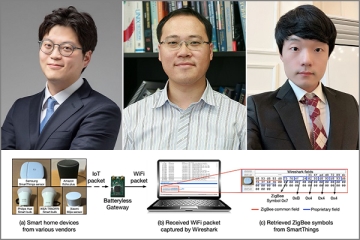
A KAIST research team successfully developed a power-less IoT gateway.
A KAIST research team announced its successful development of a battery-free IoT gateway using backscatter technology. Backscatter technology is a technique that transmits information by reflecting radiated signals existing in the air rather than directly generating wireless signals from a device, and consumes no power in generating wireless signals.
2020.07.13by 이수민 기자
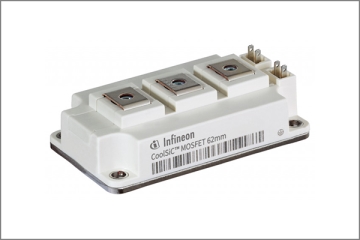
Infineon Announces Industry-Standard 62mm Package SiC MOSFETs
Infineon has added a 62mm industry-standard package to its CoolSiC MOSFET 1200V module product family. Unlike conventional 62mm IGBT modules manufactured from silicon, the CoolSiC 62mm modules made from silicon carbide can be used in applications such as photovoltaic, server, energy storage, EV charging, traction, commercial induction cooking, and power conversion systems.
2020.07.16by 명세환 기자
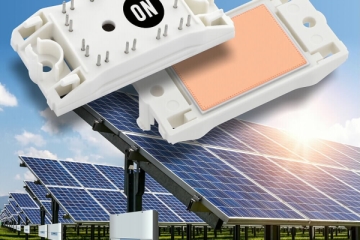
ON Semiconductor Develops SiC Power Modules for Solar Inverters
ON Semiconductor unveiled the NXH40B120MNQ, a full silicon carbide (SiC) power module product family for photovoltaic inverter applications, on the 21st. The NXH40B120MNQ full SiC power module product family, consisting of 2-channel and 3-channel models, integrates 1200V, 40mΩ SiC MOSFETs and 1200V, 40A SiC boost diodes with a dual boost stage.
2020.07.21by 이수민 기자

Intel Unveils Next-Generation 'Core Ultra Series 3' and vPro Platform for Enterprise PCs
Intel has officially unveiled the "Intel Core Ultra Series 3" for next-generation enterprise PCs and the latest vPro platform, addressing a wide range of demands from enterprise notebooks to high-performance workstations.
2026.03.26by 배종인 기자
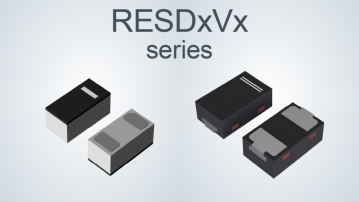
ROHM Launches ESD Protection Diode Compatible with High-Speed Interfaces of 10Gbps or Higher
Semiconductor specialist ROHM has developed the 'RESDxVx series' of ESD (electrostatic discharge) protection diodes capable of responding to next-generation high-speed data communication environments exceeding 10Gbps, simultaneously enhancing both signal quality maintenance required in high-speed interfaces and IC protection performance.
2026.03.26by 배종인 기자











