



Interbet of Things dominates the market by breaking through head-on with Zigbee.
 Published2012.11.08 09:01
On November 8, Silicon Labs held a press conference at the Grand Intercontinental Hotel to launch the Ember Zigbee solution for its low-power wireless embedded product portfolio. Silicon Labs possesses deep technological capabilities and market share in its RF products, which began in 2001 and produced over 1 billion radio chips by 2012.
Ember Zigbee, announced recently, is viewed as a potential third wave. While the previous wave involved information sharing through connections between PCs, the second wave was the voice communication revolution, specifically regarding mobile phones. The third wave, announced now, is described as all electronic devices connecting to each other to share information. This is termed the Internet of Things (IoT).
If electronic devices share the information they possess, each device can collect information from other devices and use the information source, thereby elevating them into more intelligent devices.
Bob McKel, the creator of Ethernet and chairman of an IoT company, stated that as this progresses, its potential will become a complete open standard, supporting a revolutionary platform based on the Internet, and that Silicon Labs intends to support this using Zigbee.
Fundamentally, the top priority for such a network is low power consumption. This aspect must not be complex, specifically for the connection with the user interface. Furthermore, it must have good scalability, as the number of devices connected to the network can exceed 3,000. To achieve this, it must be secure.
In some cases, you may need to move rooms, and in the case of Wi-Fi, the connection may be lost if you go to another room due to the signal. Wi-Fi and Bluetooth are examples of this. However, in the case of devices that utilize Zigbee, such as light bulbs or thermostats, there are problems using them as controllers due to instability similar to Bluetooth.
Mesh networks are important here because various devices are complexly connected to ensure maximum connectivity.
This is not to say that Wi-Fi or Bluetooth are bad. Nor does it view Zigbee as an outdated technology. However, to maximize the capabilities required in various environments, Bluetooth, Wi-Fi, and Zigbee must be utilized appropriately.
An example of Zigbee's application is in home security. While modern devices like smartphones can control their respective environments, Zigbee technology is more suitable for home devices such as motion sensors and door locks due to its security features.
Other technologies and solutions used by Silicon Labs include RF technology.
There are times when Sub GHz technology requires the highest level of stability, even though data transmission can be slow.
Sprinklers, door locks, and outdoor lighting are examples of such cases.
Page 6.
Therefore, all devices can coexist appropriately. I believe that such coexistence can enable optimal performance.
Page 6 shows the current usage, where EM35 and EM357 are Zigbee solutions.
Since there are transceivers and receivers sending Sub GHz signals, the entire application range is covered.
There are also sensor products. In the case of temperature and humidity solutions, we expect them to be covered by IoT solutions.
So, which applications are currently being used?
Currently, it is smart metering. In the United States, it has been widely adopted since 2010. This is also known as AMI or smart gridding.
Smart grid systems are now being deployed in Europe and Asia as well.
Other applications include security monitoring and automation.
There are two different aspects here. One involves adding to existing services, such as internet business services like internet provision for video content, where home security services are provided as a fourth service. The other approach is a DIY method where the user installs the system independently. In this case, the user purchases sensors from a retail store and installs them, while a service provider offers a portal for use.
Here, various systems are used by utilizing different sensors. When performing tasks such as motion sensor control systems and door locks, about eight types of sensor systems are required.
In this way, once the network is connected to the home, it becomes possible to connect systems such as the home energy grid as well.
Among these, white goods are particularly interesting. It appears that truly fascinating phenomena will emerge if appliances such as washing machines share information with other networked products. For instance, the lighting control system could be adjusted via the internet network even when the homeowner is away. Motion sensors could be implemented within the home network to detect lighting, or the lights could turn on automatically when someone enters the premises. Through this information sharing, one can experience the potential for new technological innovations.
The area with the greatest market potential is likely the integration of IoT with the healthcare sector.
There are three aspects here: the first involves the early discharge of hospitalized patients to monitor their condition, and the second is the care of the elderly. This allows seniors to stay safe and comfortable in their own homes while being monitored for physical activity if necessary. This specifically involves monitoring or sensing movement. Regarding home appliances, parts such as gas stoves and refrigerators require safety, and these can be monitored in real time. Finally, there is the efficiency of medical treatment. You can check your health at home before visiting a doctor. You can receive an examination with information such as weight and body temperature already transmitted to the doctor, and I believe that prevention is possible by sending data periodically.
The part up to this point is precisely the main part used in Zigbee. This can be seen as the part where security is required. It seems safe to assume that this is the time when the data is expected to become mainstream.
Regarding the product side, Zigbee currently incorporates ARM cores in the Ember 357 and 351 models. This marks the first time an ARM core has been used in the market. The ARM core offers new benefits, namely low power consumption and a wake-up system utilizing sleep mode. Currently, it uses the Cortex M3. Furthermore, since there are many third-party components available for development, I believe this is also beneficial for engineers.
And in the case of the ARM Core, there are no major issues even if you intend to implement it as an SoC and even develop applications. For most radio SoCs, performance is the most important factor, and this product's radio offers significant advantages in noise sensitivity and output. Currently, it comes with 128 KB of 32-bit flash memory, and 129 KB is also available.
In the case of network solutions, while the chip is important, the most crucial aspect is its stability, as Embersa started as a network solution software company. It can be applied as an integrated solution that includes both hardware and software.
The provided software is prepared at a production level, and the code can be received and customized. It provides the basic source code and even manages the software. In other words, if a customer requests specific features, they can be implemented. However, this software is open for other customers to use as well.
By collaborating with client companies in this way, the software can provide reliability, price, and other services. In the case of latency, it can be considered that hardware tuning is possible.
In addition to software and chips, various other forms of support are required to create a successful solution, a prime example being the EVKit. The device announced this time currently consists of three nodes designed for mesh networks, and... for now, there is no difficulty in implementing most networks with this kit.
First, packet tracing is possible, allowing for the tracking of messages. However, when developing RF applications, even if the process is simple, visualizing the data can be difficult. For instance, in the case of a light switch, there is a switch and a bulb; the light might not turn on even after the switch is turned on. There are various possible scenarios in such cases. RF is even more complex. When a signal is sent, it might not be delivered, or the assignment might be set to a different network. The number of possible scenarios is quite substantial. To handle these complex error variables, the ability to trace the entire packet allows for visual identification of where the signal was sent and where errors occurred, making it easier to use. Additionally, a debug adapter is provided, enabling the capture and flagging of errors for further debugging.
There are also debugging parts, development tools, and the Amber App Builder.
In the case of the Zigbee protocol, it is provided as a built-in App Builder.
Currently, the app builder contains about 70 apps that can be used immediately with a click.
You can download and use it directly on the chip.
By utilizing these development kits, you can save a significant amount of time, spend it on increasing the added value of your product, and quickly create more powerful solutions.
It is currently being used in various industries in the market.
Currently, in the Korean market, the sales of such products are managed by the Korean branch.
In addition, Zigbee is the name of a technology, and it has formed a consortium called the Zigbee Alliance, of which Silicon Labs is a member. Currently, there are about 400 companies, with Asia, Europe, and North America each accounting for one-third of the total.
Silicon Labs has been a member of and leading the Alliance for over 10 years through Ember.
Spitter serves as a board director of the Zigbee Alliance, and Hair Engineer serves as the chairman of the technical review committee.
1. The Internet of Things (IoT) has begun.
It will become an important trend in the future.
2. Silicon Labs will become a leading group in the future. Through Embersa...
And to this end, Silicon Labs is making continuous investments in MCU sensor wireless-based technologies.
3. IoT will enable us to live more effectively, comfortably, and conveniently.

관련뉴스

Intel Unveils Next-Generation 'Core Ultra Series 3' and vPro Platform for Enterprise PCs
Intel has officially unveiled the "Intel Core Ultra Series 3" for next-generation enterprise PCs and the latest vPro platform, addressing a wide range of demands from enterprise notebooks to high-performance workstations.
2026.03.26by 배종인 기자
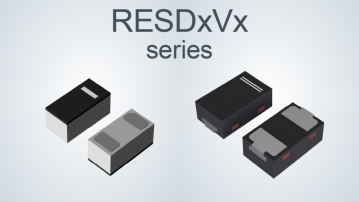
ROHM Launches ESD Protection Diode Compatible with High-Speed Interfaces of 10Gbps or Higher
Semiconductor specialist ROHM has developed the 'RESDxVx series' of ESD (electrostatic discharge) protection diodes capable of responding to next-generation high-speed data communication environments exceeding 10Gbps, simultaneously enhancing both signal quality maintenance required in high-speed interfaces and IC protection performance.
2026.03.26by 배종인 기자
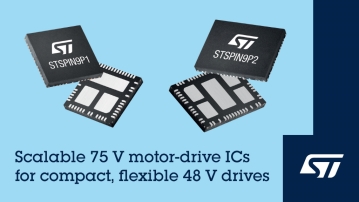
ST Launches 75V Drive IC Targeting 48V Industrial Motor Driving
ST Microelectronics has unveiled the 'STSPIN9P' series of 75V motor drive ICs tailored for 48V-class industrial drive system design. The new product family is characterized by half-bridge and full-bridge configurations that enable design scalability according to motor type and output conditions. Power supply circuits, protection functions, and current sensing circuits are integrated on-chip to simplify system configuration, and the devices are designed to support applications up to 500W maximum. The company plans to provide reference designs and demo boards to support development and evaluation in industrial automation, robotics, pumps, fans, lighting, and textile machinery.
2026.03.26by 배종인 기자
Nordic supports security updates for the entire lifecycle of IoT devices at a single fixed cost
Nordic Semiconductor, a global leader in low-power wireless connectivity solutions, has unveiled a single fixed-cost licensing model that delivers FOTA (Firmware Over-the-Air) and device management capabilities throughout the device lifecycle via nRF Cloud, and introduced a new firmware update solution to prepare for the enforcement of the European Union's Cyber Resilience Act (CRA).
2026.03.26by 배종인 기자
Practical Training in Low-Noise, Low-Power Circuit Design All in One Place… Training Fee Support
The "2026 Advanced Engineer Practical Masterclass" to strengthen competencies in high-sensitivity analog circuit and sensor-based system design will be held on April 16 at the e4ds Conference Center in Gasan-dong, Seoul. This program will be conducted as an offline paid hands-on training session, not online, and is targeted at engineers seeking on-site intensive learning. Texas Instruments will provide educational support for this training, allowing participation at 150,000 won, a 100,000 won discount from the original price of 250,000 won.
2026.03.26by 배종인 기자











