


TI Launches Wireless Power IC to Revolutionize Mobile Device Charging Methods
 Published2012.11.08 09:00
Currently, regarding the wireless charging sector, following the previous announcement by TI, an alliance has been formed and the number of members is gradually increasing. As shown in the figure, looking back to 2011, it appears that significant expansion will occur in about 10 years.
Many companies already developed it last year. We expect even more companies to develop it this year, and anticipate that next year will be the period of substantial expansion.
In Korea as well, Verizon was a major service provider, and companies L and S are also supplying to Verizon, with plans to include devices with built-in wireless charging. Currently, it is supplied as an option, but it is said that Verizon has requested that models with wireless charging be supplied.
Nokia is currently the only company to launch on a large scale, releasing the TX and TX simultaneously. It is said that they are aiming to regain market share with this.
It is said that TI's solution is currently being used in Nokia as well. In the case of LG, it was initially supplied to Verizon, but recently this summer, the LTE Optimus similarly has the RX controller built-in, and is being offered as an option with only a small cover containing the coil or without it.
For wireless charging, you need to have both the RX and the TX to use it. However, you have to carry both of them, but the TX is so large that it is not feasible to carry two of them in an environment.
If we consider the infrastructure where wireless charging systems are installed in places like coffee shops, it is believed that there would be no need to carry a TX. Therefore, it is said that wireless charging has not yet become widespread.
In the case of Japan's Docomo, it is said that they have independently introduced wireless charging and are supplying it to Verizon.
In Korea as well, companies like SKT, KT, and LG Uplus are closely using advertising in accordance with marketing needs, and it is expected that this will require a large-scale need.
It seems that they are using a map to display the current locations of wireless networks for marketing purposes.
Based on current technology, it is low-power wireless charging. It can be considered a maximum of 5 watts. In this case, it is said to be fully optional for smartphones.
WP is currently defining the medium power specification as 15 W. It is said that this allows for charging devices ranging from high-end PCs to tablets. Currently, tablets consume approximately 7.5 to 15 watts.
I think these aspects will be commercialized by next year.
There is currently a hot topic regarding cross-coupled inductive wireless charging. Alternatively, there is the magnetic resonance method, but this aspect has slightly lower efficiency. This is the resonant type. Similarly, specifications for this are being established by the WPC, and currently, Samsung and Nokia are forming a new alliance to finalize the specifications by adopting the magnetic resonance method.
The magnetic resonance technology being released this time is setting the standard for specifications that enable charging using a method that also includes the closed-coupled inductive method.
Currently, there is a problem because there is no worldwide standard like Bluetooth.
Once a standard is established, all existing device providers can use it. This is precisely what the standard called Chi is. This background is intended to quickly revitalize the market and enable its widespread use. From TI's perspective, it is expected that if this aspect is activated, more RX devices will be widely used.
The figure below shows a Nokia-style TX-terminal wireless charger. It utilizes the bq500410a; while the frequency is Type A1 with a 5V input and Type A5 with a 15V input, this RFP-based frequency method reportedly does not cause significant wireless charging issues even if the device moves up and down during charging. Currently, it uses three call buttons, but it has the disadvantage of being somewhat expensive. The normal active charging area can be considered to be 70 mm @ 20 mm.
Currently, the difference between WPC 1.1 and 1.0 can be seen as the inclusion of a feature that applies FOD and shuts off power from TX if it detects foreign matter.
There are many applications. Currently, there are smartphones, tablet PCs, and many other devices. And since this involves charging, sufficient waterproofing is implemented. It offers significant advantages against moisture and other types of water.
Currently, TI has released three devices, and the 500210 has a 19V input and uses coil A1.
This is the coil method, and there are A1, A6, and A5.
500512 is a 5V type. The 410A has a 12V input. It has 3 coils and is an A6 type.
Competitors are also currently producing 12V input methods.
Currently, IDT is actively promoting in Korea. Regarding the TX side, companies P and R currently handle MCUs, while I also possesses them, but their competitiveness is somewhat lacking due to their large size. Combinance is the company that possesses the solution itself. TI does not provide solutions; currently, it only supplies devices.
In the case of TX, previously released bq510B products used a regulated output method, whereas the 50 51 method can be considered to have a built-in charger. Current smartphones have this built-in, so you only need to input 5V. However, if you want to charge only the battery, you can do so by placing the chip in the battery pack. If there are any other methods that do not include the charger within the system....
The 'B' in 510B indicates compliance with WPC v 1.1, and it is said to have a feature that cuts off power if foreign objects are present. The size is 1.9 * 3 mm. In this case, the size is reduced by 60%, and charging efficiency is said to increase up to 90%. Additionally, advantages include a 20V tolerance, overvoltage, and current protection features.
The difference from the existing method is that the charging method uses a transmission to receive and charge via a regulator, and this is precisely linear charging. In the case of the switching method, the general configuration uses an internal inductor. It is said that if the 510B is used, the linear charge and switcher charging parts can be eliminated to allow direct charging to the system battery, and this will reduce board space by 60%.
In terms of efficiency, the 500410A is expected to achieve an average efficiency of about 20% higher than competitors at 5V. Basically, it is said that wireless charging efficiency is considered non-existent unless it reaches 70% or higher. This is based on the premise that it must achieve 70% efficiency compared to existing linear charging methods, a finding derived from market research.
Looking at the efficiency difference between the existing interlaced direct charging method and wireless charging, there is a difference of about 15%.
As for applications, there are currently methods of attaching charging to speakers, car consoles, and tablet accessory covers, and we are also looking into placing them in coffee shops. We are also considering a charging method that involves attaching a coil to the V-box.
In other words, I envision tables, mixers, and other electrical appliances being used without power cords.
It is said that while WPC has established tight standards for TX, nothing has been decided yet regarding RX.
It is said that the difference between the closed-coupled and resonance methods is based on the charging distance, not the charging wattage.

관련뉴스
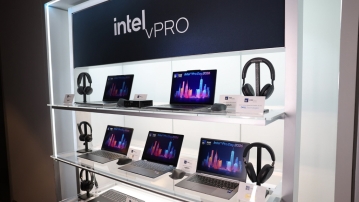
Intel Unveils Next-Generation 'Core Ultra Series 3' and vPro Platform for Enterprise PCs
인텔이 차세대 기업용 PC를 위한 ‘인텔 코어 Ultra 시리즈 3’와 최신 vPro 플랫폼을 공식 발표하며, 기업용 노트북부터 고성능 워크스테이션까지 폭넓은 수요 충족에 나섰다.
2026.03.26by 배종인 기자
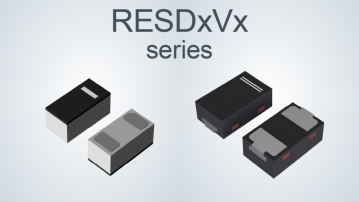
ROHM Launches ESD Protection Diode Compatible with High-Speed Interfaces of 10Gbps or Higher
반도체 전문 기업 로옴(ROHM)이 10Gbps를 넘어서는 차세대 고속 데이터 통신 환경에 대응할 수 있는 ESD(정전기 방전) 보호 다이오드 ‘RESDxVx 시리즈’를 개발하며, 고속 인터페이스에서 요구되는 신호 품질 유지와 IC 보호 성능을 동시에 끌어올렸다.
2026.03.26by 배종인 기자
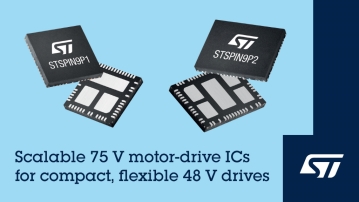
ST Launches 75V Drive IC Targeting 48V Industrial Motor Driving
ST마이크로일렉트로닉스가 48V급 산업용 구동 시스템 설계에 맞춘 75V 모터 드라이브 IC ‘STSPIN9P’ 시리즈를 공개했다. 새 제품군은 하프 브리지와 풀 브리지 구조로 구성돼 모터 종류와 출력 조건에 따라 설계를 확장할 수 있도록 한 것이 특징이다. 전원 회로와 보호 기능, 전류 감지 회로를 칩에 통합해 시스템 구성을 단순화했으며, 최대 500W급 애플리케이션까지 대응하도록 설계됐다. 회사는 레퍼런스 디자인과 데모 보드도 함께 제공해 산업 자동화, 로보틱스, 펌프, 팬, 조명, 섬유 기계 등에서 개발과 평가를 지원할 계획이다.
2026.03.26by 배종인 기자
Nordic supports security updates for the entire lifecycle of IoT devices at a single fixed cost
Nordic Semiconductor, a global leader in low-power wireless connectivity solutions, has unveiled a single fixed-cost licensing model that delivers FOTA (Firmware Over-the-Air) and device management capabilities throughout the device lifecycle via nRF Cloud, and introduced a new firmware update solution to prepare for the enforcement of the European Union's Cyber Resilience Act (CRA).
2026.03.26by 배종인 기자
Practical Training in Low-Noise, Low-Power Circuit Design All in One Place… Training Fee Support
고감도 아날로그 회로와 센서 기반 시스템 설계 역량을 강화할 수 있는 ‘2026 고급 엔지니어 실무 마스터 클래스’가 오는 4월16일 서울 가산동 e4ds 컨퍼런스 센터에서 열린다. 이번 과정은 온라인이 아닌 오프라인 유료 실습 교육으로 진행되며, 현장 중심의 심화 학습을 원하는 엔지니어를 대상으로 한다. 이번 교육은 텍사스 인스트루먼트(Texas Instruments)가 교육비를 지원해 정가 25만원에서 10만원 할인 된 15만원에 참가할 수 있다.
2026.03.26by 배종인 기자











