



ADI, Launches SIMO PMIC to Increase Wearable Charging Speed 4X
 Published2021.09.24 08:30
Increases Charging Speed for Ultra-Compact Wearables and Hearables
Reduces Overall Solution Size by 50%, Material Cost by 60%
Analog Devices (ADI) announced on the 24th the launch of MAX77659, a new single inductor multi-output power management integrated circuit (SIMO PMIC) with an integrated switch-mode buck-boost charger. The new product, suited for ultra-compact wearables, hearables, and IoT devices, guarantees operation for 4 hours or more with just 10 minutes of charging. This is approximately 4 times faster than existing solutions.
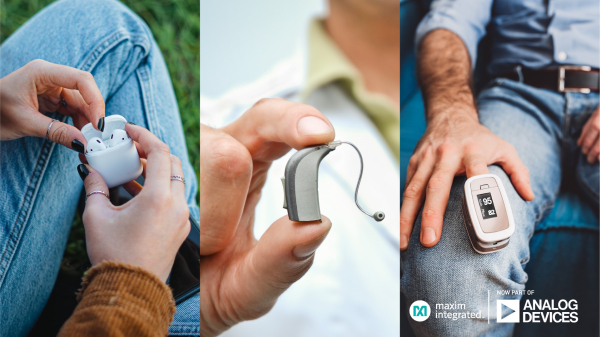
Switch-Mode Buck-Boost Charger [Photo=ADI]
The new product integrates a switch-mode buck-boost charger and three independent programmable buck-boost regulators operating with a single inductor, reducing the overall solution size by up to 50%. It is offered in an ultra-compact 30-bump wafer level package (WLP) measuring 2.55mm × 2.37mm, and achieves material cost savings of up to 60% through single inductor usage and integrated charger. The complete solution footprint is 22mm2, making it optimal for ultra-compact IoT applications.
The regulator operates at 91% efficiency from nominal load through overload conditions, with quiescent current consumption of 5µA under light load conditions. Additionally, automatic headroom control provides sufficient headroom for adjusting charging current and minimizes voltage drop to reduce heat generation.
Roger Yeung, General Manager of Maxim Integrated Battery Power Solutions at ADI, stated: "ADI's SIMO technology reduces the size of ultra-compact hearables and wearable devices while enhancing performance. MAX77659 enables shorter charging times and extended usage duration, improving convenience in daily life, and provides board space to accommodate various additional features required by portable devices such as expanded memory capacity, location tracking, and biometric sensing."
Related news

'Digitalization, Miniaturization, and Connectivity', the Foundation for Medical Innovation
Robots simplify invasive procedures in surgical operations, helping patients recover quickly, and wearable devices monitor patient medication intake and daily activities. The collected data is transmitted to physicians, who use this information to understand patient status in real time. This is a vision of the future based on advances in medical technology. With progress in wireless data transmission and component miniaturization technologies, minimally invasive surgery and telemedicine are expected to become reality soon.
2021.09.15by 이수민 기자
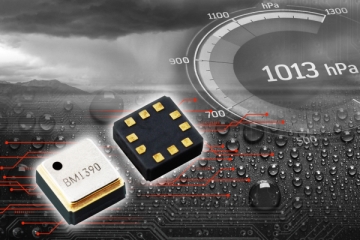
ROHM Unveils IPX8 Waterproof Pressure Sensor IC 'BM1390GLV'
Barometric pressure sensors have been widely adopted in smartphones and wearable devices to acquire altitude difference data for indoor navigation and activity tracking. Recently, as applications have expanded, there is growing demand for barometric pressure sensors with improved water-resistant performance, miniaturization, and robustness against external environmental changes. In response, Rohm has developed the BM1390GLV, a compact high-precision barometric pressure sensor IC with IPX8 water-resistant rating, targeting white goods, industrial equipment, and small-scale IoT devices.
2021.09.17by 이수민 기자

ADI Announces Maxim MAXQ1065, IoT Security Encryption Controller
Currently, tens of billions of IoT devices are in use, and malicious hacking attacks are occurring against them. ADI has launched Maxim's 'MAXQ1065', an ultra-low-power cryptographic controller that strongly protects edge-to-cloud IoT nodes such as medical and wearable devices from security attacks by applying ChipDNA PUF technology.
2021.09.17by 이수민 기자

Intel Unveils Next-Generation 'Core Ultra Series 3' and vPro Platform for Enterprise PCs
Intel has officially unveiled the "Intel Core Ultra Series 3" for next-generation enterprise PCs and the latest vPro platform, addressing a wide range of demands from enterprise notebooks to high-performance workstations.
2026.03.26by 배종인 기자

ROHM Launches ESD Protection Diode Compatible with High-Speed Interfaces of 10Gbps or Higher
Semiconductor specialist ROHM has developed the 'RESDxVx series' of ESD (electrostatic discharge) protection diodes capable of responding to next-generation high-speed data communication environments exceeding 10Gbps, simultaneously enhancing both signal quality maintenance required in high-speed interfaces and IC protection performance.
2026.03.26by 배종인 기자











