



Agilent Korea Announces Next-Generation MIPI M-PHY Protocol Meter for Mobile Computing Applications
 Published2013.08.20 20:23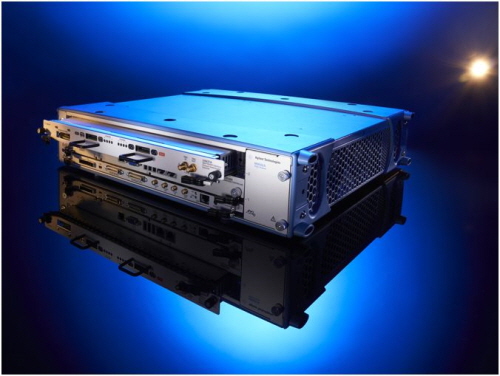
"The M-PHY physical layer is a critical part of the design and manufacturing of next-generation mobile computing products such as smartphones, tablets, and laptops," said Joel Huloux, President of the MIPI Alliance. "The most important task of the MIPI Alliance is to bring excellent products to market by establishing and advancing standard specifications. We are very pleased that Agilent has launched a new analyzer for UniPro interface analysis."
In addition, Mian Quddus, President of the UFS Association, stated, “Mobile platform products applying UFS, the next-generation memory standard, are increasing,” and added, “By using tools that make mobile platform product verification more convenient, the product design process can be shortened with high reliability.”
Today's mobile computing designs are going beyond the traditional capabilities of PCs. Mobile product designers are adding multiple high-speed buses to their designs to manage multiple high-resolution cameras, high-speed peripherals, high-performance graphics adapters, and large memory buffers. Due to increasing bandwidth demands, M-PHY specifications are becoming more advanced, including options for four lanes and 6.0 Gbs. The U4431A provides up to 16 gigabytes of analysis memory per lane, enabling system traffic capture for tens of seconds even at high speeds.
In addition, Agilent’s U4431A provides a feature called “Raw Mode” that allows design engineers to view time-correlated 8-bit/10-bit data for each protocol. This displays information about how packets are formed within the physical layer in the form of waveforms or lists.
This design visibility extends to the M-PHY protocol stack, enabling error detection from the physical layer to the link, and from the transport layer to high-level application layers. This allows engineers to identify abnormal data throughout the entire transmission process.
Ross Nelson, General Manager of Agilent Digital Debug Solutions, said, “I have heard from industry-leading silicon manufacturers that they have the technological potential to put low-cost computing devices in the hands of everyone on Earth.” He added, “Features like Raw Mode will provide insights for analyzing designs in greater detail and help resolve discovered issues more quickly. Consequently, engineers will be able to spend more time on development and optimization.”
The Agilent U4431A provides powerful capabilities to isolate abnormal events that may occur within the bus. Real-time triggering enables the detection of errors at each layer of the protocol, while filtering functions allow for focused analysis of specific types of traffic. Traffic overviews and measurement markers enable designers to analyze traffic ranging from overall bursts to fine nano-super-resolution.
The U4431A, in the form of a modular AXIe blade, allows users to analyze multiple M-PHY buses simultaneously. M-PHY buses can be time-correlated with MIPI D-PHY CSI-2 and DSI-1 PCIe®, DDR, and HDMI buses, or even general high-speed logic analyzer modules. Another advantage is that design engineers can purchase the lanes, memory, and protocol support currently required and perform additional upgrades as needed.
U
The launch of the new U4431A MIPI M-PHY analyzer, which supports FS and UniPro, marks Agilent's entry into the M-PHY protocol analysis market. In the second half of this year, new products focusing on SSIC (USB-3 over M-PHY), M-PCIe (PCIe over M-PHY), and CSI-3 are scheduled for release. With the launch of these new products, Agilent will introduce a more complete M-PHY solution that includes transceiver physical layer testing.

관련뉴스
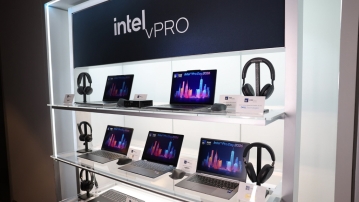
Intel Unveils Next-Generation 'Core Ultra Series 3' and vPro Platform for Enterprise PCs
Intel has officially unveiled the "Intel Core Ultra Series 3" for next-generation enterprise PCs and the latest vPro platform, addressing a wide range of demands from enterprise notebooks to high-performance workstations.
2026.03.26by 배종인 기자
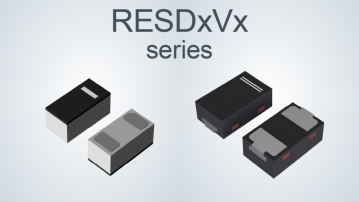
ROHM Launches ESD Protection Diode Compatible with High-Speed Interfaces of 10Gbps or Higher
반도체 전문 기업 로옴(ROHM)이 10Gbps를 넘어서는 차세대 고속 데이터 통신 환경에 대응할 수 있는 ESD(정전기 방전) 보호 다이오드 ‘RESDxVx 시리즈’를 개발하며, 고속 인터페이스에서 요구되는 신호 품질 유지와 IC 보호 성능을 동시에 끌어올렸다.
2026.03.26by 배종인 기자
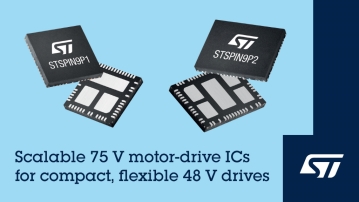
ST Launches 75V Drive IC Targeting 48V Industrial Motor Driving
ST마이크로일렉트로닉스가 48V급 산업용 구동 시스템 설계에 맞춘 75V 모터 드라이브 IC ‘STSPIN9P’ 시리즈를 공개했다. 새 제품군은 하프 브리지와 풀 브리지 구조로 구성돼 모터 종류와 출력 조건에 따라 설계를 확장할 수 있도록 한 것이 특징이다. 전원 회로와 보호 기능, 전류 감지 회로를 칩에 통합해 시스템 구성을 단순화했으며, 최대 500W급 애플리케이션까지 대응하도록 설계됐다. 회사는 레퍼런스 디자인과 데모 보드도 함께 제공해 산업 자동화, 로보틱스, 펌프, 팬, 조명, 섬유 기계 등에서 개발과 평가를 지원할 계획이다.
2026.03.26by 배종인 기자

Nordic supports security updates for the entire lifecycle of IoT devices at a single fixed cost
Nordic Semiconductor, a global leader in low-power wireless connectivity solutions, has unveiled a single fixed-cost licensing model that delivers FOTA (Firmware Over-the-Air) and device management capabilities throughout the device lifecycle via nRF Cloud, and introduced a new firmware update solution to prepare for the enforcement of the European Union's Cyber Resilience Act (CRA).
2026.03.26by 배종인 기자

Practical Training in Low-Noise, Low-Power Circuit Design All in One Place… Training Fee Support
고감도 아날로그 회로와 센서 기반 시스템 설계 역량을 강화할 수 있는 ‘2026 고급 엔지니어 실무 마스터 클래스’가 오는 4월16일 서울 가산동 e4ds 컨퍼런스 센터에서 열린다. 이번 과정은 온라인이 아닌 오프라인 유료 실습 교육으로 진행되며, 현장 중심의 심화 학습을 원하는 엔지니어를 대상으로 한다. 이번 교육은 텍사스 인스트루먼트(Texas Instruments)가 교육비를 지원해 정가 25만원에서 10만원 할인 된 15만원에 참가할 수 있다.
2026.03.26by 배종인 기자











