



Intel overcomes component shortage with innovative substrate process
 Published2022.05.30 15:33
Chip assembly speeds up by 80% and production capacity is resolved.
Intel has overcome the substrate shortage with an innovative process technique that attaches capacitors to both sides of the substrate, and has presented a model solution for utilizing factory networks.
Intel recently announced on the 30th an example of how it has resolved the global semiconductor supply shortage by utilizing its Vietnam manufacturing facility.
Computer chips are assembled between a substrate and a heat spreader to form a complete processor before being shipped. This package protects the chip and electrically connects the processor to the circuit board inside the computer.
The substrate may appear at first glance to be nothing more than a thin green plastic, but it is actually made up of about 10 layers of fiberglass, each intricately connected with metal parts.
The substrate and computer chip must be assembled within a micron-level tolerance to be electrically connected so that signals can be input and output from the motherboard to the chip through the substrate.
One of the main components of the substrate is the capacitor, a device that can store electrical charge. Capacitors reduce noise and impedance and maintain a constant voltage delivered to the chip.
For years, Intel and its substrate suppliers have been responsible for attaching capacitors to one side of each substrate.
Meanwhile, Vietnam Semiconductor Assembly and Test (VNAT) plants have been attaching capacitors to both sides of the substrate, which has reportedly improved chip assembly speeds by 80% while addressing production capacity issues experienced by substrate suppliers.
Since May 2021, VNAT has been working to expand its factory footprint, introduce additional tools, and modify existing tools to prepare for large-scale production.
“Our plan to leverage our Vietnam facility demonstrates that integrated manufacturing is a cornerstone of Intel’s success. Our global network of factories and supply chain ecosystem will be better able to adapt to changing conditions and deliver products with greater flexibility,” said Keyvan Esfarjani, Intel executive vice president and chief global operating officer. “Last year, when substrate supply was challenging, these internal capabilities generated $2 billion in additional revenue for Intel, enabling us to be more agile in meeting our customers’ ever-changing needs.”

Comments
Related news
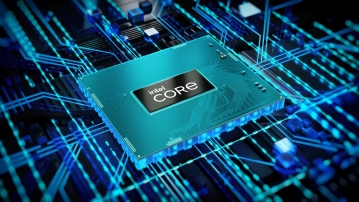
Intel Launches 12th Gen Intel Core HX Processors
Today, professionals and content creators demand more powerful processing performance and greater platform bandwidth to increase content processing speed. This is because it makes it possible to meet budgeted allocations and target schedules in fast-moving work environments.
2022.05.12by 명세환 기자

Intel Vision 2022: "The Evolution of the Digital Renaissance"
In the era of hyper-connectivity, advanced technologies and infrastructure are driving rapid growth in the digital sector through seamless interconnection. As complexity in development and security continues to rise, Intel has established a venue to unveil comprehensive solutions spanning both software and hardware.
2022.05.13by 명세환 기자

Intel Invests $700 Million in Cutting-Edge R&D Mega Lab
Intel has made investments for sustainable data centers through a $700 million mega lab and industry-first open IP liquid immersion cooling.
2022.05.20by 배종인 기자

Intel Unveils Next-Generation 'Core Ultra Series 3' and vPro Platform for Enterprise PCs
Intel has officially unveiled the "Intel Core Ultra Series 3" for next-generation enterprise PCs and the latest vPro platform, addressing a wide range of demands from enterprise notebooks to high-performance workstations.
2026.03.26by 배종인 기자
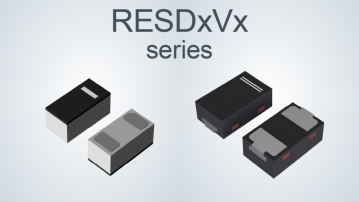
ROHM Launches ESD Protection Diode Compatible with High-Speed Interfaces of 10Gbps or Higher
Semiconductor specialist ROHM has developed the 'RESDxVx series' of ESD (electrostatic discharge) protection diodes capable of responding to next-generation high-speed data communication environments exceeding 10Gbps, simultaneously enhancing both signal quality maintenance required in high-speed interfaces and IC protection performance.
2026.03.26by 배종인 기자











