



Silicon Labs Reference Design, rapid design support for developers, motor rotation design support within 5 minutes
 Published2013.11.15 15:06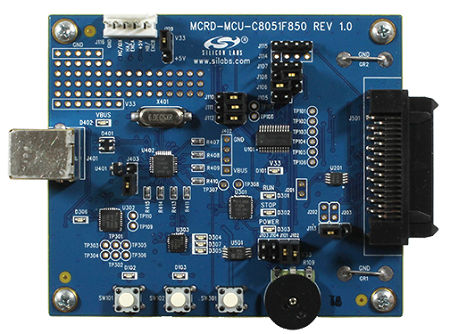
November 12, 2013 – Silicon Labs (NASDAQ: SLAB, Country Manager In-gyu Kim), a global leader in high-performance analog-intensive mixed-signal ICs, announced today a BLDC motor control reference design that provides ready-to-use hardware and software for sensorless BLDC (brushless DC) applications using Silicon Labs' C8051F85x/6x microcontrollers (MCUs). Silicon Labs’ new reference design provides a comprehensive system-grade solution that can accelerate embedded development in a wide range of motor control applications, including remote-controlled helicopters, motor-driven toy cars, electronic speed controllers, PCs, and electric fans, as well as power tools such as cutters, razors, lawnmowers, nail guns, and staplers, and small appliances such as blenders, grinders, toothbrushes, and vacuum cleaners.
Embedded system designs are becoming increasingly complex, and development schedules are becoming tighter. Consequently, shortening development time is a key consideration when selecting MCUs for motor control applications. The C8051F85x/6x MCU-based motor control reference design makes the work easier for developers by providing cost-effective hardware and production-quality firmware for rapid evaluation and development in cost-sensitive BLDC applications. In addition, the motor control GUI (graphical user interface) provides developers with greater flexibility and ease of use when controlling and understanding BLDC motor operation, and the use of production-grade motor control source code helps to further shorten the design process.
The sensorless BLDC motor control reference design uses a C8051F850 MCU to control a BLDC outrunner motor (typically found in toy helicopters) mounted on a motor board. The powertrain board includes a gate driver, power MOSFETs, current-sensing resistors, as well as a resistor divider that attenuates the motor phase voltage, which can be measured by the C8051F85x/6x MCU. The MCU board includes buttons for start/stop, changing the motor direction, and resetting the MCU, in addition to the C8051F85x/6x MCU. The PWM output of the MCU drives the gate drive on the powertrain board. The MCU board also includes an operational amplifier (op-amp) that amplifies the current-sensing voltage, allowing the MCU to measure it.
The C8051F85x/6x product family is highly suitable for BLDC applications because it offers industry-leading analog performance, a small footprint, and other features optimized for motor control design. The cost-effective, high-performance 8051-based MCU rotates a 6-pole motor in a reference design kit at speeds up to 50,000 rpm. The C8051F85x/6x MCU family eliminates the need for external components such as crystal oscillators, voltage references, level shifters, temperature sensors, and other discrete devices, enabling developers to reduce overall system costs.
Silicon Labs' sensorless BLDC reference design is designed to provide developers with a productive and comprehensive “out-of-the-box” experience, offering everything related to rotary motor products within 5 minutes. The reference design includes the following hardware and software tools:
• C8051F850 MCU control board for controlling motors and associated peripherals
• Powertrain board equipped with gate driver and power MOSFET
• Turnigy 450 Series 3800 kV BLDC outrunner motor attached to the motor mount board
• Software tools including a CD with application notes, production-ready motor control firmware source code, and a motor control GUI
• Free Keil® PK51 development software with no license restrictions (worth approximately $2,500)
• Power supply and USB cable
Diwakar Vishakhadatta, Vice President and General Manager of 8-bit MCU Products at Silicon Labs, said, “Rapid application development, reduced system costs, and rapid time-to-market are the most important factors for embedded developers designing cost-sensitive motor controls. We have developed a sensorless BLDC motor control reference design to make developers’ work easier and generate higher productivity, and significant benefits can be enjoyed when designing BLDC systems based on the entry-level C8051F85x/6x MCUs.”

관련뉴스
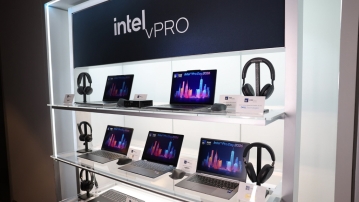
Intel Unveils Next-Generation 'Core Ultra Series 3' and vPro Platform for Enterprise PCs
Intel has officially unveiled the "Intel Core Ultra Series 3" for next-generation enterprise PCs and the latest vPro platform, addressing a wide range of demands from enterprise notebooks to high-performance workstations.
2026.03.26by 배종인 기자
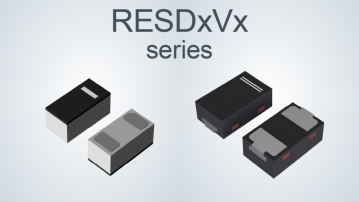
ROHM Launches ESD Protection Diode Compatible with High-Speed Interfaces of 10Gbps or Higher
반도체 전문 기업 로옴(ROHM)이 10Gbps를 넘어서는 차세대 고속 데이터 통신 환경에 대응할 수 있는 ESD(정전기 방전) 보호 다이오드 ‘RESDxVx 시리즈’를 개발하며, 고속 인터페이스에서 요구되는 신호 품질 유지와 IC 보호 성능을 동시에 끌어올렸다.
2026.03.26by 배종인 기자
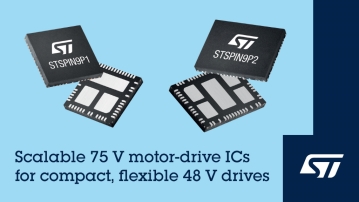
ST Launches 75V Drive IC Targeting 48V Industrial Motor Driving
ST마이크로일렉트로닉스가 48V급 산업용 구동 시스템 설계에 맞춘 75V 모터 드라이브 IC ‘STSPIN9P’ 시리즈를 공개했다. 새 제품군은 하프 브리지와 풀 브리지 구조로 구성돼 모터 종류와 출력 조건에 따라 설계를 확장할 수 있도록 한 것이 특징이다. 전원 회로와 보호 기능, 전류 감지 회로를 칩에 통합해 시스템 구성을 단순화했으며, 최대 500W급 애플리케이션까지 대응하도록 설계됐다. 회사는 레퍼런스 디자인과 데모 보드도 함께 제공해 산업 자동화, 로보틱스, 펌프, 팬, 조명, 섬유 기계 등에서 개발과 평가를 지원할 계획이다.
2026.03.26by 배종인 기자

Nordic supports security updates for the entire lifecycle of IoT devices at a single fixed cost
Nordic Semiconductor, a global leader in low-power wireless connectivity solutions, has unveiled a single fixed-cost licensing model that delivers FOTA (Firmware Over-the-Air) and device management capabilities throughout the device lifecycle via nRF Cloud, and introduced a new firmware update solution to prepare for the enforcement of the European Union's Cyber Resilience Act (CRA).
2026.03.26by 배종인 기자

Practical Training in Low-Noise, Low-Power Circuit Design All in One Place… Training Fee Support
고감도 아날로그 회로와 센서 기반 시스템 설계 역량을 강화할 수 있는 ‘2026 고급 엔지니어 실무 마스터 클래스’가 오는 4월16일 서울 가산동 e4ds 컨퍼런스 센터에서 열린다. 이번 과정은 온라인이 아닌 오프라인 유료 실습 교육으로 진행되며, 현장 중심의 심화 학습을 원하는 엔지니어를 대상으로 한다. 이번 교육은 텍사스 인스트루먼트(Texas Instruments)가 교육비를 지원해 정가 25만원에서 10만원 할인 된 15만원에 참가할 수 있다.
2026.03.26by 배종인 기자











