

.png)

Updated Bluetooth® 4.1 Specification Expands Bluetooth Technology Foundation for the Internet of Things
 Published2013.12.06 10:59
December 5, 2013 – The Bluetooth Special Interest Group (Bluetooth SIG) announced today that it has adopted the updated Bluetooth core specification.
Bluetooth 4.1, announced today, represents an important evolution in the Bluetooth wireless standard. In July 2010, it was updated with Bluetooth Smart, a groundbreaking intelligent, low-power technology that enables the Internet of Things. These updates will enhance consumer convenience through strengthened coexistence capabilities for LTE support, enable large-scale data transmission, and allow devices to perform multiple roles simultaneously, helping developers achieve innovation. This new version also establishes the foundation for IP-based connectivity, expanding Bluetooth technology's role as an essential wireless link for the Internet of Things.
"Bluetooth Smart technology has driven our rapid growth, and we expect that over the next five years, the number of Bluetooth devices shipped annually will surge to over 4.5 billion units," said Suke Jawanda, Chief Marketing Officer of Bluetooth SIG. "We have updated the Bluetooth specification to respond to this anticipated growth, providing developers with the ability to better manage the roles their products perform, reducing interference with other wireless technologies, and enabling Bluetooth Smart products to exchange data at faster speeds and maintain connections without requiring user involvement. These updates reflect the market demand we have identified. We will continue to expand Bluetooth wireless technology to play an increasingly important role in the Internet of Things and evolve it to become the best solution for OEM manufacturers, developers, and ultimately consumers."
Enhanced User Convenience
Bluetooth 4.1 further expands the Bluetooth brand's promise to deliver a "just works" experience to consumers. Three major points regarding improved user convenience are as follows:
• Coexistence — Implemented to work seamlessly in coordination with modern mobile communication technologies such as LTE. The radio signals of Bluetooth and LTE communicate with each other, enabling harmonious transmission and reducing the possibility of interference in adjacent bands. Coordination between the two technologies occurs automatically, and consumers experience the high level they expect.
• Enhanced connection capability — Provides manufacturers with the ability to better control the creation and maintenance of Bluetooth connections by making reconnection time intervals flexible and variable. This feature improves the consumer experience by automatically reconnecting devices when they are in close proximity to each other. If a consumer leaves a room and returns, two recently used devices will automatically reconnect without user intervention.
• Improved data transmission capability — Bluetooth Smart technology provides large-scale data transmission capability. For example, sensors that collect data during running, cycling, and swimming can use this new feature to transmit the collected data after the consumer returns home, enabling more efficient transmission.
Empowering Developers with Innovation Capability
Bluetooth 4.1 expands the Bluetooth Smart development environment by providing product and application developers with the flexibility to develop products that perform multiple roles. With this new capability, a single device can simultaneously act as both a Bluetooth Smart peripheral and a Bluetooth Smart Ready hub.
For example, a smart watch can serve as a hub collecting information from a Bluetooth Smart heart rate monitor while also serving as a smartphone accessory that alerts users when new messages arrive on their mobile phone. As the Bluetooth Smart ecosystem grows, Bluetooth SIG expects more solutions performing hub and peripheral roles to emerge. Bluetooth 4.1 will bring this kind of flexibility to Bluetooth Smart device and application developers.
Enabling the Internet of Things
By adding to the core specification a standard for creating dedicated channels to be used for IPv6 communication, the foundation has been laid for future protocols that enable IP connectivity. As the use of Bluetooth Smart technology rapidly increases and IP connectivity is added in the near future, signals are appearing everywhere indicating that Bluetooth technology will become an essential wireless link for the Internet of Things. These updated features enable Bluetooth Smart sensors to also utilize IPv6, providing developers and OEM manufacturers with the flexibility necessary to ensure connectivity and compatibility.
For details on the latest Bluetooth 4.1 technology, tools, and other information including frequently asked questions and brand guidelines, visit https://www.bluetooth.org/en-us/specification/adopted-specifications.

관련뉴스

Intel Unveils Next-Generation 'Core Ultra Series 3' and vPro Platform for Enterprise PCs
인텔이 차세대 기업용 PC를 위한 ‘인텔 코어 Ultra 시리즈 3’와 최신 vPro 플랫폼을 공식 발표하며, 기업용 노트북부터 고성능 워크스테이션까지 폭넓은 수요 충족에 나섰다.
2026.03.26by 배종인 기자

ROHM Launches ESD Protection Diode Compatible with High-Speed Interfaces of 10Gbps or Higher
반도체 전문 기업 로옴(ROHM)이 10Gbps를 넘어서는 차세대 고속 데이터 통신 환경에 대응할 수 있는 ESD(정전기 방전) 보호 다이오드 ‘RESDxVx 시리즈’를 개발하며, 고속 인터페이스에서 요구되는 신호 품질 유지와 IC 보호 성능을 동시에 끌어올렸다.
2026.03.26by 배종인 기자
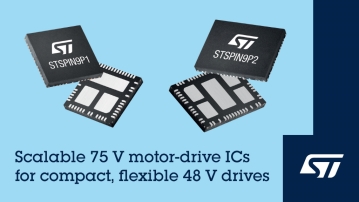
ST Launches 75V Drive IC Targeting 48V Industrial Motor Driving
ST마이크로일렉트로닉스가 48V급 산업용 구동 시스템 설계에 맞춘 75V 모터 드라이브 IC ‘STSPIN9P’ 시리즈를 공개했다. 새 제품군은 하프 브리지와 풀 브리지 구조로 구성돼 모터 종류와 출력 조건에 따라 설계를 확장할 수 있도록 한 것이 특징이다. 전원 회로와 보호 기능, 전류 감지 회로를 칩에 통합해 시스템 구성을 단순화했으며, 최대 500W급 애플리케이션까지 대응하도록 설계됐다. 회사는 레퍼런스 디자인과 데모 보드도 함께 제공해 산업 자동화, 로보틱스, 펌프, 팬, 조명, 섬유 기계 등에서 개발과 평가를 지원할 계획이다.
2026.03.26by 배종인 기자

Nordic supports security updates for the entire lifecycle of IoT devices at a single fixed cost
Nordic Semiconductor, a global leader in low-power wireless connectivity solutions, has unveiled a single fixed-cost licensing model that delivers FOTA (Firmware Over-the-Air) and device management capabilities throughout the device lifecycle via nRF Cloud, and introduced a new firmware update solution to prepare for the enforcement of the European Union's Cyber Resilience Act (CRA).
2026.03.26by 배종인 기자

Practical Training in Low-Noise, Low-Power Circuit Design All in One Place… Training Fee Support
고감도 아날로그 회로와 센서 기반 시스템 설계 역량을 강화할 수 있는 ‘2026 고급 엔지니어 실무 마스터 클래스’가 오는 4월16일 서울 가산동 e4ds 컨퍼런스 센터에서 열린다. 이번 과정은 온라인이 아닌 오프라인 유료 실습 교육으로 진행되며, 현장 중심의 심화 학습을 원하는 엔지니어를 대상으로 한다. 이번 교육은 텍사스 인스트루먼트(Texas Instruments)가 교육비를 지원해 정가 25만원에서 10만원 할인 된 15만원에 참가할 수 있다.
2026.03.26by 배종인 기자











