



NXP Launches Ultra-High Efficiency, Smallest CAN System-Based Chip for In-Vehicle Networks
 Published2013.12.27 15:05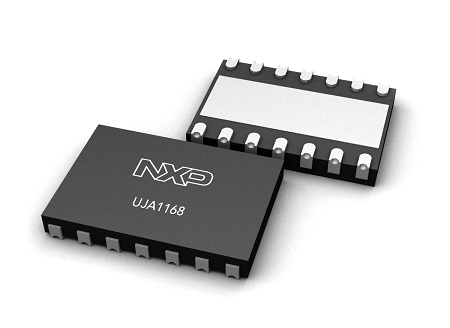
December 11, 2013, Seoul — NXP Semiconductors (NASDAQ: NXPI), a global leader in in-vehicle networking, announced today the launch of the UJA116x family of System Basis Chips (SBCs), the industry's smallest CAN SBCs. Setting a new standard for miniaturization, the UJA116x SBC family delivers optimal performance in a wide range of automotive ECU applications, including steering, cameras, and dashboards, where board space is limited. Providing powerful features while reducing component and system costs, the UJA116x family offers automotive OEMs and key component suppliers a complete in-vehicle networking solution, ranging from the UJA1161, a basic integrator with proprietary transceivers, to the UJA1168, a fully featured SBC that supports partial networking and CAN FD (Flexible Datarate) passive support. You can watch an introductory video on NXP's latest CAN SBC for in-vehicle networks at http://youtu.be/wdU3Wn9pwI4 .
Rob Bouwer, International Product Marketing Manager at NXP Semiconductors, said, “With new cars now equipped with more than 50 ECUs (Electronic Control Units), it has become essential for automotive OEMs to choose a compact, cost-effective, and scalable solution,” adding, “Our 3rd generation CAN SBC is designed based on a proven track record in automotive networking and meets the requirements of major automotive parts suppliers seeking compact, energy-efficient in-vehicle networking solutions for current and future vehicles.”
The next-generation SBC product family, UJA116x, enables the automotive industry to miniaturize ECUs into powerful and cost-effective solutions by integrating common functions such as a standby or sleep mode CAN transceiver, a 5V voltage regulator, a 5V protection sensor supply, and a watchdog in a compact HVSON14 package (3.5 x 5.5 mm).
To meet industry requirements for enhanced energy efficiency, the best-in-class UJA1168 also supports Partial Networking, a key innovation in power efficiency defined in the industry standard ISO11898-6. In current in-vehicle networking architectures, ECUs are always active and consume power when the vehicle is in use. CAN Partial Networking changes this model by activating only the ECUs that require specific functions, while keeping other ECUs in a low-power state until needed. This enables a significant reduction in power consumption and CO2 emissions.
The UJA1168, which provides a fully scalable SBC solution to OEMs, also supports CAN FD passive. In other words, UJA1168-based ECUs remain inactive during CAN FD communication and become active when regular CAN communication occurs.

관련뉴스
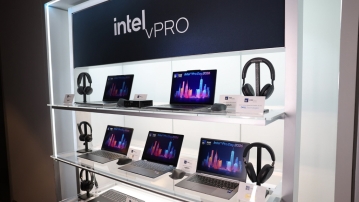
Intel Unveils Next-Generation 'Core Ultra Series 3' and vPro Platform for Enterprise PCs
Intel has officially unveiled the "Intel Core Ultra Series 3" for next-generation enterprise PCs and the latest vPro platform, addressing a wide range of demands from enterprise notebooks to high-performance workstations.
2026.03.26by 배종인 기자
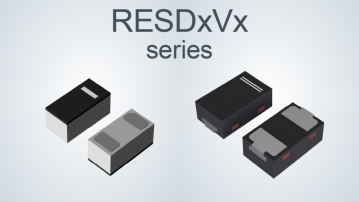
ROHM Launches ESD Protection Diode Compatible with High-Speed Interfaces of 10Gbps or Higher
반도체 전문 기업 로옴(ROHM)이 10Gbps를 넘어서는 차세대 고속 데이터 통신 환경에 대응할 수 있는 ESD(정전기 방전) 보호 다이오드 ‘RESDxVx 시리즈’를 개발하며, 고속 인터페이스에서 요구되는 신호 품질 유지와 IC 보호 성능을 동시에 끌어올렸다.
2026.03.26by 배종인 기자
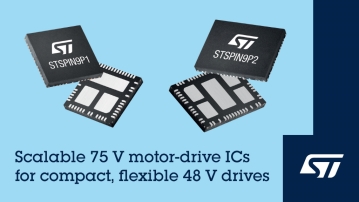
ST Launches 75V Drive IC Targeting 48V Industrial Motor Driving
ST마이크로일렉트로닉스가 48V급 산업용 구동 시스템 설계에 맞춘 75V 모터 드라이브 IC ‘STSPIN9P’ 시리즈를 공개했다. 새 제품군은 하프 브리지와 풀 브리지 구조로 구성돼 모터 종류와 출력 조건에 따라 설계를 확장할 수 있도록 한 것이 특징이다. 전원 회로와 보호 기능, 전류 감지 회로를 칩에 통합해 시스템 구성을 단순화했으며, 최대 500W급 애플리케이션까지 대응하도록 설계됐다. 회사는 레퍼런스 디자인과 데모 보드도 함께 제공해 산업 자동화, 로보틱스, 펌프, 팬, 조명, 섬유 기계 등에서 개발과 평가를 지원할 계획이다.
2026.03.26by 배종인 기자
Nordic supports security updates for the entire lifecycle of IoT devices at a single fixed cost
Nordic Semiconductor, a global leader in low-power wireless connectivity solutions, has unveiled a single fixed-cost licensing model that delivers FOTA (Firmware Over-the-Air) and device management capabilities throughout the device lifecycle via nRF Cloud, and introduced a new firmware update solution to prepare for the enforcement of the European Union's Cyber Resilience Act (CRA).
2026.03.26by 배종인 기자
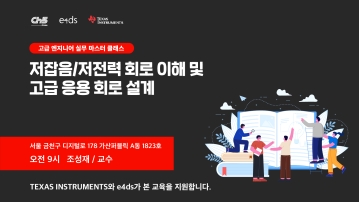
Practical Training in Low-Noise, Low-Power Circuit Design All in One Place… Training Fee Support
고감도 아날로그 회로와 센서 기반 시스템 설계 역량을 강화할 수 있는 ‘2026 고급 엔지니어 실무 마스터 클래스’가 오는 4월16일 서울 가산동 e4ds 컨퍼런스 센터에서 열린다. 이번 과정은 온라인이 아닌 오프라인 유료 실습 교육으로 진행되며, 현장 중심의 심화 학습을 원하는 엔지니어를 대상으로 한다. 이번 교육은 텍사스 인스트루먼트(Texas Instruments)가 교육비를 지원해 정가 25만원에서 10만원 할인 된 15만원에 참가할 수 있다.
2026.03.26by 배종인 기자











