


Promotion of Next-Generation Semiconductor International Standards
 Published2022.11.03 16:13
South Korea is moving forward with international standardization initiatives to lead the global market in next-generation semiconductors, nanotechnology, and other advanced technology fields.
The National Institute of Standards and Technology under the Ministry of Trade, Industry and Energy (Director Lee Sang-hoon) announced that it proposed 13 international standard proposals in advanced technology fields including next-generation semiconductors, nanotechnology, and displays at the 86th International Electrotechnical Commission (IEC) General Assembly held in San Francisco, USA from October 31 to November 4.
At this general assembly, approximately 170 standard experts from industry, academia, and research institutions including Samsung Display, LG Electronics, LS Electric, ETRI, Korea Institute of Machinery and Materials, and Korea Electronics Technology Institute participated from South Korea, and proposed 13 new international standard proposals in advanced technology fields.
The 13 proposed international standards consist of △5 standards in the semiconductor field including performance and reliability evaluation methods for next-generation semiconductor neuromorphic devices △1 standard for holographic display measurement methods △7 standards in the nanotechnology field including graphene reduction degree analysis evaluation methods and graphene-based material specific surface area measurement methods.
The international standard proposals submitted by South Korea will be published as final international standards 2-3 years later if international standard development proceeds smoothly following approval by field-specific committees.
In conjunction with this general assembly, the first meeting of the Quantum Technology Standardization Evaluation Group (SEG), which was proposed and established by South Korea, was also held.
Park Sung-soo, Director of the Korean Institute of Electronics and Telecommunications Research Institute (ETRI), who was appointed as chairman of the Standardization Evaluation Group (SEG) in June, presided over the meeting and launched a project to develop quantum technology standardization strategy and roadmap.
As the Quantum Technology Standardization Evaluation Group (SEG) begins in earnest to discuss international standardization in quantum technology fields such as quantum computing, quantum communications, and quantum sensors centered on South Korea, it is expected that our technology can be actively reflected in future international standardization processes.
As the IEC General Assembly was held in the United States, opportunities were created to strengthen standardization cooperation in advanced technology fields with the US through standard cooperation meetings with US companies and research institutes.
Last year, the National Institute of Standards and Technology established a standardization cooperation partnership with the American National Standards Institute (ANSI) and is promoting standardization cooperation in quantum technology, autonomous vehicles, artificial intelligence, and semiconductor fields.
Taking the occasion of the IEC US General Assembly, the institute visited US companies and research institutes to discuss Korea-US standardization cooperation methods in order to strengthen standardization cooperation in quantum technology (IBM), autonomous vehicles (Tesla), nanotechnology (Harvard University), and intelligent robotics (Boston Dynamics) fields.
Furthermore, to enhance South Korea's contribution to the international community as a standards leader, cooperation methods were also discussed with MIT University, which operates a Special Program for Urban and Regional Research (SPURS) targeting developing countries, to transfer the Korean-style standards system.
South Korea plans to promote close standardization cooperation with the US in advanced technology fields including next-generation semiconductors, quantum technology, and artificial intelligence, and to expand cooperation to product safety and climate change response standardization.
Lee Sang-hoon, Director of the National Institute of Standards and Technology, stated, "To secure global competitive advantage in next-generation advanced technology fields, it is more important than ever to formulate international standardization strategies simultaneously with technology development," and added, "Through policy support to strengthen linkages between research and development and standards, we will make every effort to ensure that more Korean company technologies are reflected in international standards and can contribute to market entry worldwide."

Related news

Intel Unveils Next-Generation 'Core Ultra Series 3' and vPro Platform for Enterprise PCs
Intel has officially unveiled the "Intel Core Ultra Series 3" for next-generation enterprise PCs and the latest vPro platform, addressing a wide range of demands from enterprise notebooks to high-performance workstations.
2026.03.26by 배종인 기자
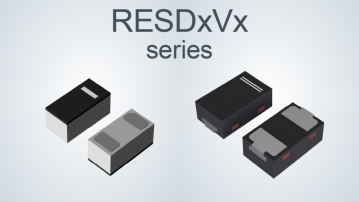
ROHM Launches ESD Protection Diode Compatible with High-Speed Interfaces of 10Gbps or Higher
Semiconductor specialist ROHM has developed the 'RESDxVx series' of ESD (electrostatic discharge) protection diodes capable of responding to next-generation high-speed data communication environments exceeding 10Gbps, simultaneously enhancing both signal quality maintenance required in high-speed interfaces and IC protection performance.
2026.03.26by 배종인 기자
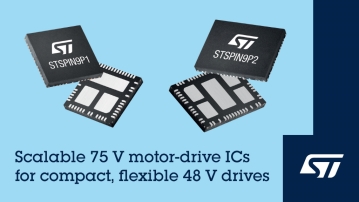
ST Launches 75V Drive IC Targeting 48V Industrial Motor Driving
ST Microelectronics has unveiled the 'STSPIN9P' series of 75V motor drive ICs tailored for 48V-class industrial drive system design. The new product family is characterized by half-bridge and full-bridge configurations that enable design scalability according to motor type and output conditions. Power supply circuits, protection functions, and current sensing circuits are integrated on-chip to simplify system configuration, and the devices are designed to support applications up to 500W maximum. The company plans to provide reference designs and demo boards to support development and evaluation in industrial automation, robotics, pumps, fans, lighting, and textile machinery.
2026.03.26by 배종인 기자

Nordic supports security updates for the entire lifecycle of IoT devices at a single fixed cost
Nordic Semiconductor, a global leader in low-power wireless connectivity solutions, has unveiled a single fixed-cost licensing model that delivers FOTA (Firmware Over-the-Air) and device management capabilities throughout the device lifecycle via nRF Cloud, and introduced a new firmware update solution to prepare for the enforcement of the European Union's Cyber Resilience Act (CRA).
2026.03.26by 배종인 기자
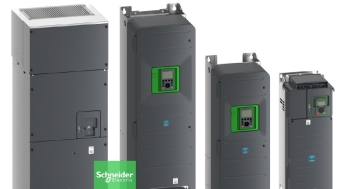
Schneider Aims for Building Energy Savings and Operational Stability with Next-Generation HVAC Drives
Schneider Electric has unveiled its next-generation HVAC drive product line 'Altivar HVAC'. The new product line's key features center on enhanced energy savings, system operational stability, and building management system integration. The products are divided into 'ATH200' for OEM and small equipment applications, and 'ATH600' for environments requiring continuous operation and advanced control. The company plans to expand the application scope from commercial buildings to facilities where HVAC system stability is critical, such as hospitals, airports, and data centers. The announcement includes over 30% energy savings, operation from -10°C to +60°C, Modbus and BACnet support, and compatibility with low global warming potential refrigerants.
2026.03.26by 명세환 기자











