



Rolls-Royce Opens the Era of Hydrogen Aviation Engines
 Published2022.12.01 11:50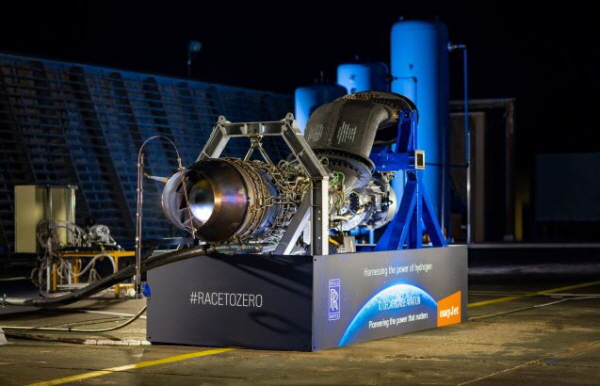
Rolls-Royce has successfully operated an aircraft engine using hydrogen, opening up the possibility of using green hydrogen in the aviation sector in the future.
Rolls-Royce and easyJet announced on the 30th that they have launched the world's first modern hydrogen aircraft engine and established a new aviation milestone.
This ground test was conducted as an early concept demonstrator using green hydrogen generated from wind and tidal power. This is a significant step forward demonstrating that hydrogen can be a future carbon-neutral aviation fuel, and also a key achievement showcasing Rolls-Royce and EasyJet's decarbonization strategy.
The two companies have embarked on work to demonstrate that hydrogen can safely and efficiently power civilian aircraft engines, and are already planning a second set of tests with the goal of conducting flight tests in the long term.
This test was conducted at the Boscombe Down outdoor test facility, a military aircraft test site of the UK Ministry of Defence (MoD), by converting Rolls-Royce’s AE 2100-A medium aircraft engine.
The green hydrogen for the test was supplied by the European Marine Energy Centre (EMEC) and generated using renewable energy at the hydrogen production and tidal test facility in Eday, Orkney Islands, UK.
Grant Shapps, UK Secretary of State for Business, Energy and Industrial Strategy (BEIS), stated, “The UK is leading the global transition to zero-emission flight, and this test by Rolls-Royce and EasyJet is a significant achievement demonstrating how business innovation can change the way we live.”
He also added, “Using hydrogen produced from tidal and wind energy in Scotland’s Orkney Islands for jet engines is a true success story for the UK, serving as an exemplary case demonstrating a collaborative approach that can realize clean aircraft while creating jobs nationwide.”
Rolls-Royce CTO Grazia Vittadini said, “The success of this hydrogen test will be an important milestone.”“The partnership with EasyJet was announced in July, but it is already off to a successful start with groundbreaking achievements. The two companies are pushing the boundaries to realize the carbon neutrality potential of hydrogen, which can contribute to reshaping the future of flight,” he said.
EasyJet CEO Johan Lundgren stated, “This is a true success of the partnership. Hydrogen offers significant potential not only for EasyJet-sized aircraft but also for aircraft of various sizes, and we will continue to strive to support this groundbreaking research. Through this, we will be able to make significant progress in addressing the challenge of carbon neutrality by 2050.”
The partnership between the two companies plans a series of additional equipment tests, ranging from ground test analysis of this initial concept to large-scale ground tests of Rolls-Royce's Pearl 15 jet engine.
This partnership was triggered after the two companies joined the UN-sponsored Race to Zero campaign to achieve carbon neutrality by 2050.

관련뉴스
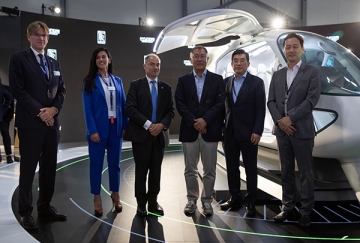
Rolls-Royce and Hyundai Motor Join Hands to Lead Future Mobility (AAM) Market
롤스로이스와 현대자동차그룹은 18일 영국 판보로 에어쇼에서 미래항공 모빌리티(AAM) 시장에 완전 전기추진체계 및 수소연료전지 기술을 제공하기 위한 협력안을 발표했다.
2022.07.22by 김예지 기자

A single misaligned light means 'defect'… Vehicle interior lighting now guarded by semiconductors and software
Automotive interior lighting is moving beyond its role as 'auxiliary lighting.' As it becomes a core element of user experience (UX) that expresses brand identity through color and animation while reflecting driver preferences, the LED interior ambient lighting market is growing rapidly. In connection with this, we met in advance with Choi Young-jae, Research Director at Dabo Corporation, who will present a technical webinar session on "Intelligent LED Interior Lighting Solutions Illuminating Future Vehicles," to hear about market trends and changes in design requirements.
2026.08.28by 명세환 기자
TI, HEV·EV 트랙션 인버터용 다축 코어리스 전류 센서 TMCS2100-Q1 공개
Texas Instruments가 HEV·EV 트랙션 인버터용 다축 코어리스 홀 효과 전류 센서 TMCS2100-Q1을 공개했다. 수평·수직 자기장을 동시에 측정하는 다축 센싱 기술로 기존 단일 축 센서 대비 최대 20배 높은 정확도를 달성하며, 버스바 무개조 설계로 기계 설계 유연성을 확보했다. 800V 아키텍처 확산에 따른 고정확도 요구 충족과 소형화를 동시에 구현한다.
2026.08.27by 배종인 기자

Vector Korea Launches New Version of 'CANoe' with AI Agent and MCP
Vector Korea has released a new version of CANoe 20 SP2 equipped with an AI agent and MCP. With a single natural language prompt, it automates the entire process from CAPL test code generation to execution and error correction, completing tasks that previously took several hours to days in just minutes. The Vector-RAG technology suppresses LLM hallucination phenomena, and it is compatible with existing LLMs such as GitHub Copilot and Claude, provided free of charge on CANoe 20 SP2 and higher versions.
2026.08.27by 배종인 기자
자동차연구원, ‘2026 자율주행모빌리티산업전’ 참가
한국자동차연구원이 2026 자율주행모빌리티산업전에 참가해 AI 기반 자율주행, 고성능 컴퓨팅, 시스템 안전·보안 기술 연구 성과를 공개한다. 산학연 협력을 통해 자율주행 기술을 고도화하고 우주모빌리티 분야로 연구 영역을 확장 중이다.
2026.08.25by 배종인 기자











