



Infineon Launches New LTE LNA and LNA Bank to Boost Smartphone Data Speeds by Up to 96% and Enhance User Experience
 Published2014.02.06 09:27
February 4, 2014, Seoul – Infineon Technologies (Korea CEO Seung-soo Lee) has launched an LTE Low Noise Amplifier (LNA) and Quad LNA Bank series specifically designed to improve data transmission speeds in smartphones.
LTE (or 4G) is the latest standard for wireless communication and can provide data transfer speeds of up to 300 Mbit/s (56 Mbit/s for the previous UMTS (3G)). Therefore, it enables fast mobile internet connections where loading times are barely noticeable, which greatly enhances the user experience and satisfaction of smartphone users.
However, meeting user expectations for the high data transmission speeds provided by LTE is a challenging task facing today's mobile devices. Due to the increasing complexity of the RF front-end, more RF components (switches, diplexers, dividers, etc.) must be used, which leads to increased losses in the overall system and a decrease in the signal-to-noise ratio (SNR). Furthermore, the distance between the antenna and the RF transceiver causes additional line losses, negatively impacting the SNR and the resulting data transmission speed.
Infineon's BGA7x1N6 and BGM7xxxx4L12 product families provide the low noise figure, accurate gain, and high linearity required for designers to address these challenges. These products are based on Infineon's advanced SiGe (Silicon Germanium) chip technology and feature built-in ESD protection.
The new LNA and LNA bank are integrated into both the diversity and main antenna paths of mobile phones to increase system sensitivity and ensure the best user experience. This enables data transfer speeds up to 96% higher than solutions without LNAs, fully utilizing the potential performance of LTE. The high linearity of the new device series ensures optimal reception even under conditions where isolation between antennas is poor and there is long line loss between the antenna and the transceiver. These devices can achieve a sensitivity improvement of generally 3.4 dB compared to a system without an LNA, with a package size (1.1 mm x 0.7 mm) that is 70% smaller than conventional LNAs and a package size (1.9 mm x 1.1 mm) that is 61% smaller than conventional LNA banks.

관련뉴스

Intel Unveils Next-Generation 'Core Ultra Series 3' and vPro Platform for Enterprise PCs
Intel has officially unveiled the "Intel Core Ultra Series 3" for next-generation enterprise PCs and the latest vPro platform, addressing a wide range of demands from enterprise notebooks to high-performance workstations.
2026.03.26by 배종인 기자

ROHM Launches ESD Protection Diode Compatible with High-Speed Interfaces of 10Gbps or Higher
반도체 전문 기업 로옴(ROHM)이 10Gbps를 넘어서는 차세대 고속 데이터 통신 환경에 대응할 수 있는 ESD(정전기 방전) 보호 다이오드 ‘RESDxVx 시리즈’를 개발하며, 고속 인터페이스에서 요구되는 신호 품질 유지와 IC 보호 성능을 동시에 끌어올렸다.
2026.03.26by 배종인 기자
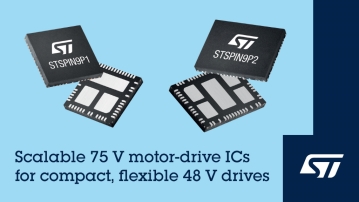
ST Launches 75V Drive IC Targeting 48V Industrial Motor Driving
ST마이크로일렉트로닉스가 48V급 산업용 구동 시스템 설계에 맞춘 75V 모터 드라이브 IC ‘STSPIN9P’ 시리즈를 공개했다. 새 제품군은 하프 브리지와 풀 브리지 구조로 구성돼 모터 종류와 출력 조건에 따라 설계를 확장할 수 있도록 한 것이 특징이다. 전원 회로와 보호 기능, 전류 감지 회로를 칩에 통합해 시스템 구성을 단순화했으며, 최대 500W급 애플리케이션까지 대응하도록 설계됐다. 회사는 레퍼런스 디자인과 데모 보드도 함께 제공해 산업 자동화, 로보틱스, 펌프, 팬, 조명, 섬유 기계 등에서 개발과 평가를 지원할 계획이다.
2026.03.26by 배종인 기자
Nordic supports security updates for the entire lifecycle of IoT devices at a single fixed cost
Nordic Semiconductor, a global leader in low-power wireless connectivity solutions, has unveiled a single fixed-cost licensing model that delivers FOTA (Firmware Over-the-Air) and device management capabilities throughout the device lifecycle via nRF Cloud, and introduced a new firmware update solution to prepare for the enforcement of the European Union's Cyber Resilience Act (CRA).
2026.03.26by 배종인 기자
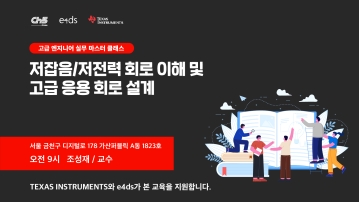
Practical Training in Low-Noise, Low-Power Circuit Design All in One Place… Training Fee Support
고감도 아날로그 회로와 센서 기반 시스템 설계 역량을 강화할 수 있는 ‘2026 고급 엔지니어 실무 마스터 클래스’가 오는 4월16일 서울 가산동 e4ds 컨퍼런스 센터에서 열린다. 이번 과정은 온라인이 아닌 오프라인 유료 실습 교육으로 진행되며, 현장 중심의 심화 학습을 원하는 엔지니어를 대상으로 한다. 이번 교육은 텍사스 인스트루먼트(Texas Instruments)가 교육비를 지원해 정가 25만원에서 10만원 할인 된 15만원에 참가할 수 있다.
2026.03.26by 배종인 기자











