



Ola Electric Two-Wheelers Lead Growth in India's Mobility Sector
 Published2023.02.13 12:06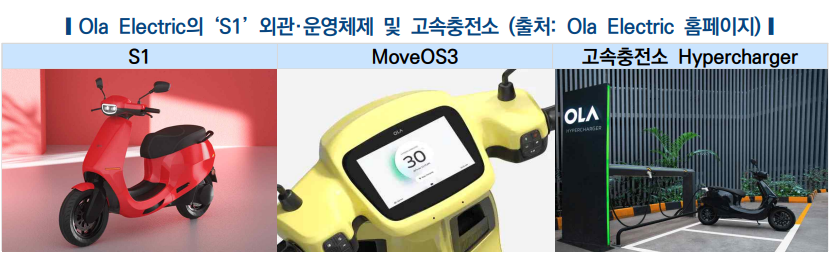
▲ Ola Electric S1 exterior, operating system, and fast charging station (Image courtesy of Korea Automotive Technology Institute)
Optimized for local lifestyles and minimized the downsides of electrification
Ranked No. 1 in domestic market share in 2022 since product launch in 2021
On the 10th, the Korea Automotive Research Institute [published] Industry Trends Vol. 1 under the theme 'Ola, Shining a Light on the Indian Mobility Market' In the 111 report, Ola indicated India’s growth potential in both demand and manufacturing aspects of the mobility sector, led by its ability to connect services and products.
Ola Electric, an affiliate of Ola, aims to become an integrated mobility company encompassing batteries, electric vehicles, and services, and is making a name for itself in the Indian electric two-wheeler market.
According to foreign media outlets such as Crunchbase, Ola has grown rapidly since its establishment, becoming a major player alongside Uber in the Indian ride-hailing market, and has attracted at least $4.7 billion (5.8 trillion won) in investment funds from Hyundai Motor, Softbank, Tiger Global, and others.
Ride-hailing is a service that connects drivers and passengers using mobile platforms and location data. Ola provides differentiated services that reflect the characteristics of India, such as cash payments, operations in small and medium-sized cities, and diversification of operating methods.
In India, two-wheeled vehicles accounted for 73% (15.53 million units) of the 21.37 million new vehicle registrations in 2022.
In line with the trend of electrifying two-wheeled vehicles in India, Ola Electric launched three E2W models (S1, S1 Pro, and S1 Air) in 2021–2022 and is attracting consumers with superior performance and affordable prices compared to competing models from other companies.
The 'Ola S1' has a top speed of 95 km/h, a real-world driving range of 128 km, and a price of 110,000 rupees (1.65 million won), but the competing model 'Ather 450 Plus' has a top speed of 90 km/h, a real-world driving range of 85 km, and a price of 135,000 rupees (2.03 million won), making Ola's E2W overwhelmingly superior.
Leveraging these advantages, Ola achieved the number one domestic market share in 2022 following the launch of its first E2W product in August 2021.
<bOla Electric completed its 'Futurefactory' in just 11 months for the rapid mass production of E2W, and ranked first with an 18% market share, accounting for 120,000 of the 670,000 new high-speed E2W registrations in India in 2022.
The biggest feature is the introduction of new functions tailored to the local lifestyle and the minimization of the downsides of electrification.
Based on a software-centric design, it actively responded to local needs in India by incorporating various features, applied the unique MoveOS operating system to all models, and continuously improved the OS through OTA wireless updates.
For example, it offers digital key sharing and multiple profiles that allow sharing of the vehicle with family members to suit large family culture, and a party mode that synchronizes headlights and music to meet the needs of those who value events and parties.
To mitigate the disadvantages of E2W, it was equipped with a high-performance battery and expanded its own hypercharger network.
It achieves both lightweight design and long driving range with a ternary lithium-ion battery that has a higher energy density than lithium iron phosphate, and can travel 50km with a 15-minute charge at a 'Hypercharger'. As of December 2022, 50 Hyperchargers have been installed across India, and there are plans to add 50 more in the future.
Ola is evolving into a vertically integrated mobility company that includes core components such as batteries, electric vehicles, and services.
With the support of the Indian government, which aims for battery independence, we are expanding investment in in-house battery production.
We signed an agreement with the Indian government to produce 20 GWh annually under the Battery Local Production Subsidy Program (ACC PLI).
ACC PLI is an Advanced Chemistry Cell ProductIt stands for Ion Linked Incentive, a subsidy policy for mass production of batteries in India.
The Indian government has allocated a budget of 181 billion rupees (2.8 trillion won) to build an annual production capacity of 50 GWh.
Ola unveiled its self-developed ternary battery, the NMC 2170, and plans to begin mass production as early as 2023. It has also invested $500 million in battery technology R&D to establish the 'Battery Innovation Center (BIC)' in Bengaluru.
In addition, following the expansion of the E2W lineup, we plan to enter the electric vehicle (E4W) market and promote electrification across all areas of mobility.
It was announced that the E2W lineup would be expanded with high-end (S1, S1 pro) and entry-level (S1 air) scooters and high-end and entry-level motorcycles from 2022 to 2024, the first E4W would be launched in 2024, and six types of high-end and entry-level vehicles would be released by 2027.
The Korea Automotive Research Institute predicted that, unlike legacy companies, Ola's strength would be its service-oriented product development capabilities.
We have developed products that meet the diverse potential demands of the Indian market and accumulated extensive experience in the Indian market through our shared mobility service (Ola Cabs). Based on this foundation, we can plan and manufacture products (Ola Electric), thereby securing a differentiated competitive edge.
However, risk factors include a lack of experience in mass-producing hardware and deteriorating profitability in the service business sector.
It is assessed that securing global-level quality may take time due to a lack of experience in hardware mass production, and that there is a need to accumulate supply chain management capabilities for materials and components, particularly those required for the mass production of electric vehicles (E4W).
According to Reuters, on April 1 following the Ola Electric E2W fire accident in Pune in March 202240,000 units were voluntarily recalled.
Concerns have also been raised that the recent sluggish performance of some service businesses could affect the growth of Ola Electric, the manufacturing division, due to deteriorating profitability in the service sector.
Despite concerns, Ola's growth is cited as an example hinting at the potential of India, which is garnering attention as an emerging mobility market.
Taking advantage of the global trend of companies moving out of China, the Indian government hopes to emerge as a manufacturing nation of the future.
Furthermore, due to Chinese consumers' preference for domestic brands and the Chinese government's exclusionary industrial development policies, global companies have recently begun to take an interest in India as a huge emerging market outside of China.
The Indian government aims to become the center of the global electric vehicle industry in the future by increasing domestic demand for electric vehicles based on 'Make in India' initiatives such as FAME and ACC PLI, while simultaneously supporting domestic companies and attracting global companies.
India's demand for mobility is expected to surge, driven by rising national income and a stable population growth rate.
India's GDP growth forecast for 2023 is very high at 6.9%, and as it is predicted to surpass Germany and Japan to become the world's third-largest economy by 2027, the rate of motorization is expected to surge.
As of 2020, India's median age is 28.7 years, and with a high proportion of young people and relatively stable population growth, new demand for mobility is expected to continue to increase.
Meanwhile, the Indian government implemented an electric vehicle purchase subsidy system, creating conditions for the growth of the related market.
India is implementing the FAME II policy, which provides subsidies for electric vehicles with major components produced locally, and two-wheelers, which are in high local demandIt is characterized by providing generous subsidies for the electrification of [it].
FAME II stands for Faster Adoption and Manufacturing of Hybrid and Electric Vehicles phase II, and E2W receives a subsidy of up to 40% of the price, 15,000 rupees (230,000 won) per kWh of battery (local government subsidies separate).

관련뉴스

A single misaligned light means 'defect'… Vehicle interior lighting now guarded by semiconductors and software
자동차 실내조명이 '보조 조명'의 자리를 벗어나고 있다. 색상과 애니메이션으로 브랜드 아이덴티티를 드러내고 운전자 취향을 담아내는 사용자 경험(UX)의 핵심 요소로 올라서면서, LED 실내 앰비언트 시장도 빠르게 커지는 중이다. 이에 관하여 '미래 자동차를 밝히는 지능형 LED 실내 조명 솔루션' 이라는 내용으로 기술 웨비나 세션을 발표하는 최영재 다보코퍼레이션 연구위원을 앞서 만나, 시장의 온도와 설계 요구의 변화를 들었다.
2026.08.28by 명세환 기자
TI, HEV·EV 트랙션 인버터용 다축 코어리스 전류 센서 TMCS2100-Q1 공개
Texas Instruments가 HEV·EV 트랙션 인버터용 다축 코어리스 홀 효과 전류 센서 TMCS2100-Q1을 공개했다. 수평·수직 자기장을 동시에 측정하는 다축 센싱 기술로 기존 단일 축 센서 대비 최대 20배 높은 정확도를 달성하며, 버스바 무개조 설계로 기계 설계 유연성을 확보했다. 800V 아키텍처 확산에 따른 고정확도 요구 충족과 소형화를 동시에 구현한다.
2026.08.27by 배종인 기자
Vector Korea Launches New Version of 'CANoe' with AI Agent and MCP
Vector Korea has released a new version of CANoe 20 SP2 equipped with an AI agent and MCP. With a single natural language prompt, it automates the entire process from CAPL test code generation to execution and error correction, completing tasks that previously took several hours to days in just minutes. The Vector-RAG technology suppresses LLM hallucination phenomena, and it is compatible with existing LLMs such as GitHub Copilot and Claude, provided free of charge on CANoe 20 SP2 and higher versions.
2026.08.27by 배종인 기자
자동차연구원, ‘2026 자율주행모빌리티산업전’ 참가
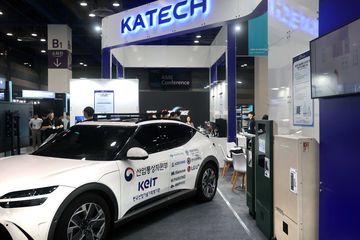
한국자동차연구원이 2026 자율주행모빌리티산업전에 참가해 AI 기반 자율주행, 고성능 컴퓨팅, 시스템 안전·보안 기술 연구 성과를 공개한다. 산학연 협력을 통해 자율주행 기술을 고도화하고 우주모빌리티 분야로 연구 영역을 확장 중이다.
2026.08.25by 배종인 기자

TUV SUD, 자동차 AI 안전·CBAM·방폭 등 5개 전문교육 확대
TUV SUD가 자동차 AI 안전, 탄소국경조정제도(CBAM), 생성형 AI, 품질경영, 국제 방폭 등 5개 분야 전문교육을 9~11월 순차 개설한다. ISO/PAS 8800 기반 자동차 AI 안전성 확보 과정, CBAM 실무 과정, IECEx CoPC 국제 방폭 인증 자격 교육 등이 최신 국제표준과 산업 현장 사례를 반영한 실무 중심으로 구성된다.
2026.08.24by 명세환 기자











