



Titanium carbide coating on titanium surface improves seawater battery performance
 Published2023.03.20 12:28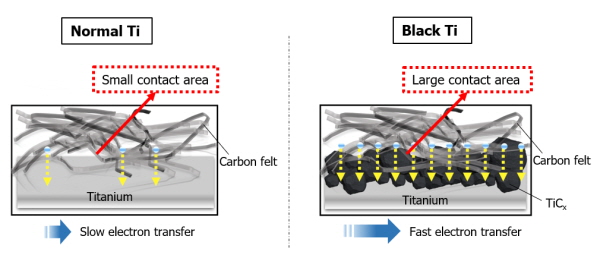
▲ Comparison of battery electron transfer between cases using conventional titanium (Normal Ti) and TiC-coated titanium (Black Ti)
A technology capable of suppressing corrosion in the carbon current collector of seawater batteries has been developed, and improvements in seawater battery performance are expected in the future.
Professor Lee Dong-wook of the Department of Energy and Chemical Engineering at UNIST (President Lee Yong-hoon) has developed a technology that significantly enhances the performance of seawater batteries by coating the surface of titanium (Ti), used as a current collector in seawater batteries, with a black suit called titanium carbide (TiC).
In particular, it was discovered that the corrosion of the carbon current collector was suppressed during this process. Systematically analyzing this is expected to aid in the design of new metal current collectors for seawater batteries in the future.
A current collector refers to a material that serves as a pathway for electron movement. Among these, the positive current collector of a seawater battery consists of a carbon current collector and a titanium metal current collector. Titanium metal current collectors are widely used due to their high stability when interacting with seawater.
On the other hand, corrosion of carbon current collectors, which frequently occurs in seawater batteries and other batteries, is cited as a major cause of weakened cycle stability. Therefore, inhibiting the corrosion of carbon current collectors is of paramount importance for achieving high stability.
The research team devised a method to increase the efficiency of seawater batteries by preventing corrosion of the entire current collector. The TiC-coated titanium (Black Ti) developed by the research team demonstrated chemical, electrochemical, and mechanical stability in a seawater environment.
When the developed current collector is used in a seawater battery, the coin-type cell shows a 4-fold improvement in cycle performance and a 30% improvement in output performance compared to the existing one, and the voltage gap is reduced to 20%.
In addition, it was successfully applied to high-capacity prismatic type cells, yielding results showing that output performance increased by 15% and resistance and voltage gap decreased by 25% and 20%, respectively.
The research team quantitatively and qualitatively confirmed that the performance improvement was due to the inhibition of corrosion of the carbon current collector.
"Seawater batteries are next-generation battery systems that use seawater as a cathode material," said researcher Yoon-Jong Cho, the first author. "Through this research, the current collector fabricated in a simple manner could contribute to accelerating the commercialization of not only seawater batteries but also fuel cells, flow batteries, and metal-air batteries."
This research was conducted with support from the National Research Foundation of Korea (NRF), the Korea Energy Technology Evaluation Institute (KETEP), and UNIST, and the results were published online on February 20 in 'Advanced Functional Materials,' a prestigious journal in the field of materials science.

관련뉴스
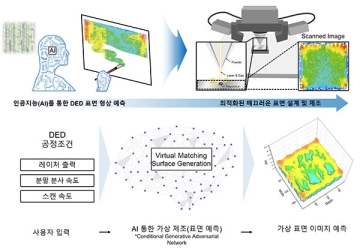
UNIST Develops Virtual AI Manufacturing Technology for Metal Surfaces
UNIST 기계공학과 정임두 교수팀은 15일 ‘금속 공정조건에 따라 예상되는 금속 표면 3D 형상’을 실제 데이터 기반으로 가상 제조하는 기술 개발에 성공했다.
2022.11.21by 김예지 기자
.jpg)
UNIST's Power Management and Sensor IC Technology Receives Global Recognition
UNIST 전기전자공학과가 ‘반도체 설계 올림픽(ISSCC)’에 논문 3편이 채택되며, UNIST의 전력 관리와 센서 IC 기술이 세계무대에서 인정받았다.
2022.12.01by 배종인 기자
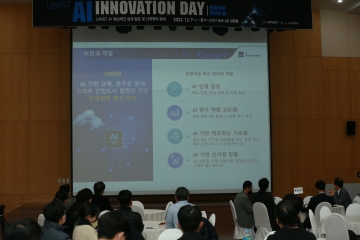
UNIST Leads the Southeast Region's AI Innovation Ecosystem
AI 전문 인재 양성과 AI산업 육성을 위해 울산이 지역 거점으로서 AI 기술 개발과 생태계 조성에 앞장서고 있다.
2022.12.08by 명세환 기자
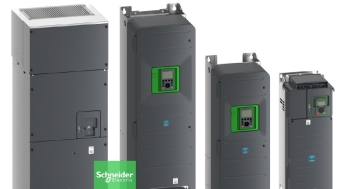
Schneider Aims for Building Energy Savings and Operational Stability with Next-Generation HVAC Drives
슈나이더 일렉트릭이 차세대 HVAC 드라이브 제품군 ‘Altivar HVAC’를 공개했다. 새 제품군은 에너지 절감, 시스템 가동 안정성, 빌딩 관리 시스템 연동을 강화한 것이 핵심이다. 제품은 OEM 및 소형 장비용 ‘ATH200’과 연속 운전·고급 제어가 필요한 환경용 ‘ATH600’으로 나뉜다. 회사는 상업용 건물은 물론 병원, 공항, 데이터센터 등 공조 설비의 안정성이 중요한 시설까지 적용 범위를 넓히겠다는 구상이다. 발표 내용에는 30% 이상 에너지 절감, 영하 10도~영상 60도 운전, Modbus·BACnet 지원, 저지구온난화지수 냉매 대응 등이 포함됐다.
2026.03.26by 명세환 기자
Ecolab Expands AI Data Center Cooling Business Through Acquisition of CoolIT
이콜랩이 AI 데이터센터용 액체 냉각 기업 쿨아이티 시스템즈를 약 47억5천만달러에 인수하기로 했다. 거래는 규제 승인 등을 거쳐 2026년 3분기 안에 마무리될 예정이다. 쿨아이티는 직접 칩 냉각 기반의 냉각수 분배 장치, 콜드 플레이트, 매니폴드 등을 공급해온 기업으로, 하이퍼스케일 데이터센터와 코로케이션 사업자를 고객으로 두고 있다. 이번 인수는 AI 확산으로 커진 고발열·고밀도 서버 환경에 대응하기 위한 조치로, 이콜랩은 자사의 물 관리·디지털 모니터링 역량과 쿨아이티의 하드웨어 기술을 결합해 데이터센터 냉각 사업을 넓힐 계획이다.
2026.03.26by 명세환 기자











