



TI Launches Industry's First Near-Infrared DLP® Device for Spectroscopic Analysis and DLP NIRscan™ Evaluation Module
 Published2014.03.07 11:23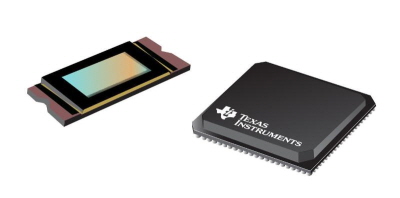
TI Korea (CEO Kent Chon, www.ti.com/ww/kr ) March 6, 2014 – TI (CEO Kent Chon) announced the industry's first DLP® device optimized for near-infrared (NIR) use and a supporting evaluation module (EVM) at Pittcon 2014. The launch of the DLP4500NIR and DLP NIRscan™ EVM signifies the expansion of TI's MEMS technology into transmission and reflection spectroscopy and other areas. With this DLP technology, spectrometers used in the food, pharmaceutical, oil, and gas industries can now deliver laboratory-level performance in both field and production facilities.
Henrik Skov Andersen, CEO and President of Ibsen Photonics, explained, "The integration of DLP technology into Ibsen Photonics' various OEM spectrometers is bringing about a revolutionary change in traditional spectroscopic analysis. Our latest compact programmable polychromator, equipped with DLP technology, allows for the pre-dispersion and selection of multiple wavelengths, enabling high-speed transmission or absorption measurements in the VIS-NIR range with an affordable broadband detector. This unique capability allows customers to create critical dynamic measurement structures and algorithms for target applications, while increasing speed and accuracy and protecting samples from unnecessary exposure."
"TI is constantly expanding its technological capabilities so that DLP technology can be utilized across industry boundaries in advanced scientific, industrial, and medical solutions," said Mariquita Gordon, DLP Embedded Manager at TI. "With the newly launched near-infrared DLP platform, developers of spectroscopic equipment will be able to develop a whole new level of mobile equipment that delivers the sensitivity and accuracy of laboratory equipment in the field while reducing overall system costs."
The biggest difference between the DLP4500NIR device and other components and solutions for NIR spectroscopy on the market is that the DLP4500NIR device utilizes approximately one million digital programmable micromirrors, which are the core of DLP technology. When used with a single-element detector, the DLP4500NIR can replace an expensive linear detector array, enabling the design of high-performance spectrometers while lowering the standard Bill of Materials (BOM). Optimized for light in the 700 to 2500 nanometer range, the DLP4500NIR can be programmed to select and attenuate multiple wavelengths at speeds up to 4 kHz. The DLP technology architecture provides a signal-to-noise ratio (SNR) exceeding 30,000:1 over a set measurement time, allowing for faster and more accurate results compared to spectrometers using traditional solutions.
By controlling each micromirror in the DLP4500NIR, setting patterns can be generated, allowing users to more precisely adjust spectral resolution and wavelength range, as well as adjust integration time and equalize light throughput. As a result, users can optimize material analysis for various materials very quickly in a single system using adaptive scanning techniques.
The DLP4500NIR is small, enabling the implementation of a compact product form factor, which allows for the creation of systems usable in the field or factory. In addition to spectroscopic analysis, the DLP4500NIR can be used for other applications, including single-pixel cameras, laser marking, and microscopy.
The DLP NIRscan EVM offers a new alternative for engineers seeking to build a true portable, multi-functional spectrometer at a lower cost. As the industry's first DLP technology-based spectroscopic development platform, the DLP NIRscan features multiple interfaces, making it suitable for a wide range of designs. Equipped with the DLP4500NIR device featuring an integrated DLPC350 digital controller, the DLP NIRscan utilizes a single-element extended InGaAs detector compatible with a transmission sampling module and a halogen lamp.
To enhance processing performance, the DLP NIRscan utilizes TI’s Sitara™ AM3358 ARM® Cortex® A8 processor (AM3358) and the ADS1255, a 24-bit, 30kSPS delta-sigma analog-to-digital converter (ADC). The built-in Ethernet port and two USB ports provide wired and wireless (Wi-Fi®, Bluetooth®, connectors sold separately) connectivity options for connecting to a computer.
In addition, a Linux operating system and web server based on the BeagleBone Black architecture are pre-installed, allowing for immediate configuration without the need for separate downloads. Simply connect the DLP NIRscan to your computer via USB and open a web browser. The web interface provides remote connectivity to the installed system via various devices, including smartphones and tablets. Furthermore, you can utilize various support and tools provided by the BeagleBoard.org open-source community.

관련뉴스

Intel Unveils Next-Generation 'Core Ultra Series 3' and vPro Platform for Enterprise PCs
인텔이 차세대 기업용 PC를 위한 ‘인텔 코어 Ultra 시리즈 3’와 최신 vPro 플랫폼을 공식 발표하며, 기업용 노트북부터 고성능 워크스테이션까지 폭넓은 수요 충족에 나섰다.
2026.03.26by 배종인 기자

ROHM Launches ESD Protection Diode Compatible with High-Speed Interfaces of 10Gbps or Higher
반도체 전문 기업 로옴(ROHM)이 10Gbps를 넘어서는 차세대 고속 데이터 통신 환경에 대응할 수 있는 ESD(정전기 방전) 보호 다이오드 ‘RESDxVx 시리즈’를 개발하며, 고속 인터페이스에서 요구되는 신호 품질 유지와 IC 보호 성능을 동시에 끌어올렸다.
2026.03.26by 배종인 기자
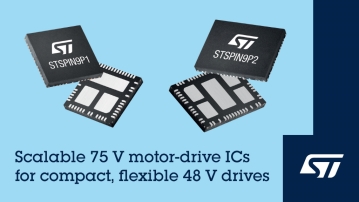
ST Launches 75V Drive IC Targeting 48V Industrial Motor Driving
ST마이크로일렉트로닉스가 48V급 산업용 구동 시스템 설계에 맞춘 75V 모터 드라이브 IC ‘STSPIN9P’ 시리즈를 공개했다. 새 제품군은 하프 브리지와 풀 브리지 구조로 구성돼 모터 종류와 출력 조건에 따라 설계를 확장할 수 있도록 한 것이 특징이다. 전원 회로와 보호 기능, 전류 감지 회로를 칩에 통합해 시스템 구성을 단순화했으며, 최대 500W급 애플리케이션까지 대응하도록 설계됐다. 회사는 레퍼런스 디자인과 데모 보드도 함께 제공해 산업 자동화, 로보틱스, 펌프, 팬, 조명, 섬유 기계 등에서 개발과 평가를 지원할 계획이다.
2026.03.26by 배종인 기자

Nordic supports security updates for the entire lifecycle of IoT devices at a single fixed cost
Nordic Semiconductor, a global leader in low-power wireless connectivity solutions, has unveiled a single fixed-cost licensing model that delivers FOTA (Firmware Over-the-Air) and device management capabilities throughout the device lifecycle via nRF Cloud, and introduced a new firmware update solution to prepare for the enforcement of the European Union's Cyber Resilience Act (CRA).
2026.03.26by 배종인 기자

Practical Training in Low-Noise, Low-Power Circuit Design All in One Place… Training Fee Support
고감도 아날로그 회로와 센서 기반 시스템 설계 역량을 강화할 수 있는 ‘2026 고급 엔지니어 실무 마스터 클래스’가 오는 4월16일 서울 가산동 e4ds 컨퍼런스 센터에서 열린다. 이번 과정은 온라인이 아닌 오프라인 유료 실습 교육으로 진행되며, 현장 중심의 심화 학습을 원하는 엔지니어를 대상으로 한다. 이번 교육은 텍사스 인스트루먼트(Texas Instruments)가 교육비를 지원해 정가 25만원에서 10만원 할인 된 15만원에 참가할 수 있다.
2026.03.26by 배종인 기자











