



UNIST·ADNOC, AI-Based Decarbonization Partnership for Petrochemical Processes
 Published2023.05.11 16:44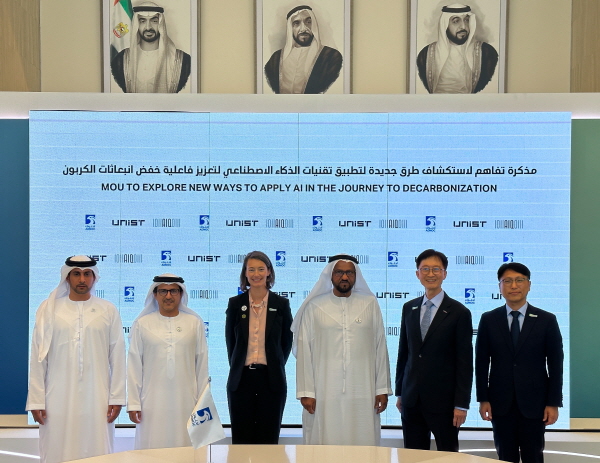
UNIST (Ulsan National Institute of Science and Technology) has established a strategic partnership with the UAE's largest state-owned oil company and is moving forward to pioneer the global digital carbon-neutrality market. The strategy is to lead the global carbon-neutral era by jointly developing AI-based decarbonization optimization systems for large-scale refining and petrochemical processes.
UNIST announced that it has signed a Strategic Collaboration Agreement (SCA) with the ADNOC (Abu Dhabi National Oil Company) Group at the Abu Dhabi Energy Center in the UAE to lead the global digital carbon-neutrality market.
At the signing ceremony, UNIST President Lee Yong-hoon, Sophie Hildebrand, CTO of the ADNOC Group, and Omar Al Marzooqi, CEO of AIQ, an AI-specialized subsidiary of ADNOC, jointly signed the agreement.
According to the agreement, UNIST and the ADNOC Group will launch two digital carbon-neutrality flagship projects from the second half of this year, and plan to establish a joint digital carbon-neutrality research center by the end of this year.
The flagship projects are "Development of Artificial Intelligence for Multi-stage Continuous Process Optimization of Liquid Chemical Products in Refining and Petrochemical Plants" and "Development of Environmental Monitoring System Using Artificial Intelligence and Satellite Imagery."
Upon the establishment of the joint research center, the plan is to pursue three joint projects including "Development of Optimized Refining Processes Using AI," "Development of Decarbonization and Sustainable Refining Processes," and "Construction of Eco-friendly Hydrogen Industry Models."
The two institutions also agreed to actively cooperate in establishing a national-level "Digital Carbon-Neutrality Strategic Partnership" involving central and local governments, research institutions, and private enterprises from both Korea and the UAE.
To this end, the ADNOC Group delegation has agreed to visit UNIST and Ulsan City in the second half of this year to discuss specific joint cooperation measures.
The plan is to discuss ways to host a "Global Digital Carbon-Neutrality" event co-hosted by ADNOC, UNIST, and Ulsan City at the 28th UN Climate Change Conference of the Parties (COP-28) to be held in Dubai, UAE at the end of November.
Both parties also agreed to work together to expand government-level cooperation, including from the Ministry of Science and ICT.
Previously, UNIST visited the UAE in March alongside Ulsan Mayor Kim Doo-gyeom and other Ulsan delegations, discussing with ADNOC ways to establish strategic cooperation in digital carbon-neutrality. The concrete results include launching flagship projects through this SCA agreement, establishing joint research centers, and hosting joint events at COP-28.
UNIST President Lee Yong-hoon said, "Through this agreement, UNIST has established its position as a leading institution in the global digital carbon-neutrality field. With ADNOC's return visit in the second half of this year, we will make efforts to serve as a catalyst for expanding strategic cooperation between Korea and the UAE in the digital carbon-neutrality field."
UNIST opened the Carbon Neutrality Graduate School in 2022 and has been leading research in the digital carbon-neutrality field by cooperating with the Graduate School of Artificial Intelligence, which opened in 2020. Since the second half of 2022, UNIST has been promoting cooperation with the UAE in the global digital carbon-neutrality field.
The ADNOC Group, which signed the agreement with UNIST, is headed by Sultan Ahmed Al Jaber, Minister of Industry and Advanced Technology as its chief executive officer. Minister Al Jaber also serves as the President of COP-28. ADNOC is leading climate change response policies by allocating $15 billion (approximately 20 trillion won) as a low-carbon growth budget last year and establishing a related organization, the "Low-Carbon International Growth Division."

Comments
Related news
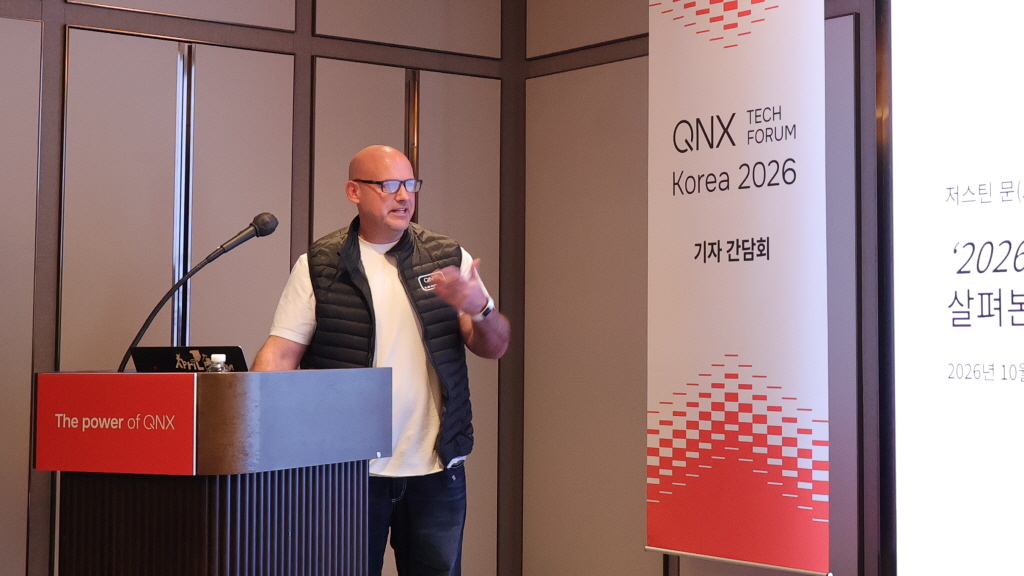
QNX, "SDV Development Complexity Reaches Limit, AI is a Tool to Enhance Developer Capabilities, Not Replace Them"
QNX has diagnosed that software-defined vehicle (SDV) development has reached a critical level of complexity due to increased vehicle software, strengthened security and safety regulations. AI is not intended to replace developers but rather to enhance productivity by supporting repetitive tasks such as documentation, requirements management, and verification, the company emphasized. Additionally, QNX stressed that a "Human in the Loop" structure where humans make final judgments is essential even when utilizing artificial intelligence. QNX Vice President Justin Moon explained that the company will expand its business beyond automobiles into physical AI fields including robotics, smart factories, and defense. QNX plans to leverage open-source ecosystems such as Eclipse SDV, position microkernel-based security and safety certification capabilities as key strengths, and expand industry-academia cooperation in the Korean market
2026.10.22by 배종인 기자

Mouser to Demonstrate Humanoid Robot at Electronica 2026
Mouser Electronics will demonstrate the biped humanoid robot RoboTUM at the Electronica 2026 exhibition held in Munich, Germany in November. This robot, a student-led project from Munich University of Technology, is a high-performance robotics platform that integrates advanced electronic components and embedded technologies such as microcontrollers, NVIDIA Jetson, IMU, and EtherCAT, allowing exhibition visitors to directly experience real-world applications of cutting-edge technology.
2026.10.22by 배종인 기자
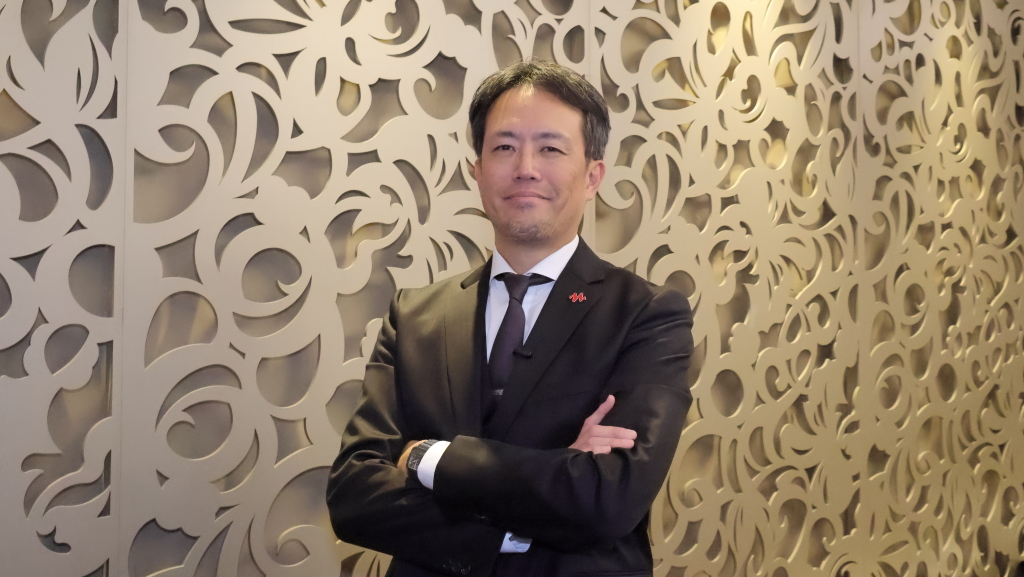
[Interview] Choi Jun-ho, Vice President of Keysight Technologies, "Supporting Advanced Technology Development Through Collaboration and Talent Behind the Frontline of Technology"
Keysight Technologies is leading technological innovation through a platform strategy that integrates design, simulation, emulation, and testing in line with the era of advanced technologies such as AI, data centers, and optical communications. Furthermore, the company is concentrating on enhancing customers' development efficiency and maximizing product utilization by leveraging AI. In addition, to support these efforts, Keysight is actively investing in cultivating talent with cross-domain competencies, engineer education, and strengthening collaboration with customers. In this context, Keysight held the 'Keysight World Tech Day Seoul 2026' on the 21st and introduced the company's advanced technological capabilities. Accordingly, this publication conducted an interview with Choi Jun-ho, Vice President of Keysight Technologies headquarters, at the Keysight World venue to discuss Keysight's advanced technologies and the company's philosophy for supporting advanced technology development.
2026.10.22by 배종인 기자
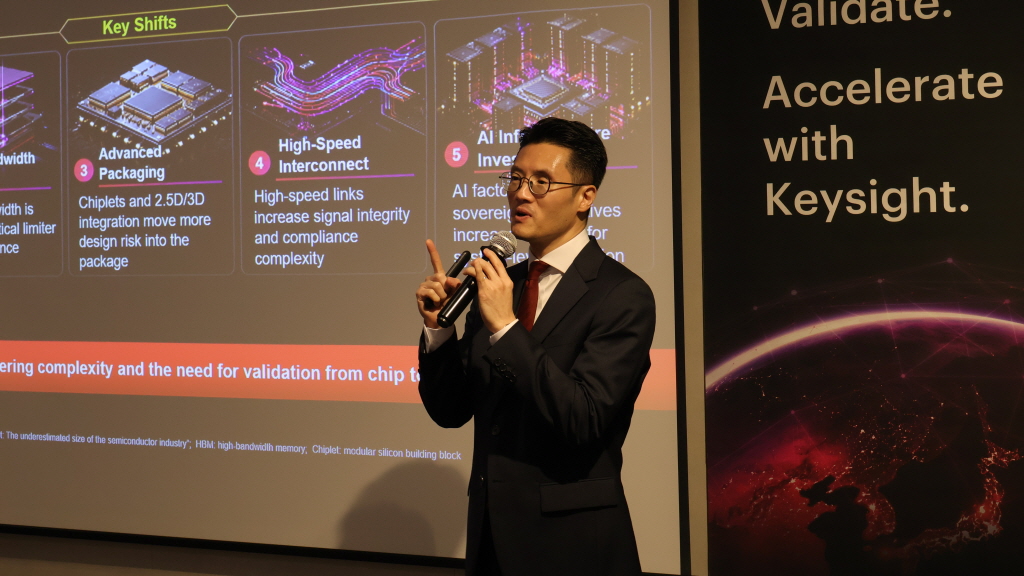
Keysight, "Evolving into an Engineering Platform Company Opening the AI Era"
Keysight Technologies held Keysight World Tech Day Seoul 2026 and shared core technologies and design and validation strategies in AI semiconductors, 6G, and aerospace and defense sectors. This year, a new AI semiconductor track was established to focus on HBM, chiplets, silicon photonics, and AI infrastructure validation challenges. Additionally, AI-RAN, 6G technology based on NTN, and validation methods for mission-critical systems such as satellite communications, radar, and electronic warfare were also introduced. Keysight announced that it will increase verification efficiency and support innovation in the complex semiconductor and data center development processes in the AI era through integrated design, emulation, and test solutions.
2026.10.21by 배종인 기자
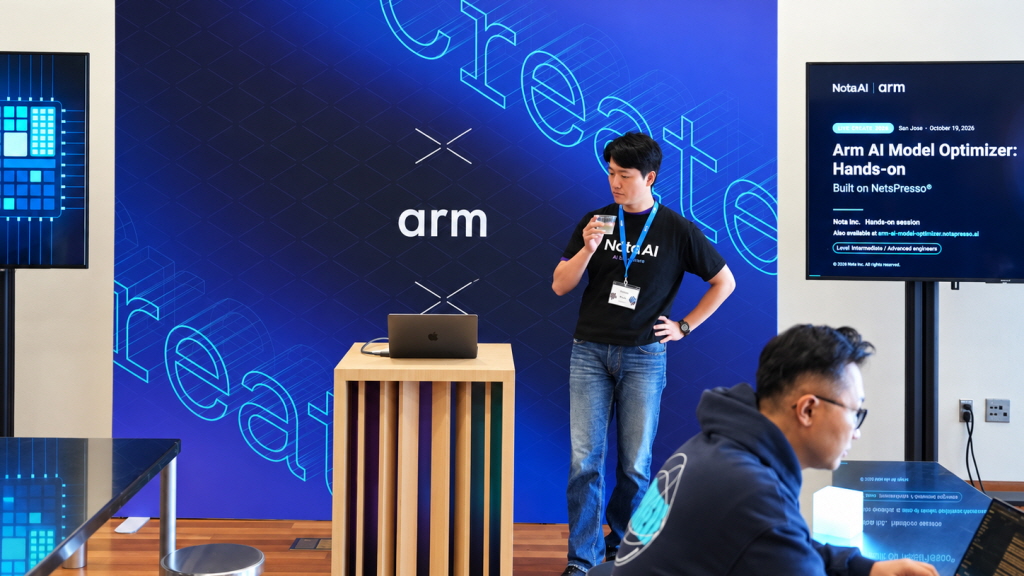
Nota Unveils Netspresso-Based AI Optimization Tool at Arm Create 2026
AI model optimization technology company Nota supported hands-on workshops for the 'Arm AI Model Optimizer' based on Netspresso at Arm Create 2026. This tool enables developers to efficiently deploy AI models to target hardware through quantization and graph optimization. Currently available in early access form, the company plans to continuously improve features based on feedback from global developers.
2026.10.20by 배종인 기자











