

.png)

STMicroelectronics Introduces L1 Series Ultra-Low Power STM32 Microcontrollers with Increased Memory and Reduced Power Consumption
 Published2014.03.17 15:43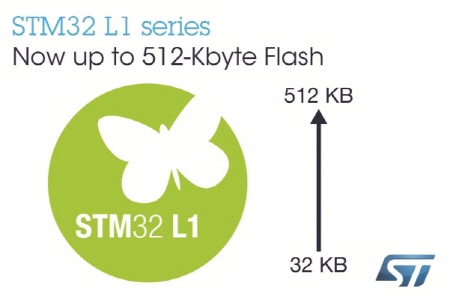
March 14, 2014, Seoul — STMicroelectronics (ST), a global semiconductor company contributing to customers across a wide range of electronic applications, announced the addition of a new 512KB flash-sized chip to its ultra-low-power ARM® Cortex®-M3 32-bit microcontroller STM32L1 series. With this, the L1 series has become the only microcontroller series on the market that combines ultra-low power consumption with up to 512KB flash and 80KB RAM, featuring more than 70 products across three product lines.
These new chips provide excellent low-power operation through ST's proprietary Ultra-low-leakage (ULL) 110nm CMOS process and optimized architecture that dramatically reduces leakage, and are aimed at cost-effective embedded designs for battery-operated applications in fitness, healthcare, wearables, and industrial/measurement fields.
The main features of the L1 series are as follows.
• High-performance ARM Cortex-M3 32-bit core operating at up to 33 DMIPS at 32 MHz
• Pin-to-pin and software compatible with existing STM32L1 chips
• Run mode dynamic power consumption reduced from 257µA/MHz at 32MHz to 177µA/MHz at 4MHz
• Two ultra-low power modes reducing to 435nA with SRAM retention
• True Embedded EEPROM
• Dual-bank flash with RWW (Read-While-Write) functionality enabling high-speed, secure firmware updates and rollback to previous data in case current data is invalid or corrupted
The new chips inherit the DNA of the existing STM32L1, which features voltage scaling, a flexible clock tree using a low-power MSI (multi-speed internal) oscillator, and an operating temperature range of -40 to +85°C or up to 105°C in low-power mode, while utilizing ST's new 110nm process technology to have the smallest variation in power consumption between 25°C and +105°C in the industry.
The STM32 L1 512KB supports STM32 Nucleo expansion boards to help accelerate software and hardware development. This new prototyping board is powered by mbed and supports Arduino connectivity, while providing an ST Morpho expansion header that allows access to all on-chip peripherals of the microcontroller.
Migration of existing applications is easier because you can utilize all software libraries and development tools included in the STM32 portfolio that are provided for existing ultra-low power chips.

관련뉴스
Intel Unveils Next-Generation 'Core Ultra Series 3' and vPro Platform for Enterprise PCs
인텔이 차세대 기업용 PC를 위한 ‘인텔 코어 Ultra 시리즈 3’와 최신 vPro 플랫폼을 공식 발표하며, 기업용 노트북부터 고성능 워크스테이션까지 폭넓은 수요 충족에 나섰다.
2026.03.26by 배종인 기자
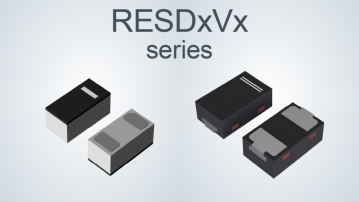
ROHM Launches ESD Protection Diode Compatible with High-Speed Interfaces of 10Gbps or Higher
반도체 전문 기업 로옴(ROHM)이 10Gbps를 넘어서는 차세대 고속 데이터 통신 환경에 대응할 수 있는 ESD(정전기 방전) 보호 다이오드 ‘RESDxVx 시리즈’를 개발하며, 고속 인터페이스에서 요구되는 신호 품질 유지와 IC 보호 성능을 동시에 끌어올렸다.
2026.03.26by 배종인 기자
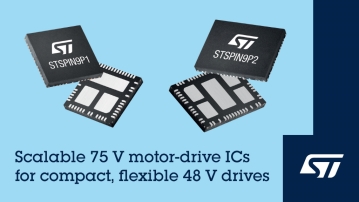
ST Launches 75V Drive IC Targeting 48V Industrial Motor Driving
ST마이크로일렉트로닉스가 48V급 산업용 구동 시스템 설계에 맞춘 75V 모터 드라이브 IC ‘STSPIN9P’ 시리즈를 공개했다. 새 제품군은 하프 브리지와 풀 브리지 구조로 구성돼 모터 종류와 출력 조건에 따라 설계를 확장할 수 있도록 한 것이 특징이다. 전원 회로와 보호 기능, 전류 감지 회로를 칩에 통합해 시스템 구성을 단순화했으며, 최대 500W급 애플리케이션까지 대응하도록 설계됐다. 회사는 레퍼런스 디자인과 데모 보드도 함께 제공해 산업 자동화, 로보틱스, 펌프, 팬, 조명, 섬유 기계 등에서 개발과 평가를 지원할 계획이다.
2026.03.26by 배종인 기자
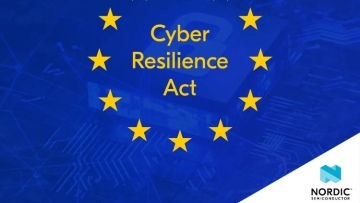
Nordic supports security updates for the entire lifecycle of IoT devices at a single fixed cost
Nordic Semiconductor, a global leader in low-power wireless connectivity solutions, has unveiled a single fixed-cost licensing model that delivers FOTA (Firmware Over-the-Air) and device management capabilities throughout the device lifecycle via nRF Cloud, and introduced a new firmware update solution to prepare for the enforcement of the European Union's Cyber Resilience Act (CRA).
2026.03.26by 배종인 기자
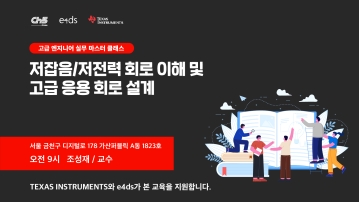
Practical Training in Low-Noise, Low-Power Circuit Design All in One Place… Training Fee Support
고감도 아날로그 회로와 센서 기반 시스템 설계 역량을 강화할 수 있는 ‘2026 고급 엔지니어 실무 마스터 클래스’가 오는 4월16일 서울 가산동 e4ds 컨퍼런스 센터에서 열린다. 이번 과정은 온라인이 아닌 오프라인 유료 실습 교육으로 진행되며, 현장 중심의 심화 학습을 원하는 엔지니어를 대상으로 한다. 이번 교육은 텍사스 인스트루먼트(Texas Instruments)가 교육비를 지원해 정가 25만원에서 10만원 할인 된 15만원에 참가할 수 있다.
2026.03.26by 배종인 기자











